
Samsung Electronics announced it is the leading 5G network vendor in Korea by delivering the largest share of 5G network solutions in the country.
 Samsung announced that it has supplied 5G core solutions and more than 53,000 5G radio base stations to three operators in Korea.
All three mobile carriers have launched 5G services in 85 cities across the country targeting consumers and enterprises.
Korean operators have been transmitting 5G signals in Seoul and metropolitan areas since December 1, 2018 using 5G base station radios and 5G core solutions from Samsung’s Networks Business unit, said Paul Kyungwhoon Cheun, head of Networks Business at Samsung Electronics.
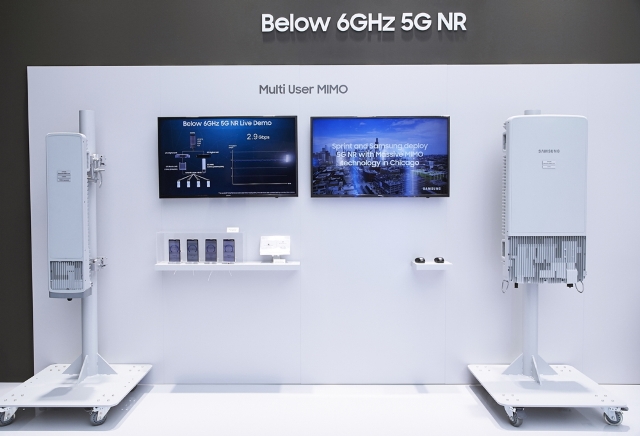
Korean operators rolled out their commercial 5G networks using Samsung’s 5G Massive-MIMO Unit (MMU) radio base station in the 3.5GHz spectrum.
Samsung has won several 5G deals in Korea because of the ability to re-use existing sites to deploy a 5G network consisting of tens of thousands of radios within just a few months since the December 1st launch.
The virtualized 5G core solutions, provided to Korean operators for their 5G launch, support both legacy 4G networks and next-generation 5G services in Non-Standalone (NSA) mode. Samsung said they can also migrate to Standalone (SA) mode through a software upgrade in the future.
Daryl Schoolar, practice leader for Service Provider Technologies at Ovum, said: “The role of Samsung in helping all three Korean mobile operators during commercial 5G networks launches gives the vendor credibility.”
Samsung has also bagged 5G network contracts from three telecom operator clients in the US such as AT&T, Verizon Communications and Sprint, Reuters reported.
Samsung holds 3 percent of the global telecom infrastructure market compared with 28 percent for Huawei, Dell’Oro Group says.
Samsung’s network business made $775 million in operating profit last year, according to Eugene Investment & Securities.
Samsung earlier said it plans to invest $22 billion in 5G mobile technology and other fields such as artificial intelligence, biopharma and automotive electronic parts over three years.


