
Nokia Solutions and Networks (NSN) today added an improved Flexi Zone architecture. This will be demonstrated at the Mobile World Congress 2014.
The improved Flexi Zone architecture from NSN will be the most versatile small cell solution able to cover all deployment scenarios.
A Flexi Zone controller application can be added to existing macro-cellular base stations to run a large number of nearby small cells. Flexi Zone’s cluster approach can now be used for indoor deployments. In addition, Flexi Zone controller supports the integration of NSN Liquid Applications to deliver locally-relevant, fast services directly from small cell base station clusters.
In a statement, NSN said it is launching a software version of its Flexi Zone controller that can be deployed on Flexi Multiradio 10 Base Stations. This provides operators with a cost-effective way to implement clusters of outdoor and indoor small cells for fill-in coverage near existing macro sites, for example in streets flanked by high-rise buildings. It also enables early deployment of hot zones by re-using macro site infrastructure.
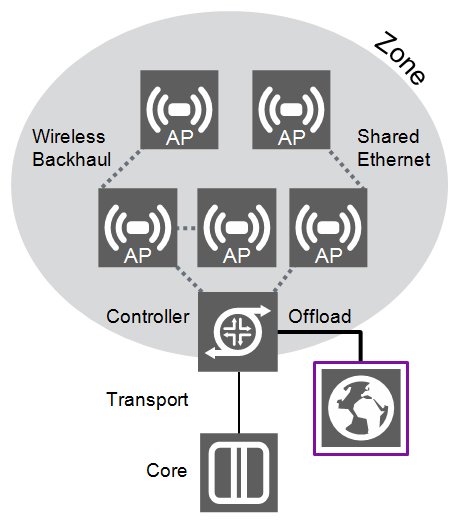
Flexi Zone controller can run a mix of indoor and outdoor cells within one cluster, making it the first small cell solution capable of addressing large and very large indoor environments like airports, university campuses and shopping malls. The innovation will support high density indoor locations such as busy metro stations, exhibition centers and conference halls.
NSN Flexi Zone controller software can also be used to increase the capacity of legacy macro-cellular Distributed Antenna Systems (DAS) in large buildings by supporting the deployment of complementary LTE and Wi-Fi small cells.
Unlike conventional DAS or hybrid DAS systems, the enhanced Flexi Zone controller can make use of many different transport media including a building’s existing and shared Ethernet (LAN), fiber or coaxial cabling, or even wireless links for large open indoor spaces, slashing operators’ deployment costs by avoiding the need to install dedicated connections.

