SK Hynix has announced plans to invest 100 trillion won ($64.38 billion) in new semiconductor manufacturing facilities in South Korea, significantly expanding its AI memory production capacity as global demand for memory chips continues to surge. The investment includes a new NAND flash memory fabrication plant and an advanced chip packaging facility in Cheongju, forming part of South Korea’s broader AI-driven semiconductor expansion strategy.
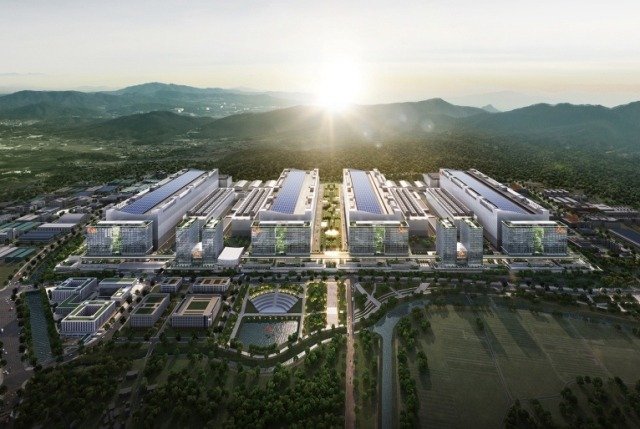
The company’s largest investment will be 80 trillion won ($51.46 billion) to construct the M17 NAND flash memory fabrication plant, with production targeted by 2029. Construction of the new fab is scheduled to begin next year. In addition, SK Hynix will invest 20 trillion won to build a new semiconductor packaging plant in Cheongju, which is expected to be completed by late 2027. The detailed investment plan was presented by SK Hynix CEO Kwak Noh-jung at an event attended by South Korean President Lee Jae Myung.
The 100 trillion won investment in Cheongju was first announced earlier this week, but the company has now disclosed how the funds will be allocated. The projects are part of a broader $2.1 trillion South Korean semiconductor investment initiative involving SK Hynix and Samsung to strengthen the country’s leadership in AI chips and reduce economic dependence on the Seoul metropolitan region. South Korea aims to double its memory chip production capacity within five years through these investments.
The expansion comes as AI hyperscalers continue driving unprecedented demand for memory technologies. Prices for both NAND flash and DRAM memory have climbed to historic highs amid supply constraints. SK Hynix, Samsung, and Micron remain the world’s leading memory chip manufacturers, benefiting from the rapid deployment of AI infrastructure and high-performance computing systems.
Despite the long-term optimism, investor sentiment remained cautious. SK Hynix shares fell 15 percent, while Samsung Electronics shares dropped 9 percent during a global semiconductor selloff after concerns emerged about potential oversupply in AI computing infrastructure, Reuter news report said. The company also noted that its investment schedule could change depending on future semiconductor demand, customer spending patterns, and construction site availability.