South Korea has cemented its position as the leading source of streaming content outside the United States, generating 12.1 billion hours of viewing on Netflix worldwide between April 2025 and March 2026, according to new research from Omdia and Digital i presented at the International Streaming Summit (OTT·FAST) 2026 in Busan.
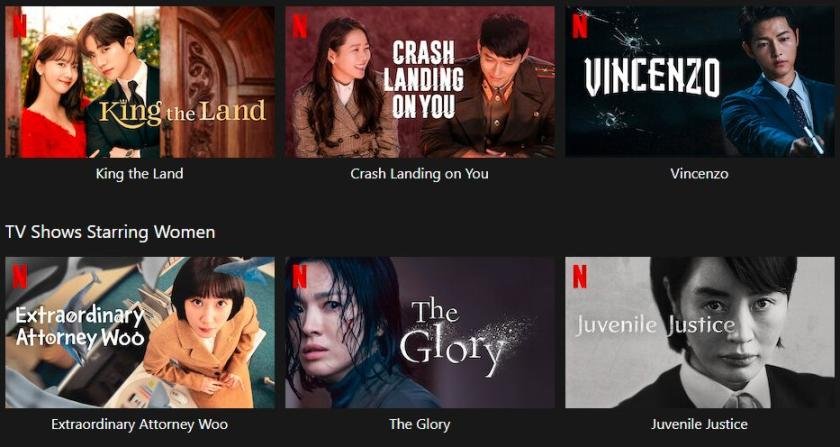
The Omdia report highlights the growing global appeal of Korean entertainment, with South Korean productions significantly outperforming content from other major international markets. Korean content attracted 44 percent more viewing hours than Japanese productions and nearly twice the viewing volume of content from the United Kingdom, underscoring the strength of the country’s entertainment exports.
Content from the United States delivered 59.6 billion viewing hours.
Japan ranked third with 8.4 billion viewing hours.
The United Kingdom generated 6.8 billion hours.
Spain contributed 3.2 billion hours.
South Korean content attracted 44 percent more viewing than Japanese productions and almost twice the viewing of UK content, reflecting growing international demand for Korean entertainment.
Beyond the top five markets, United States–Canada co-productions generated 2.4 billion viewing hours, followed by United Kingdom–United States co-productions with 1.9 billion hours, Canada with 1.8 billion hours, Colombia with 1.7 billion hours, and Mexico with 1.5 billion hours.
Popular titles such as Squid Game, Daehongsu (The Great Flood), and Pokssak Sog-atsuda (When Life Gives You Tangerines) played a major role in driving audience engagement across international markets. These productions helped South Korea surpass content powerhouses including Japan, the UK, and Spain on Netflix.
According to Omdia, South Korea ranked second only to the United States among all content origins available on Netflix, reflecting the country’s sustained success in producing globally relevant stories that resonate with audiences across cultures and languages.
Maria Rua Aguete, Head of Media & Entertainment at Omdia, noted that the streaming era has transformed how content travels across borders. Strong storytelling, high production quality, valuable intellectual property, and effective global distribution have enabled South Korean creators to build a sustainable entertainment ecosystem capable of delivering international hits across multiple genres.
The findings also illustrate a broader trend in the streaming industry, where viewers are increasingly embracing non-English-language content. What began with breakthrough successes such as Squid Game has evolved into a robust content pipeline that consistently attracts global audiences. The analysis is based on Digital i estimates of Netflix viewing across 17 key markets, including the United States, Canada, Brazil, Mexico, Australia, Japan, South Korea, France, Germany, Italy, Spain, the United Kingdom, the Netherlands, Poland, and several Nordic countries.
BABURAJAN KIZHAKEDATH