The Philippines has recorded strong improvements in mobile network performance, with download speeds rising 73 percent, 5G population coverage reaching 62 percent, and prepaid mobile data prices falling about 67 percent.
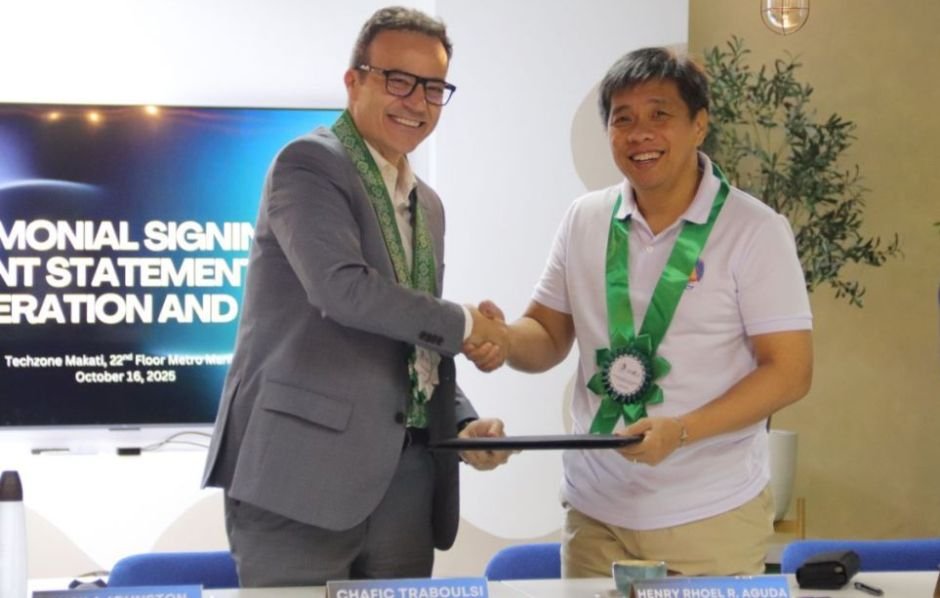
The Department of Information and Communications Technology (DICT) is using real-world network data to measure these gains and identify connectivity gaps across the country’s more than 7,600 islands, Ookla said in a blog post.
DICT uses Ookla’s Speedtest Intelligence and Downdetector to monitor network performance, benchmark telecom providers, identify underserved locations and track service disruptions. The approach represents a shift from the government’s historical dependence on provider-reported coverage and performance statistics.
City-level measurements are particularly important in the Philippines, where differences in geography, infrastructure, backhaul and network investment can produce significant variations in the mobile experience between communities.
Philippines Mobile Download Speed Rises 73% to 43.80 Mbps
Median mobile download speed increased from 25.29 Mbps in Q1 2023 to 43.80 Mbps in Q1 2026, an improvement of about 73 percent in three years.
The increase provides an important indicator of how mobile network investment is translating into better real-world performance for subscribers. Faster connections improve access to video streaming, digital payments, online education, remote working, social media, cloud applications and other data-intensive services.
Fixed broadband improved during the same period, although at a slower rate. Fiber download speed increased from 89.58 Mbps in Q1 2023 to 108.94 Mbps in Q1 2026, an increase of 19.36 Mbps, or about 22 percent.
The comparison shows mobile download performance improving much faster proportionally than fiber during the three-year period.
5G Population Coverage Expands From 22% to 62%
The expansion of 5G is another major indicator of improving Philippine mobile network performance. 5G population coverage increased from 22 percent to 62 percent in three years, representing a gain of 40 percentage points.
The number of local government units with 5G service also increased from 120 to 460, adding 340 local government units and representing growth of about 283 percent.
The expansion means a significantly larger proportion of Filipinos now live in locations where 5G service is available. For DICT, independent measurements provide a way to assess whether operator network rollouts are producing genuine improvements in coverage and user experience.
Prepaid Mobile Data Price Drops 67% to ₱7.07 Per GB
Improving network performance has been accompanied by a steep decline in mobile data costs. Prepaid mobile data prices dropped from ₱21.50 per GB to ₱7.07 per GB, a reduction of approximately 67 percent.
Consumers are therefore paying roughly one-third of the previous price per gigabyte, improving the affordability of mobile internet services as network speeds and 5G availability increase.
The combination of faster mobile broadband, wider 5G access and cheaper data strengthens the overall connected experience rather than improving network speed in isolation.
DICT Uses Oplan Bantay Signal to Identify Network Gaps
Through initiatives including Oplan Bantay Signal, DICT uses city-level network information to identify underserved locations requiring targeted intervention.
Instead of depending primarily on nationwide averages, the government can examine how network performance differs among individual cities and municipalities. This allows DICT to determine where improvements are taking place and where mobile coverage, speed or reliability remains inadequate.
Downdetector adds another dimension by helping identify service disruptions. Combining speed measurements with outage information provides a broader view of network quality because high download speeds alone do not guarantee a reliable mobile experience.
DICT Dashboard Tracks More Than 3.27 Million Network Tests
DICT’s “Signal mo, Boses mo” MIND Performance Dashboard provides additional visibility into real-world network performance.
The dashboard recorded 3,272,949 tests, with an overall average download speed of 115.19 Mbps, average upload speed of 109.39 Mbps, and average latency of 9 milliseconds.
The fixed-service provider comparison shows significant performance differences. Globe recorded an average download speed of 166.63 Mbps, followed by PLDT Home Fiber at 116.00 Mbps, PLDT at 82.87 Mbps, and SpaceX Starlink at 55.47 Mbps.
Test distribution also varied considerably between providers. PLDT Home Fiber represented 46.39 percent of tests, PLDT 25.16 percent, Globe 21.87 percent, and SpaceX Starlink 6.58 percent.
These dashboard figures complement DICT’s mobile network monitoring by showing how real-world performance varies across technologies, providers and locations.
Independent Data Strengthens Philippines Network Oversight
DICT’s use of independent network intelligence provides a more granular benchmark for evaluating telecom performance across the Philippines.
Between Q1 2023 and Q1 2026, median mobile download speeds climbed from 25.29 Mbps to 43.80 Mbps, while median fiber speeds increased from 89.58 Mbps to 108.94 Mbps. Over three years, 5G population coverage expanded from 22 percent to 62 percent, while the number of covered local government units jumped from 120 to 460. Meanwhile, prepaid mobile data prices fell from ₱21.50 to ₱7.07 per GB.
Combined with a performance dashboard drawing on 3,272,949 tests, the data gives DICT a stronger evidence base for identifying underserved communities, assessing operator performance and directing attention toward measurable improvements in mobile and broadband connectivity.
BABURAJAN KIZHAKEDATH