
Estimote, the market leader in indoor location software, will be launching LTE beacon this month.
“The launch of LTE in our new beacon opens up new range of possible applications. Thanks to the integration of LTE-M with BLE and GPS, it’s now possible to track assets globally and access relevant data at any time,” Jakub Krzych, CEO of Estimote, said.
Since the LTE beacon can be programmed with JavaScript, it can work independently of phones running apps, effectively turning it into a mobile device. Customers can program the LTE beacon to work as a GPS tracker sending its GPS location over LTE, without the need for a mobile device.
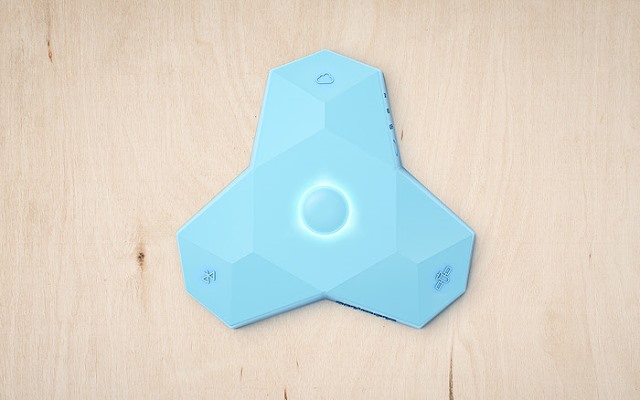
Estimote LTE Beacon is a wireless device that, when attached to assets or vehicles, can report its precise location and telemetry data.
The LTE Beacon can last multiple years without charging and can send data directly to the cloud.
It uses multiple radio technologies, such as GPS and Bluetooth and Estimote’s software to precisely track assets indoors and outdoors.
It supports Estimote’s “proof of location” and “proof of delivery” technologies.
The device works globally and uses the latest Low Power IoT LTE connectivity technology.
The LTE Beacon is programmable and can be configured directly from the browser using Web Bluetooth technology.
Developers can program apps for the device using the popular Javascript language.
Estimote sells LTE Beacons as Dev Kits containing 2 devices for $129 + a subscription fee starting at $2 a month for every device.
The company expects this device will enable developers to prototype new use-cases and create a new wave of IoT applications.
Previously it wasn’t possible to seamlessly track assets throughout their journey from indoors to outdoors to indoors.
Typically, RFID tags and scanners were used for indoor location. Their accuracy isn’t great and RFID scanners are expensive.
Outdoor tracking was possible with GPS locators. They could only last a few days, because of using 3G connectivity.
Both GPS locators and RFID scanners use legacy software and it isn’t easy for modern software developers to build apps and adapt them to their needs.