Nothing has positioned the new Phone (4b) as an affordable gateway into its ecosystem, but the smartphone enters India’s highly competitive mid-range market with a price tag that raises more questions than excitement.
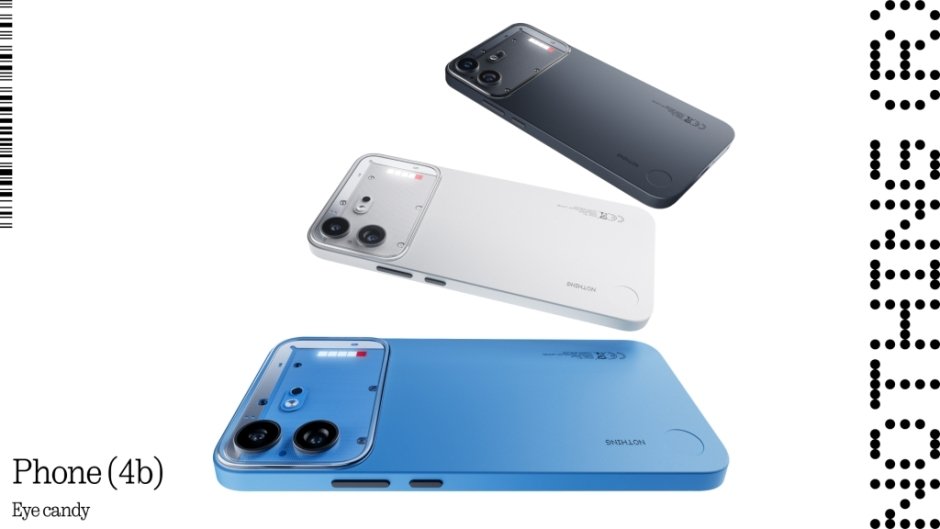
Starting at an effective price of ₹29,999 (MRP ₹34,999) for the 8GB + 128GB model and ₹33,699 (MRP ₹38,999) for the 8GB + 256GB version, the Phone (4b) struggles to justify its pricing against rivals offering stronger chipsets, faster charging, better cameras, and longer software support.
The Snapdragon 6 Gen 4 used in the Nothing Phone (4b) is likely to be one of its biggest drawbacks at its price point. Although Nothing claims the chipset delivers an AnTuTu score of more than 1 million, it remains part of Qualcomm’s mid-range Snapdragon 6 series. In comparison, several smartphones in the ₹30,000-40,000 segment are already equipped with more powerful Snapdragon 7-series or Snapdragon 8-series processors.
For example, the Motorola Edge 60 Pro features the Snapdragon 7 Gen 3, while the Motorola Edge 70 comes with the newer Snapdragon 7s Gen 4. Buyers willing to spend slightly more can opt for the Xiaomi 14 Civi, which is powered by the Snapdragon 8s Gen 3, or the POCO F7 5G, which features the Snapdragon 8s Gen 4. These processors offer significantly stronger CPU, GPU, AI and gaming performance than the Snapdragon 6 Gen 4.
As a result, consumers spending close to ₹35,000 on a smartphone are increasingly expecting Snapdragon 7-series or Snapdragon 8-series performance rather than a Snapdragon 6-series chipset, making Nothing’s processor choice difficult to justify against similarly priced competitors.
Another disappointing aspect is the 33W wired charging support. Although the device includes a large 6,000mAh battery, charging technology significantly trails competitors that now offer 67W, 80W or even 100W fast charging in similar price segments. A full charge taking more than one hour is no longer a standout feature in 2026.
Several smartphones in the ₹30,000-40,000 price segment already offer much faster charging than the Nothing Phone (4b)’s 33W wired charging. The Motorola Edge 70 Fusion supports 68W TurboPower charging, while the Motorola Edge 60 Pro offers up to 90W wired fast charging. The iQOO Z9s Pro features 80W FlashCharge, enabling a full recharge in around 35 minutes.
Meanwhile, the Realme Narzo 90 Pro and Redmi Turbo 5 support 100W fast charging, with the Redmi Turbo 5 also packing a massive 7,540mAh battery. The POCO X8 Pro also delivers 90W HyperCharge. Compared with these devices, the Nothing Phone (4b)’s 33W charging appears less competitive, especially for buyers who expect faster charging speeds in this price range.
The camera hardware also appears conservative. The Phone (4b) offers a 50MP OIS primary camera and a 119-degree ultrawide camera, but there is no dedicated telephoto lens or higher-end imaging hardware despite its premium pricing. Features such as Ultra XDR, AI anti-shake, and dual video capture rely heavily on software processing rather than significant hardware innovation.
Display specifications remain competitive but not market-leading. The 6.77-inch 120Hz Super AMOLED panel delivers 2,000 nits peak brightness, 1,200 nits outdoor brightness, HDR10+ support, and a 1,000Hz touch sampling rate, yet several competing devices now offer brighter panels, LTPO technology, or higher-resolution displays at comparable prices.
Nothing continues to promote its Glyph Bar with 45 individually controlled mini LEDs reaching 3,500 nits brightness, but the lighting interface remains largely a cosmetic differentiator rather than a feature that substantially improves productivity or smartphone usability. Buyers looking for practical value may not consider the Glyph system a compelling reason to spend more.
Gaming claims also warrant caution. Support for 90 FPS in BGMI and Call of Duty Mobile and 120 FPS in lighter games such as Subway Surfers and League of Legends: Wild Rift is respectable, but the Snapdragon 6 Gen 4 is unlikely to satisfy power users seeking sustained flagship-level gaming performance over extended sessions.
Nothing highlights 3 years of Android updates and 6 years of security patches, which is an improvement over many mid-range devices. However, several smartphone makers are now extending Android OS upgrades beyond three years, reducing the competitive advantage of Nothing’s software commitment.
The company has focused heavily on AI by integrating ChatGPT, Google Gemini, Circle to Search, and its Essential AI suite. However, these software features are increasingly common across Android smartphones and are no longer unique selling points.
The Phone (4b) certainly offers strengths, including its transparent design, IP64 rating, 4,400mm² vapour chamber, stereo speakers, and durable construction tested through 68 quality control protocols and 95,000 tests. Nevertheless, these positives may not outweigh concerns over processor choice, charging speed, camera hardware, and aggressive pricing.
For consumers shopping in the ₹30,000-40,000 segment, the Nothing Phone (4b) appears to prioritize design aesthetics and software experience over hardware leadership. Unless buyers are particularly attracted to the Glyph Interface or Nothing’s distinctive design language, competing smartphones offer stronger overall specifications and better value for money at similar or even lower prices.
BABURAJAN KIZHAKEDATH