
The United States is aiming to remove hurdles to ensure faster deployment of the 5G mobile networks.
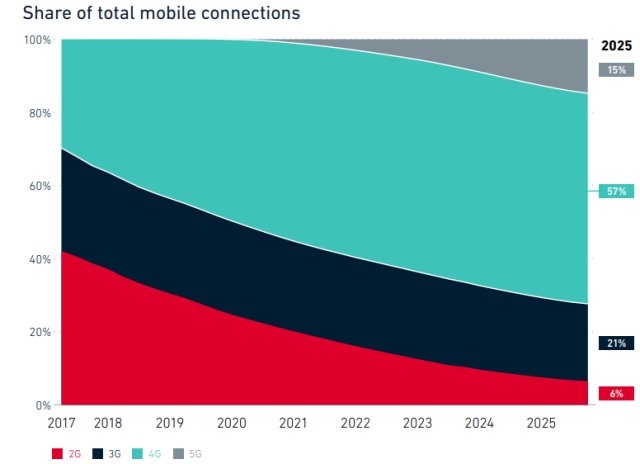 US is well behind Asia in terms of the forecast for 5G subscriber base, according to GSMA’s Mobile Economy report released in June 2018. The GSMA report indicated that Asia region alone will have 675 million 5G connections by 2025, more than half of the global 5G total expected. Australia, China, Japan and South Korea will be the key 5G markets in Asia.
5G networks could remove speed and capacity as constraints on wireless innovation and could be 100 times faster than current networks.
“The lag time between a device’s request for data and the network’s response will be less than one-tenth of what it is today. Wireless networks that today support 1,000 connected devices per square kilometer could instead support 1 million,” Federal Communications Commission (FCC) Chairman Ajit Pai said at a White House summit.
The Donald Trump administration said they have high hopes for the 5G technology that has the potential to help create 3 million new jobs, $275 billion in private investment, and $500 billion in new economic growth.
Networks, now in the final testing stage, will rely on denser arrays of small antennas and the cloud to offer data speeds up to 50 or 100 times faster than current 4G networks and serve as critical infrastructure for a range of industries.
AT&T, Verizon, T-Mobile and Sprint, among others, are considering 5G launches from this year onwards.
Congress and regulators are also working to free up more wireless spectrum for use by 5G networks and improve other regulations to make it easier to deploy fiber lines, which are critical for 5G traffic from small cells.
FCC earlier said it will conduct 5G spectrum auction in November.
CTIA, a wireless industry trade group representing Sprint, AT&T, Samsung and Intel, said in a statement after the summit, “We completely agree with the administration, the FCC … and congressional leaders that free market American leadership in 5G is vital for our economy, private investment and future innovation.”
The FCC on Wednesday voted to eliminate regulatory barriers to 5G deployment. Ajit Pai said the measure would cap fees that cities could charge to install small cells and requires local governments to promptly review applications.
Ajit Pai said 5G networks will need 800,000 cell sites, mostly small cells no bigger than a backpack, or about four times the existing number of sites.
As a result of our escalating trade war with China, by the end of this year we will have a 25 percent duty on antennas, switches, and routers – the essential network facilities needed for 5G deployment,” said FCC Commissioner Jessica Rosenworcel, a Democrat.