
Telefonica has implemented several strategies that significantly contribute to cutting CO2 emissions, as highlighted in the ‘Connected Living Report 2023’.
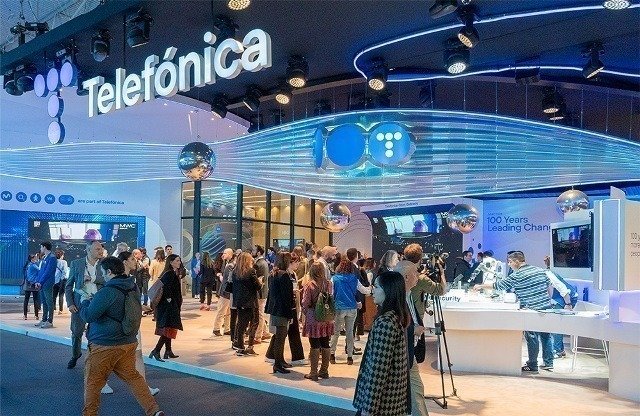
These efforts, primarily driven by digitalization and sustainability-focused initiatives, have helped avoid the emission of 69.2 million tonnes of CO2 in 2023. Below are the key strategies contributing to this achievement:
# Digital Habits and Connectivity
Telefonica’s network connectivity across Spain, Germany, and Brazil has enabled the adoption of digital habits that promote more sustainable lifestyles. These habits include:
Video calls: By facilitating remote interactions, Telefonica has helped reduce the need for travel, both domestically and internationally. For example, video calls in Spain avoided up to 18 domestic and 3 international trips, saving more than 2,000 kg of CO2 per person.
Telework and hybrid work: More than 50 percent of Telefonica’s customers in Spain and Germany adopted telecommuting, significantly cutting emissions by reducing daily commuting. This shift also saves fuel and reduces congestion.
Online training: By enabling remote learning, Telefonica has reduced the need for weekly trips for educational purposes, many of which would have involved fuel-intensive transport modes like cars running on petrol or diesel.
# Optimizing Transport
Telefonica’s digital platforms are helping customers use transport more efficiently:
Public transport and carpooling apps: These digital solutions reduce private car usage, with 2 out of 3 users relying on public transport apps, and 1 in 4 utilizing carpooling, cutting an average of 42-53 kg of CO2 per person each year.
Navigation apps: More than half of Telefonica’s users leverage satellite navigation tools to optimize driving routes, avoiding unnecessary detours and traffic congestion, further reducing emissions.
# E-commerce Growth
The shift toward online shopping, facilitated by Telefonica’s digital infrastructure, has led to a significant reduction in CO2 emissions. While transporting goods still produces emissions, the reduction in personal trips to physical stores (often made by car) offsets this. On average, 60 kg of CO2 are avoided for each trip by using e-commerce.
# Energy-Efficient Networks
Telefonica’s commitment to decarbonizing its operations is evident in its transition to more energy-efficient technologies:
Fiber and 5G technologies: These technologies are more energy-efficient than previous generations, allowing Telefonica to handle an 8.6-fold increase in network traffic while reducing energy consumption by 8.6 percent compared to 2015.
Renewable energy: Telefonica’s electricity consumption is now 100 percent renewable in Europe, Brazil, Chile, and Peru, with 84 percent renewable usage globally.
# Net-Zero Goals and Emission Reductions
Telefonica aims to achieve net-zero emissions by 2040, with substantial progress already made. Since 2015, the company has reduced operational emissions by 81 percent and overall emissions, including those from its value chain, by 51 percent.
By leveraging digitalization as a tool for sustainability, Telefonica is playing a crucial role in driving the green transition and helping to mitigate climate change while expanding its network and maintaining high-quality service.
Baburajan Kizhakedath

