
A new ITU standard highlights that compliance with the Paris Agreement will require the information and communication technology (ICT) industry to reduce greenhouse gas (GHG) emissions by 45 percent from 2020 to 2030.
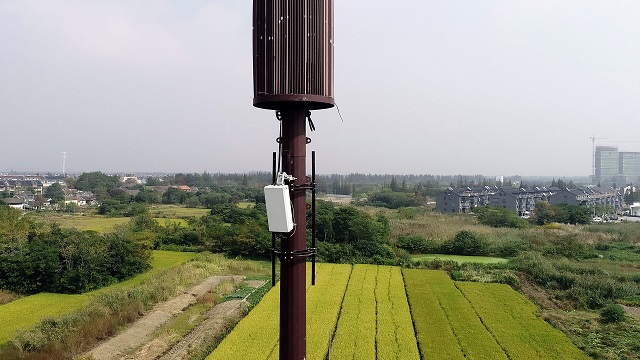
The standard will support ICT companies in reducing GHG emissions at the rate necessary to meet the United Nations Framework Convention on Climate Change (UNFCCC) Paris Agreement’s goal of limiting global warming to 1.5°c above pre-industrial levels.
The recommended emission-reduction targets are the first targets specific to the ICT industry to be approved by the Science Based Target Initiative (SBTi).
The ITU standard – ITU L.1470 GHG emissions trajectories for the ICT sector compatible with the UNFCCC Paris Agreement – was developed in collaboration with the Global Enabling Sustainability Initiative (GeSI), GSMA and SBTi. It is supported by associated Guidance for ICT Companies setting Science-Based Targets.
ITU L.1470 puts forward emission-reduction trajectories for operators of mobile networks, fixed networks and datacentres. The standard and associated guidance will support operators in setting targets aligned with the latest climate science, the science-based targets recognized by SBTi.
“This new ITU standard offers authoritative guidance on the pathway towards net zero emissions for the ICT industry,” said ITU Secretary-General Houlin Zhao.
29 operator groups representing 30 per cent of the mobile connections worldwide are already committed to science-based targets, reports GSMA.
These groups include America Movil, AT&T, BT, Bharti Airtel, Deutsche Telekom, Elisa, Far Eastone, KPN, Magyar Telekom, NTT DOCOMO, Orange, Proximus, Reliance Jio Infocomm, Safaricom, Singtel, SK Telecom, STC, Swisscom, T-Mobile USA, Taiwan Mobile, TDC, Tele2, Telefonica, Telekom Austria, Telenor, Telia Company, Telstra, Verizon and Vodafone.
ITU L.1470 will support many more operators in following suit.
The shift to renewable and low-carbon energy is expected to account for the majority of the ICT industry’s GHG emission reductions over the 2020-2030 timeframe.
ICT companies will achieve greater energy efficiency, incentivized by associated cost savings as well as revenue-generation opportunities.



