
Nokia has signed a new 5G expansion agreement with Taiwan Mobile to accelerate the development of AI-native mobile networks across Taiwan, strengthening the operator’s network performance, automation, resilience, and sustainability. The long-term partnership aims to prepare Taiwan Mobile for growing AI-driven network traffic while enabling new 5G revenue opportunities through intelligent network technologies.
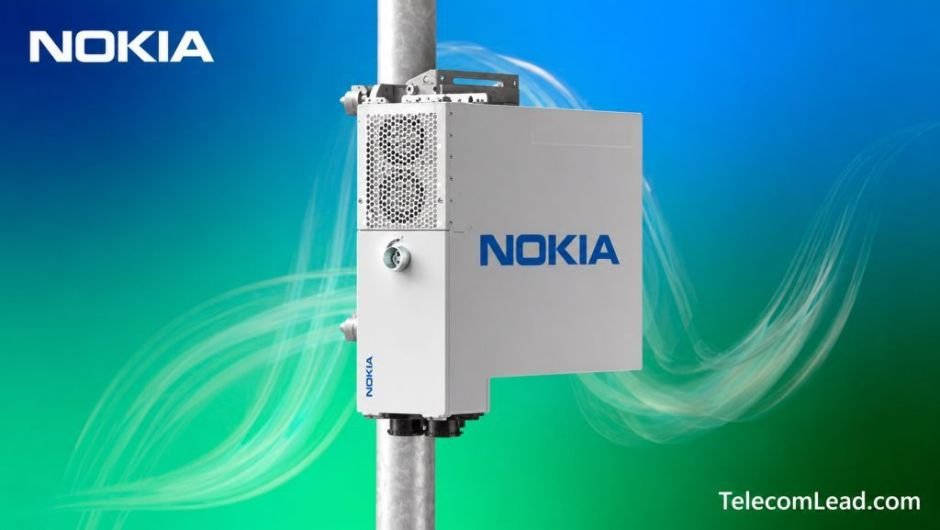
As part of the agreement, Nokia will deploy its latest AirScale portfolio, including next-generation baseband cards, advanced radio solutions, and AI-powered software, to modernize Taiwan Mobile’s existing 5G infrastructure. The deployment is designed to improve network capacity, increase uplink performance, enhance spectrum efficiency, and support future 5G-Advanced services.
AI Powers the Entire Mobile Network Lifecycle
The agreement introduces AI across every stage of the network lifecycle, allowing Taiwan Mobile to build a highly automated and intelligent mobile infrastructure.
For AI-driven network intelligence, Nokia will implement real-time automation and predictive analytics using its Predictive Hardware Analytics (PHWA) service and MantaRay Self-Organizing Networks (SON) platform. These AI algorithms automate network operations, improve performance, enable predictive maintenance, and support closed-loop network assurance, reducing operational complexity and lowering the total cost of ownership.
On the infrastructure side, Nokia’s next-generation AirScale baseband and radio technologies will significantly expand network capacity while improving uplink performance to accommodate rapidly increasing AI-generated traffic and deliver superior customer experiences.
AI Reduces Energy Consumption and Strengthens Network Resilience
Sustainability remains a major focus of the deployment. Nokia will use AI-powered energy management algorithms capable of traffic-aware optimization and proactive power savings to reduce electricity consumption while supporting Taiwan Mobile’s environmental, social, and governance (ESG) objectives.
The agreement also introduces AI-enabled self-healing and intelligent traffic steering capabilities that improve network resilience by allowing the mobile network to dynamically adapt to changing conditions and maintain service continuity, including during extreme situations.
AirScale Platform Delivers Higher Capacity with Lower Power Consumption
Nokia highlighted several technological improvements in its latest AirScale portfolio that directly benefit telecom operators.
The latest AirScale baseband cards double network capacity while reducing energy consumption. Nokia also stated that its newest AirScale baseband cards consume up to 90 percent less energy, helping operators significantly lower operational costs while improving network efficiency.
The company’s AirScale Dual Boost technology, powered by new ReefShark System-on-Chips (SoCs), enhances both uplink and downlink processing performance for Massive MIMO (mMIMO) deployments. This enables better customer experiences while allowing communication service providers (CSPs) to maximize and monetize both hardware and software investments more efficiently.
Flexible Architecture Supports 2G to 5G Evolution
Nokia’s modular AirScale System Module provides a scalable architecture by separating computing resources across RAN Layer 1, Layer 2, and Layer 3, while integrating transport functionality into a single platform.
The solution supports 2G, 3G, 4G, and 5G networks, enabling operators to simplify multi-band deployments, optimize multi-site baseband hotels, reduce acoustic noise, improve serviceability, and introduce advanced cooling technologies.
In addition, Nokia’s modular outdoor AirScale baseband offers high network capacity in a compact design, providing greater deployment flexibility, long-term scalability, and investment protection as operators continue evolving toward future 5G services.
Taiwan Mobile Targets AI-Driven Growth
The upgraded AI-native network will allow Taiwan Mobile to introduce advanced 5G capabilities such as network slicing and Reduced Capability (RedCap) services while supporting its expanding Telco+Tech business strategy.
According to Taiwan Mobile President Jamie Lin, integrating AI throughout the network will improve energy optimization, resilience, and service innovation while enabling next-generation digital applications and creating new long-term growth opportunities.
By combining intelligent automation, high-capacity radio infrastructure, energy-efficient hardware, and AI-powered software, the partnership positions Taiwan Mobile to handle rapidly growing AI traffic, deliver premium 5G services, reduce carbon emissions, and prepare its network for the transition to 5G-Advanced and beyond.
SHAFANA FAZAL

