Today’s telecom news includes announcements on INWIT, Telecom Italia, Thales, Singtel, Bridge Alliance, SEACOM, among others.
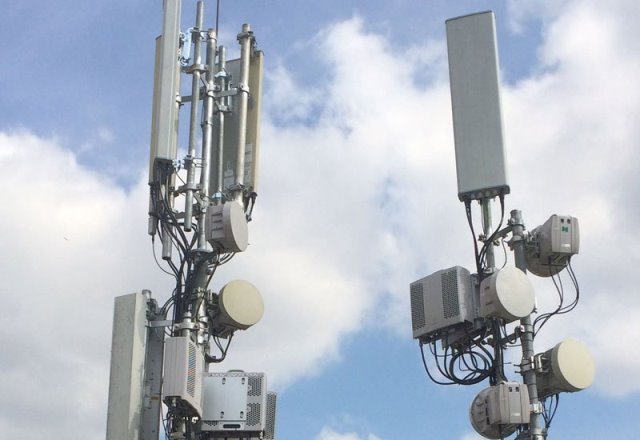
Italian Court Rejects INWIT’s Bid to Halt TIM Tower Contract Exit
An Italian court has rejected INWIT’s request to temporarily block Telecom Italia (TIM) from exiting its long-term tower lease agreement, marking another setback for Italy’s largest telecom tower operator. The judge ruled that INWIT had not demonstrated imminent and irreparable harm, allowing TIM’s withdrawal process to continue while the broader legal dispute moves forward. INWIT, which derives a significant share of its revenue from TIM and Fastweb, plans to challenge the ruling. The dispute centers on conflicting interpretations of contract terms, with INWIT arguing the agreements remain valid until 2038, while TIM maintains its exit can take effect by 2030 or earlier depending on related legal decisions.
Thales, Singtel, and Bridge Alliance Launch Asia-Pacific’s First Multi-Operator IoT eSIM Network
Thales, Singtel Group, and Bridge Alliance have introduced Asia-Pacific’s first multi-operator enterprise IoT eSIM network, enabling businesses to manage connected devices across multiple countries and mobile operators through a single orchestration platform. The solution simplifies large-scale IoT deployments by eliminating the need for separate connectivity agreements in different markets while supporting remote provisioning and centralized management. The platform has successfully completed interoperability testing with Singtel, Optus, AIS, and Globe Telecom, making it ready for commercial enterprise deployments across the region. The initiative is expected to accelerate digital transformation by providing seamless, secure, and scalable IoT connectivity for industries operating across Asia-Pacific.
SEACOM Strengthens East Africa with Resilient Digital Network Infrastructure
SEACOM has highlighted the strength of its resilient network infrastructure across East Africa, reinforcing reliable connectivity for enterprises, cloud providers, and telecom operators throughout the region. Its terrestrial network connects Mombasa to Nairobi and extends into Uganda, Rwanda, and Tanzania, while multiple subsea cable routes provide redundancy to minimize service disruptions. The diversified infrastructure enhances network availability, supports growing demand for cloud services and digital applications, and improves business continuity during cable outages or infrastructure failures. By combining extensive terrestrial and subsea connectivity, SEACOM is helping strengthen East Africa’s digital ecosystem and enabling organizations to maintain secure, high-performance communications across regional markets.
SHAFANA FAZAL