
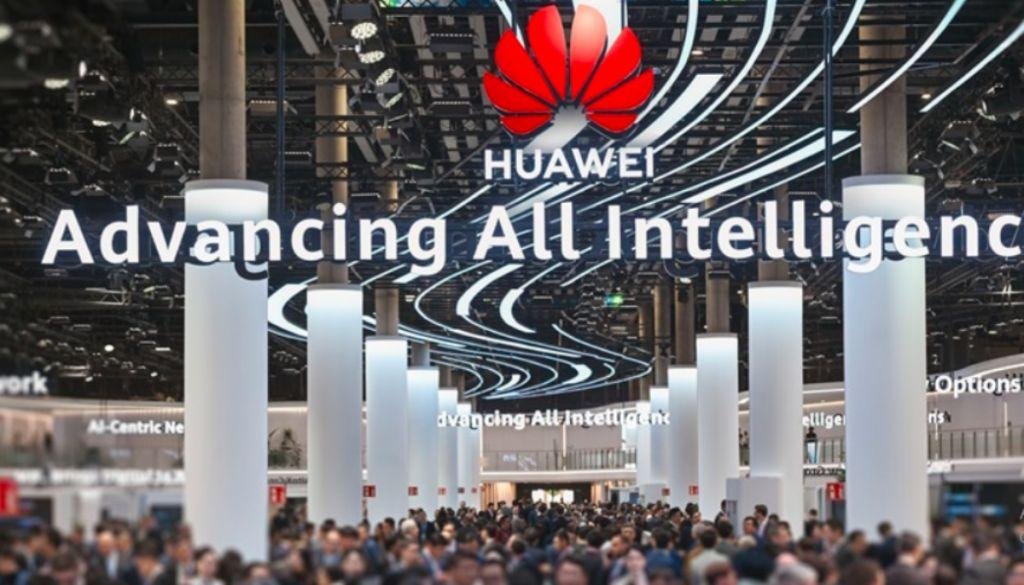
At MWC Barcelona 2026, Huawei unveiled its latest AI-Centric Network solutions, underscoring its vision to accelerate the intelligent transformation of carrier networks and prepare operators for the agentic era of AI-native connectivity. These advancements are designed to help telecom providers build intelligent services, networks, and network elements that integrate artificial intelligence into the core and edge of modern digital infrastructure.
Driving the Next Phase of Intelligent Networks
Under the theme Advancing All Intelligence, Huawei introduced a series of enhanced AI-Centric Network capabilities aimed at enabling carriers to seize new opportunities in the rapidly evolving mobile AI landscape. By embedding intelligence across network layers, these solutions support the rollout of intelligent services and autonomous network operations, helping carriers adapt to growing demands for AI-driven experiences, Huawei said at the Mobile World Congress.
Huawei’s AI-Centric Network strategy emphasizes three core layers of innovation:
Service Layer Intelligence: Carriers can now build multi-agent collaboration platforms with dedicated service agents for voice, monetization, and broadband services. These platforms enable seamless transformation of traditional services into AI-driven offerings, enhancing user engagement and service value.
Network Layer Autonomy: Huawei is advancing its autonomous network solutions, including Phase 1 of the L4 Autonomous Driving Network, which improves operational efficiency, service quality, and monetization capabilities. This autonomy helps carriers transition from reactive management to proactive, intent-driven operations.
Network Element Innovation: At the infrastructure level, Huawei partners with carriers to innovate areas such as RAN algorithms, WAN service identification, and core network service intent — driving improvements in energy efficiency, experience awareness, and network resilience.
Supporting Intelligent Networks With U6 GHz and SuperPoD
Huawei also showcased all-scenario U6 GHz products that unlock the full performance potential of 5G-Advanced (5G-A) networks by delivering high capacity and low latency ideal for mobile AI applications. In addition, Huawei displayed its SuperPoD clusters — high-performance computing infrastructures designed to support AI workloads and serve as a robust backbone for future agentic services.
Paving the Way to a Fully Intelligent Era
As carriers worldwide accelerate 5G-A adoption and explore the evolution toward 6G and autonomous networks, Huawei’s AI-Centric Network solutions provide a foundation for intelligent connectivity, automated operations, and new business models. These advancements enable operators to transform traditional network roles into AI-enabled platforms that deliver immersive digital experiences and unlock long-term growth opportunities.
Huawei Pushes 5G-Advanced Into the Agentic AI Era
Huawei expanded its vision for the mobile future by highlighting how 5G-Advanced (5G-A) networks will evolve into the foundation of the agentic AI era, enabling intelligent services, multi-agent collaboration, and seamless connectivity for AI-native applications. While the specific “5GA AI Agentic” press release is not yet available as a standalone article, Huawei’s MWC announcements collectively show how 5G-A is being reimagined to support AI-centric experiences and agent-driven network evolution.
Intelligent Network Foundations for AI and Agents
Huawei’s MWC 2026 showcases emphasize the industry shift from conventional connectivity toward intelligent, AI-enabled network infrastructure that supports massive agent ecosystems. This includes enhancements such as digital identity management, dynamic agent group communication, and task session orchestration — all critical for future multi-agent collaboration across devices, networks, and cloud services.
Huawei Unveils AI Data Platform Powered by OceanStor Storage
Huawei launched its AI Data Platform (AIDP)—a breakthrough storage and data processing foundation designed to bridge the gap between AI models and real-world business value. The new platform integrates advanced knowledge generation, memory extraction, inference acceleration, and intelligent cache management to enable carriers and enterprises to turn AI insights into scalable, high-performance applications.
The Huawei AI Data Platform addresses one of the most pressing challenges in the AI era—making AI inference as efficient and effective as model training. Instead of focusing only on training, Huawei’s AIDP enhances inference performance, accuracy, and responsiveness by building a smarter, more flexible data management layer for large-scale AI systems.
Huawei Debuts Industry’s First Campus-Grade AN L4 Autonomous Driving Network
Huawei unveiled its pioneering AN L4 (Autonomous Network Level 4) solution — the first industry-grade L4 Autonomous Driving Network (ADN) designed for enterprise campuses. This breakthrough marks a major milestone in the evolution of network operations and maintenance, shifting from reactive human-driven processes to fully AI-powered autonomous operations that deliver fault handling, service rollout, experience assurance, and security protection without manual intervention.
Huawei Unveils Next Generation Optical Network Solutions to Power the AI Era
Huawei launched its Next Generation Optical Network products and solutions, showcasing innovations that enable global carriers to evolve their fiber networks for the emerging AI-centric all-optical target network era. The announcement, delivered by Bob Chen, President of Huawei’s Optical Business Product Line, highlights how optical networks can meet the rising demands for higher bandwidth, lower latency, enhanced reliability, and intelligent operations as AI applications proliferate across homes and enterprises.
Driving Synergy Between AI and Optical Networks
Huawei’s Next Generation Optical Network strategy focuses on two key directions: AI for Networks and Networks for AI. Under AI for Networks, advanced AI technologies are embedded within optical infrastructure to improve fault prediction, network performance, user experience, and energy efficiency. For instance, intelligent fiber sensing models help detect risks early and pinpoint fault locations with high precision, while dynamic network performance models can increase transmission distances and optimize throughput.
Huawei Unveils Telco Intelligent Converged Cloud (TICC) Infrastructure
Huawei introduced its next-generation Telco Intelligent Converged Cloud (TICC) infrastructure, a transformative solution designed to help telecom operators transition from traditional cloud-native frameworks to future-ready AI-Native telco clouds. This strategic advancement marks a significant step toward building agile, intelligent, and highly efficient telecom cloud environments that serve the growing demands of AI-centric services and agent-based network operations in the Mobile AI era.
Huawei Highlights AI-Powered Green AIDC and Energy Solutions
Huawei showcased its focus on sustainable, AI-enhanced infrastructure, including AI-Ready Data Center (AIDC) solutions and green-oriented energy technologies designed to reduce carbon impact while powering intelligence-driven digital transformation. These innovations reflect Huawei’s commitment to helping operators and enterprises build efficient, resilient, and environmentally conscious ICT facilities in the age of AI and 5G-Advanced.
Huawei Showcases Agentic Communication Network (ACN)
Huawei unveiled its Agentic Communication Network (ACN) — a visionary networking framework designed to support the next generation of agent-based communication and collaboration in the mobile AI era. With the rapid rise of AI agents connecting across networks, ACN transforms traditional connectivity into a powerful “information overpass” that enables trusted, efficient, and task-centric communication between intelligent systems.
Huawei Unveils Next-Gen Core Network Intelligence Solution
Huawei introduced its latest core network intelligence solution, designed to help telecom operators build highly stable, efficient, and autonomous core networks that lay the foundation for future 6G evolution. This new release builds on Huawei’s existing automation capabilities, helping carriers shift from reactive O&M to a proactive, intelligent approach that enhances service uptime and network resilience.

