AMD announced plans to invest more than $10 billion in Taiwan’s artificial intelligence sector as the U.S. chipmaker accelerates efforts to strengthen strategic partnerships and expand its ability to build and assemble advanced AI processors.
The investment highlights AMD’s growing ambitions to challenge the dominance of Nvidia in the rapidly expanding AI semiconductor market. Analysts and investors increasingly view AMD as one of the strongest competitors in AI accelerators and high-performance computing infrastructure.
AMD said it will collaborate with Taiwanese semiconductor packaging and testing giant ASE Technology Holding and its subsidiary Siliconware Precision Industries to develop more power-efficient technologies for AI systems and processors.
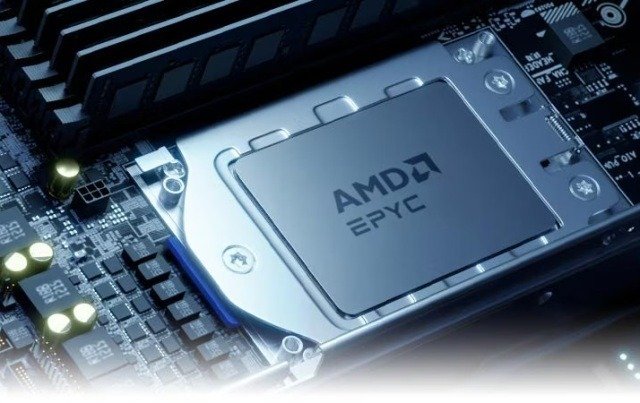
The new technologies will support AMD’s Venice CPUs, which are being manufactured using Taiwan Semiconductor Manufacturing Company 2-nanometer process technology. AMD separately confirmed that production of its Venice CPUs has already started ramping up.
AMD is also working with several Taiwan-based partners including Powertech Technology, Sanmina, Wiwynn, Wistron and Inventec to strengthen AI infrastructure development and supply chain capabilities.
AMD Chair and CEO Lisa Su said accelerating AI adoption is driving customers worldwide to rapidly scale AI infrastructure capacity to meet rising compute demand.
Lisa Su said AMD’s expertise in high-performance computing combined with Taiwan’s semiconductor ecosystem and global strategic partners will enable integrated rack-scale AI infrastructure that can help customers deploy next-generation AI systems faster.
Taiwan continues to play a central role in the global AI semiconductor supply chain, serving major technology companies including Apple and Nvidia. The island’s importance is largely driven by TSMC’s leadership in advanced chip manufacturing technologies.
AMD’s latest investment signals intensifying competition in the AI chip market as semiconductor companies race to secure advanced packaging capacity, manufacturing scale, and power-efficient computing technologies needed for AI data centers and enterprise AI deployments.
SHAFANA FAZAL