Today’s telecom news includes announcements on TRAI, TELUS, AST SpaceMobile, MTN Ghana, among others.
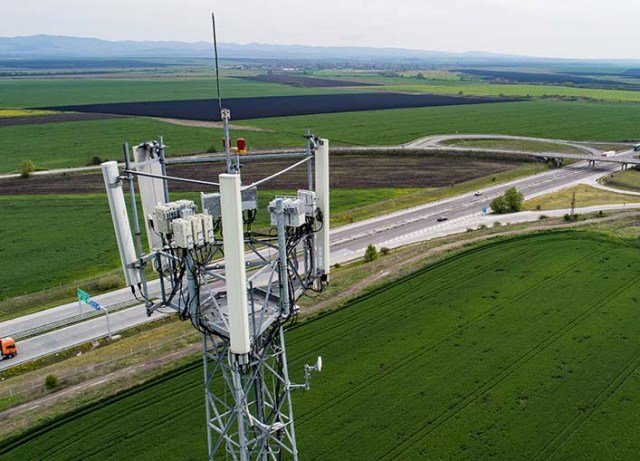
TRAI Framework Could Accelerate India’s Satellite and D2D Services
TRAI Chairman Anil Kumar Lahoti said the regulator’s satellite communication framework is intended to provide regulatory certainty and support deployment of satellite and direct-to-device services in India. TRAI’s consultation examined satellite network authorization, spectrum assignment and D2D services, including the use of mobile satellite service and IMT spectrum and interference management. Recommendations include assigning spectrum for NGSO fixed satellite services and mobile satellite services for an initial five years, with an extension of up to two years. Spectrum usage charges would be linked to service revenue, subject to a minimum annual charge. The framework is aimed at encouraging investment while keeping satellite services competitive and improving connectivity in remote areas.
TELUS and AST SpaceMobile Complete Satellite-to-Smartphone Integration Test
TELUS and AST SpaceMobile have completed their first end-to-end integration test between TELUS’s terrestrial wireless network and AST SpaceMobile’s low Earth orbit satellite network. The test validated direct satellite-to-cellular connectivity using standard, unmodified consumer smartphones on the TELUS network. The technology is designed to support broadband data, voice calls and text messaging in remote Canadian areas where traditional mobile coverage is unavailable or difficult to deploy. The milestone builds on a commercial relationship under which TELUS became a strategic equity investor in AST SpaceMobile alongside major telecom companies. The companies aim to extend cellular coverage across Canada’s geographically challenging regions while improving access to communications and emergency services.
MTN Ghana Invests $202 Million in Spectrum for 5G Expansion
MTN Ghana has secured spectrum licences worth $202 million from Ghana’s National Communications Authority to expand its 5G network and increase broadband capacity. The 15-year licences cover the 700 MHz and 3 GHz bands, giving MTN additional spectrum to support higher network capacity and broader coverage. The allocation includes two 20 MHz lots in the 700 MHz band costing $100.9 million and 150 MHz in the 3 GHz band costing $101.1 million. MTN Ghana plans to deploy the spectrum alongside its existing holdings as demand for high-speed connectivity grows. The investment comes as Ghana’s 5G market becomes more competitive, with the country targeting 70 percent population coverage by 2027.