NEC Corporation has announced the development of a new Radio Unit (RU) for 5G Sub-6GHz band base stations, incorporating advanced Massive MIMO technology. The new RU is positioned as the successor to NEC’s current integrated antenna RU and is scheduled for commercial release in the first half of fiscal year 2026, following performance evaluations and verification tests.
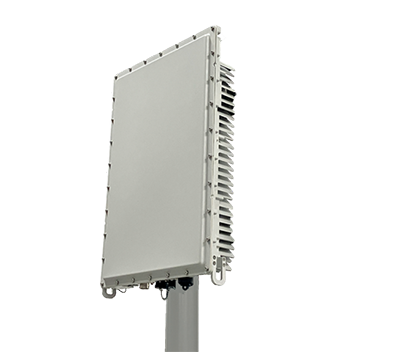
Since 2020, NEC has shipped more than 50,000 Massive MIMO units across Japan and international markets, highlighting its strong expertise in 5G radio access technologies. The latest development addresses rising mobile data traffic and the growing need for energy-efficient network infrastructure. NEC said the new RU significantly enhances both uplink and downlink throughput, while delivering a more compact, lightweight, and power-efficient design.
The 5G base station RU leverages MU-MIMO technology, enabling simultaneous communication with multiple terminals using multiple antennas. It also uses advanced beamforming technology to create highly directional beams in real time. This combination ensures stable, high-speed connectivity even in congested areas and for fast-moving users.
According to simulation results, the new RU improves average user throughput by approximately 48 percent on the uplink and 54 percent on the downlink compared with NEC’s current model. With a future software upgrade, uplink performance is expected to increase further to around 55 percent.
Energy efficiency is a key highlight of the new device. NEC said power consumption has been reduced by about 42 percent to roughly 315 W during normal operation, and by 30 percent to 630 W or less during peak operation. These improvements are expected to lower operating costs and reduce environmental impact for telecom operators.
The RU also features a compact and lightweight design. NEC reduced the unit’s volume by approximately 23 percent to 23.6 liters or less and its weight by around 33 percent to 16 kg or less. The use of compact components and a fanless design enables single-person installation, significantly cutting on-site installation labor.
When combined with NEC’s virtualized RAN (vRAN), the new RU extends the fronthaul distance between the RU and the Distributed Unit (DU) from the current 30 km to as much as 40 km. This is achieved through software-based control of communication delays. The extended fronthaul distance improves flexibility in base station placement while minimizing throughput impact. It also allows dynamic allocation of RUs and optical transmission paths based on traffic demand, helping operators optimize both capital and operating expenditures.
NEC plans to work closely with telecom carriers to conduct performance evaluations and verification tests, with the aim of launching the product in Japan in the first half of fiscal year 2026. International launches will be in the second half of fiscal year 2026.
NEC will showcase the new 5G Massive MIMO Radio Unit at MWC Barcelona 2026, scheduled to take place from March 2 to March 5, 2026.