Millimeter wave (mmWave) technology, once overlooked due to network complexities, spectrum availability issues, and early 5G limitations, is now emerging as a key driver of next-generation broadband.
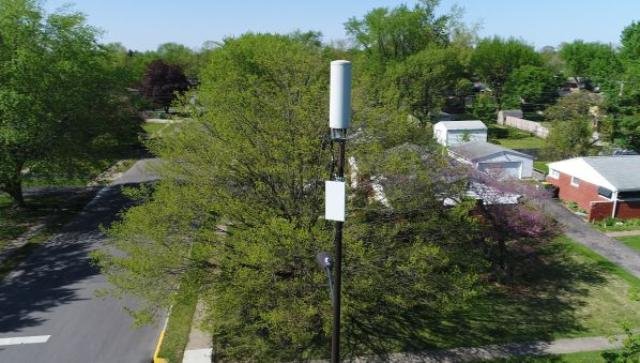
By strategically integrating mmWave into Fixed Wireless Access (FWA), operators can unlock new revenue streams, strengthen network capacity, and extend high-speed connectivity to underserved communities, Nokia said in a blog post on GSA website.
Revenue projections
A Trendforce report said the global FWA market is projected to reach US$72 billion in 2025, driven mainly by U.S. operators (T-Mobile, Verizon) and Indian players (Reliance Jio, Bharti Airtel) beefing up FWA capacity and infrastructure.
As of April 2025, 80 percent of service providers globally offer FWA, with 57 percent leveraging 5G-based FWA. Speed-based tariff models are growing too—51 percent of providers now use speed-based plans (up from 40 percent a year earlier), Ericsson said in a report. Ericsson forecasts total FWA subscribers will grow from ~130 million in 2023 to 330 million by 2029, with 85 percent of these expected to be over 5G.
Why mmWave Matters in 5G Broadband
mmWave operates on very high frequencies — 24 GHz and above — delivering multi-gigabit broadband speeds. Once considered impractical due to interference and propagation challenges, recent advances in 5G ecosystems, chipsets, and antennas have made mmWave a cost-effective, high-capacity option.
Key benefits include:
Operation in urban, suburban, and rural areas without costly densification
Reliable performance in non-line-of-sight (NLOS) conditions
Coverage extending over 10 km in rural settings
Resilience against environmental disruptions
This evolution makes mmWave essential in addressing today’s capacity crunch as FWA adoption grows.
Meeting the Capacity Demands of FWA
FWA customers typically consume 20x more data than mobile users, putting pressure on sub-6 GHz networks. mmWave offers 400–800 MHz of spectrum compared to just 40–50 MHz at sub-6 GHz, making it ideal for high-data-rate broadband.
According to Nokia research:
Sub-6 GHz networks saturate at ~12 percent FWA penetration in suburban markets.
A mmWave overlay enables penetration up to 40 percent, while boosting Discounted Cumulative Cash Flow (DCCF) by 84 percent within seven years.
This proves mmWave is not just about capacity — it’s a long-term revenue enabler.
Expanding Business Opportunities with mmWave
Beyond capacity, mmWave opens versatile use cases:
Urban broadband: Premium 5G experiences with congestion relief
Multi-dwelling units: One mmWave backhaul serving entire buildings
Enterprise & venues: High-value service tiers and SLAs
Industrial IoT: Reliable connectivity for telemetry and video monitoring
Business Ethernet: Direct Ethernet-like links with high throughput
Overcoming Challenges with Smarter Technology
Thanks to advanced high-gain antennas, intelligent algorithms, and 360-degree signal detection, modern FWA devices can handle non-line-of-sight conditions and adapt to environmental changes automatically. This ensures consistent coverage even in challenging terrains.
Real-world proof: NBN Co. in Australia is using mmWave to deliver FWA broadband with speeds up to 2.3 Gbps at nearly 9 km distance — bringing next-generation internet to areas once limited to satellite connectivity.
Regional Deployments & Key Operator Updates
India
Reliance Jio, India’s #1 telecom operator, is on pace to become the world’s largest FWA provider by mid-2025, with ~5.85 million 5G FWA users (including UBR unlicensed segment 6.88 million), surpassing T-Mobile’s ~6.85 million.
In Uttar Pradesh East, Reliance Jio’s AirFiber service captured 87.7 percent market share with 426,000 subscribers as of March 2025, far ahead of Airtel.
BSNL has jumped into the 5G FWA space, launching its first service in Hyderabad, with plans to expand to six additional cities by September 2025.
United States
FWA is now responsible for nearly all broadband net additions among major providers—AT&T, Verizon, and T-Mobile added 913,000 new FWA connections in Q1 2025, bringing total 5G FWA users to 12.5 million.
Verizon grew its FWA base by 384,000 connections in one quarter, emphasizing its rural deployment strategy. T-Mobile US, the third largest telecom operator in the US, continues pushing low-cost 5G FWA, bundling connectivity with smart-home solutions.
Europe
EOLO (Italy), in collaboration with Nokia, deployed Europe’s first standalone 5G mmWave FWA network, targeting underserved areas with ultra-fast broadband (up to 1 Gbps).
Africa
MTN Group rolled out FWA across six African markets using Huawei’s RuralStar solution, serving 5 million users in regions with under 10 percent fixed broadband penetration.
Middle East (Saudi Arabia)
Saudi telecom operator STC continues expanding its 5G FWA services with increased coverage — over 54 percent 5G population coverage and rollout across 75 cities supported by additional C-band spectrum.
The Bottom Line: mmWave is Ready for Business
With over 200 operators across 56 countries now investing in mmWave, its role in delivering scalable, profitable, and socially impactful broadband is undeniable. For operators facing growing FWA demand and network congestion, mmWave isn’t just an option — it’s a business imperative hiding in plain sight.
Baburajan Kizhakedath