European telecom operators Elisa and Deutsche Telekom are advancing artificial intelligence-powered radio access networks (AI-RAN) through separate collaborations with Nokia and NVIDIA, demonstrating how AI can improve 5G performance and create opportunities for distributed AI computing.
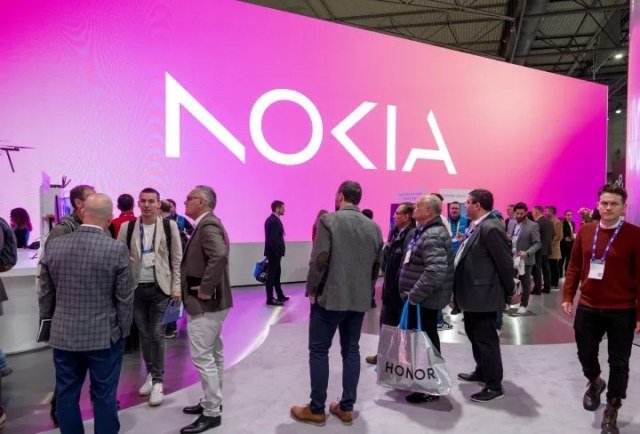
Elisa has completed live-network AI-RAN trials in Finland and is preparing for commercial-network validation in 2027, while Deutsche Telekom has demonstrated 10–15 percent improvements in 5G uplink throughput using AI-based radio signal processing.
Both initiatives combine Nokia’s 5G technology with NVIDIA accelerated computing, supporting the transition toward AI-native 6G infrastructure.
Elisa Demonstrates AI-RAN on Live 5G Advanced Network in Finland
Elisa has completed Europe’s first live-network AI-RAN trials, simultaneously running voice communication, mobile data and AI video analytics on shared computing infrastructure.
The demonstration took place in Helsinki using Elisa’s 5G Advanced network.
AI-RAN allows radio network functions and AI applications to operate on the same accelerated computing platform, potentially improving infrastructure utilization and creating capacity for enterprise AI services.
Elisa plans to validate the benefits of AI-RAN in its live commercial network during 2027.
Nokia and NVIDIA Technology Behind Elisa’s AI-RAN
Elisa’s deployment combines Nokia AI-RAN technology with NVIDIA accelerated computing to support mobile connectivity and AI inference on shared infrastructure.
The trial used Nokia’s AI-RAN solution, NVIDIA Aerial RAN Computer and NVIDIA RTX PRO 4500 Blackwell Server Edition GPUs.
It demonstrated three workloads simultaneously:
Voice over New Radio (VoNR) calls.
Mobile data connectivity over 5G Advanced.
AI-powered video analytics at the network edge.
Elisa is also deploying Dell PowerEdge servers equipped with NVIDIA RTX PRO 6000 Blackwell Server Edition GPUs at multiple network locations across Finland.
These installations will support distributed AI inference and future AI-RAN deployments.
The operator has not disclosed the number of servers, investment value or expected commercial revenue.
Elisa Targets Revenue From Distributed AI Services
Elisa’s AI-RAN strategy extends beyond improving mobile connectivity.
By placing AI computing closer to users and enterprises, the operator aims to support applications requiring low latency and local data processing.
Potential services include real-time voice AI, intelligent video surveillance, industrial automation and autonomous network operations.
For example, AI-powered cameras could analyze safety risks locally instead of transmitting all video footage to centralized data centers.
Voice AI services such as Moontalk AIRI could also benefit from distributed inference infrastructure.
For Elisa, the commercial opportunity is to combine 5G connectivity with AI computing services using shared network resources.
However, commercial service pricing, enterprise contracts and revenue targets have not been disclosed.
Deutsche Telekom Achieves 10–15% Improvement in 5G Uplink Throughput
In a separate development, Deutsche Telekom, Nokia and NVIDIA demonstrated 10–15 percent improvements in 5G uplink throughput using AI-based channel estimation.
The measurements were conducted in Deutsche Telekom’s laboratory in Bonn, Germany, and Nokia’s laboratory in Oulu, Finland.
Deutsche Telekom is testing NVIDIA AI-RAN solutions with Nokia’s commercial 5G software to improve uplink performance through real-time AI-based signal processing.
The technology targets the Physical Uplink Shared Channel (PUSCH), which carries user data from mobile devices to the network.
Conventional channel estimation uses signal-processing algorithms to account for interference, reflections and changing radio conditions.
The new approach uses AI to estimate the radio channel in real time, improving the network’s ability to process uplink signals.
The companies reported larger performance gains under more complex radio conditions.
What Does a 15% Uplink Improvement Mean?
| Illustrative baseline speed | With 10% improvement | With 15% improvement |
| 20 Mbps | 22 Mbps | 23 Mbps |
| 50 Mbps | 55 Mbps | 57.5 Mbps |
| 100 Mbps | 110 Mbps | 115 Mbps |
| 200 Mbps | 220 Mbps | 230 Mbps |
These figures illustrate the reported percentage improvements. They are not measured commercial-network speeds.
Higher uplink throughput could benefit video uploads, connected cameras, enterprise applications and industrial IoT systems.
However, the reported results remain laboratory measurements. Commercial performance will depend on spectrum availability, devices, network configuration and radio conditions.
Deutsche Telekom Plans AI-RAN Field Trials
The project supports Deutsche Telekom’s AI and network innovation strategy, focusing on intelligent radio processing, network automation and future 6G capabilities.
Following successful laboratory validation, Deutsche Telekom, Nokia and NVIDIA plan to test AI-based channel estimation under real-world network conditions.
The next phase will determine whether the 10–15 percent uplink improvements can be reproduced on commercial systems.
Unlike AI tools used primarily for network monitoring, AI-based channel estimation becomes part of the radio receiver’s real-time signal-processing chain.
This could help telecom operators improve performance from existing spectrum and radio infrastructure without proportionate increases in network equipment investment.
However, the companies have not quantified potential capex savings, operating cost reductions or commercial deployment dates for the technology.
Deutsche Telekom Expands Distributed AI Infrastructure for Robotics
Deutsche Telekom is also collaborating with NVIDIA, Agile Robots, Nokia and Supermicro to develop distributed infrastructure for physical AI applications.
The project explores how AI workloads can be distributed between centralized cloud infrastructure, telecom network-edge computing and devices.
An initial laboratory proof of concept involves NVIDIA and Agile Robots.
Deutsche Telekom is using an NVIDIA Aerial RAN Computer MGX 4U system to provide AI computing at the network edge.
The system hosts parts of Agile Robots’ physical AI application, demonstrating how telecom infrastructure could support robotics and industrial automation.
This initiative extends Deutsche Telekom’s AI strategy beyond conventional connectivity and radio optimization.
Elisa vs Deutsche Telekom: AI-RAN Deployment Comparison
| Parameter | Elisa | Deutsche Telekom |
| Primary objective | Shared 5G and AI computing | Improved 5G uplink performance |
| Deployment stage | Live-network demonstration | Laboratory validation |
| Reported result | Simultaneous voice, data and video AI | 10–15% uplink throughput improvement |
| Technology partners | Nokia, NVIDIA, Dell | Nokia, NVIDIA |
| NVIDIA platform | Aerial RAN Computer, Blackwell GPUs | Aerial RAN Computer |
| Next milestone | Commercial-network validation in 2027 | Commercial-system field trial |
| Revenue opportunity | Edge AI and enterprise inference | Network efficiency and future AI services |
Why AI-RAN Matters for Telecom Operators and 6G
The two initiatives demonstrate complementary AI-RAN business models.
Elisa is advancing AI-on-RAN, where telecom infrastructure supports AI applications alongside mobile network workloads.
Deutsche Telekom is demonstrating AI-for-RAN, where artificial intelligence directly improves radio network performance.
Both approaches could become important as operators prepare for AI-native 6G networks.
Shared computing infrastructure may eventually allow telecom operators to generate additional revenue from enterprise AI services while improving network efficiency.
However, important commercial questions remain, including GPU investment requirements, energy consumption, infrastructure utilization and return on capital.
Elisa’s live-network demonstration and Deutsche Telekom’s double-digit uplink performance gains show that AI-RAN is progressing beyond research.
The next milestone is proving whether these technical achievements can deliver scalable commercial deployments, lower network costs and new revenue streams for telecom operators.
BABURAJAN KIZHAKEDATH