
U.S. memory chip giant Micron Technology has announced a $24-billion investment to build an advanced wafer fabrication facility in Singapore, aiming to address a global shortage of memory chips intensified by the rapid growth of AI and data-driven applications. The facility, spanning 700,000 square feet of cleanroom space, is expected to begin wafer production in the second half of 2028.
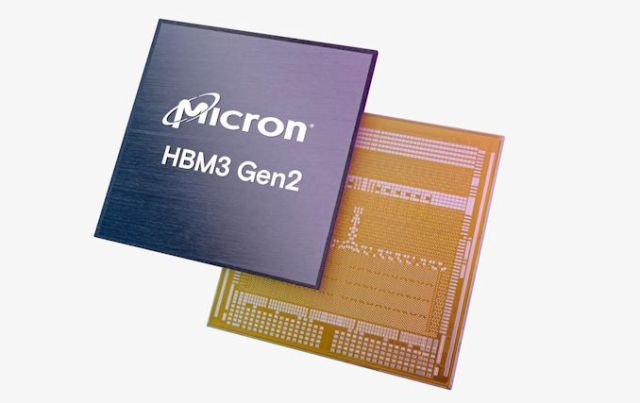
This expansion reinforces Singapore’s role as a key hub for Micron’s memory operations, where 98 percent of the company’s flash memory chips are currently produced. It complements an existing $7-billion high-bandwidth memory (HBM) packaging plant, slated to start operations in 2027 to support AI chip production.
Micron’s latest investment comes amid persistent memory supply constraints, which analysts predict may continue through late 2027. In response, major industry players, including Samsung and SK Hynix, are accelerating their production timelines, signaling an urgent push to meet growing market demand, Reuters news report said.
The new Singapore fab is projected to generate around 1,600 jobs, adding to the 1,400 positions created by the HBM packaging facility, bringing Micron’s total expansion-related workforce to 3,000. Roles will focus on fab engineering, operations, and the integration of AI, robotics, and smart manufacturing technologies.
“Micron’s leadership in advanced memory and storage is enabling the AI-driven transformation reshaping the global economy,” said Manish Bhatia, executive vice president of global operations at Micron.
The facility will align with Micron’s sustainability goals, incorporating LEED standards, greenhouse gas abatement, water recycling, and waste circularity. It also builds on Singapore’s recognition as a World Economic Forum Sustainability Lighthouse and recipient of the Energy Efficiency National Partnership (EENP) Award.
With the new fab, Micron aims to meet rising demand for NAND memory and reinforce Singapore’s position as a critical node in the global semiconductor supply chain, supporting the ongoing AI revolution and the broader semiconductor ecosystem.
BABURAJAN KIZHAKEDATH