
In a bid to address the impending workforce gap within the U.S. semiconductor industry, Intel has detailed its strategic initiatives aimed at bolstering the workforce and fostering innovation.
The Semiconductor Industry Association (SIA) recently published a report projecting a substantial growth of 33 percent in the workforce needed for the semiconductor industry by 2030, emphasizing the urgency of addressing the talent shortage.
Intel is proactively collaborating with local community colleges and implementing specific programs to meet the workforce needs of the semiconductor industry. Gabriela Cruz Thompson, Senior Director of University Research and Collaboration at Intel Labs, in a blog post highlighted the critical importance of closing this talent gap to ensure the success of both the U.S. economy and the semiconductor industry.
One of the pivotal efforts by Intel involves the establishment of educational programs, particularly focusing on technicians. Historically, Intel has relied on community college students to fill a significant portion of technician roles at fabs. However, the emphasis on technician training has diminished over the years, prompting Intel to invest in reinvigorating these programs.
The upcoming chip factories in Ohio are anticipated to play a significant role in Intel’s efforts to bridge the workforce gap. These facilities, also known as fabs, are slated to become operational in the next few years and are expected to create thousands of jobs, including 3,000 Intel positions and 7,000 construction jobs, supporting the local economy.
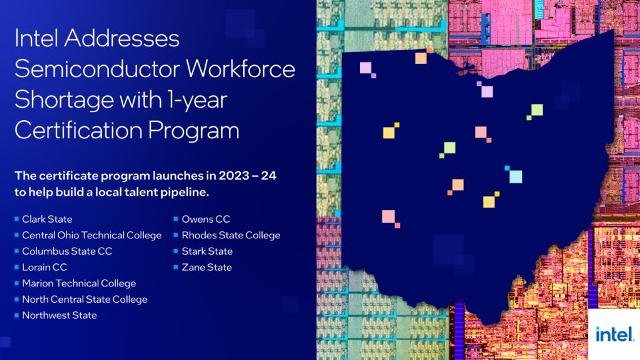
To enhance technician education and reduce barriers to entry, community colleges in Ohio, in collaboration with Intel, have developed the industry’s first stackable, shareable, and transferable one-year semiconductor technician certificate program. This program, launching in 2023-24, is designed to align with Intel’s requirements for entry-level technician positions and includes key courses like Introduction to Manufacturing, Semiconductor 101, and Vacuum Systems.
Moreover, Intel is collaborating with educational institutions and organizations like the National Science Foundation to ensure that the U.S. workforce is well-prepared for the evolving semiconductor manufacturing landscape. Through initiatives like Enhancing Engineering Technology and Advanced Semiconductor Manufacturing Technician Education (ETSTE) and Future of Semiconductors (FuSe), Intel is actively investing in creating a skilled workforce ready for the semiconductor industry’s next era.
Intel’s multifaceted approach involves not only technician certification programs but also collaborations with educational institutions to offer a range of certificates, modules, classes, and micro-credential programs, catering to students from various academic levels. Prospective entry-level semiconductor technicians and process engineers are encouraged to explore opportunities in Ohio and other Intel facilities across the United States.


