
Today’s telecom news includes announcements on Siyata Mobile, T-Mobile, Cellnex, Apple, Samsung, among others.
5G Push-to-Talk Revolution: T-Mobile Becomes First U.S. Carrier to Launch Siyata’s SD7 Ultra
Siyata Mobile announced that T-Mobile will become the first U.S. wireless provider to launch the SD7 Ultra 5G Push-to-Talk Handset, a rugged device designed for mission-critical and enterprise communications. The handset operates on T-Mobile’s T-Priority 5G network slice, delivering faster speeds, enhanced reliability, and prioritized connectivity for first responders and business users. Built with a radio-style design, the device combines traditional two-way radio functionality with nationwide 5G coverage. It includes a dedicated push-to-talk button, emergency SOS feature, integrated 20-MP camera, powerful front-facing speaker, and durable IP68 and MIL-STD-810H certification, enabling reliable communication in demanding environments such as public safety, transportation, and field services.
Telecom Tower Deals Set to Slow as Market Uncertainty Weighs on Industry
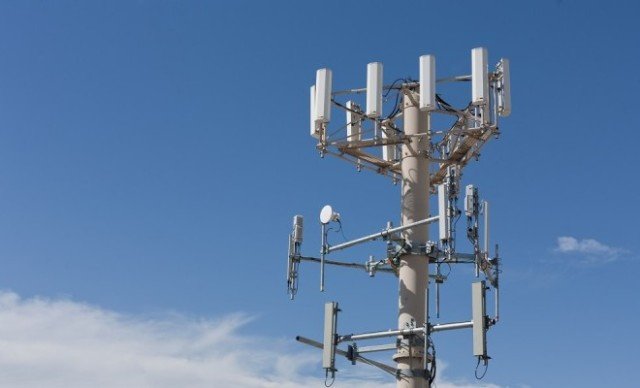
Spain-based telecom infrastructure giant Cellnex expects consolidation in the mobile tower sector to slow as volatile financial markets and higher interest rates reduce the pace of major mergers and acquisitions. CEO Marco Patuano said geopolitical tensions and economic uncertainty are making conditions less favorable for large deals, even though consolidation remains important for the industry’s long-term development. Europe’s largest tower operator also signaled it is open to selling selected assets, including its operations in Switzerland, if attractive offers emerge, as the company continues working to strengthen its finances while managing about €20 billion in debt.
India Unveils New Incentives to Supercharge Smartphone Manufacturing
India is preparing a fresh round of incentives to strengthen domestic mobile phone manufacturing, a move expected to benefit global tech giants such as Apple and Samsung Electronics. The initiative is expected to replace the current Production-Linked Incentive (PLI) scheme that is nearing its end and will likely link subsidies more closely to export performance and the use of locally manufactured components. The move reflects India’s strategy to further position itself as a major global smartphone manufacturing hub. In the 2024–25 fiscal year, the country produced nearly $60 billion worth of mobile phones, with exports reaching $21.7 billion.
SHAFANA FAZAL

