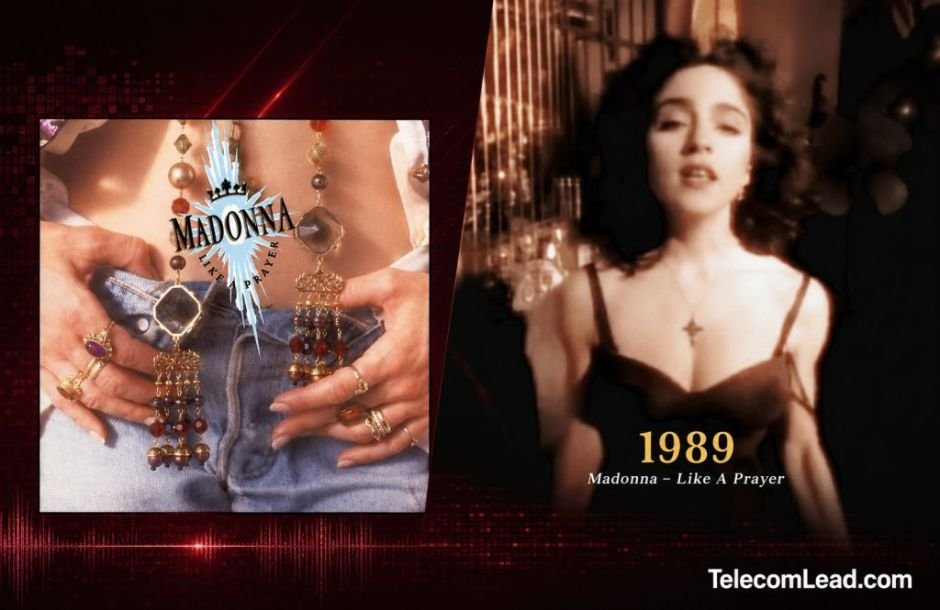
The Australian Recording Industry Association has excluded fully AI-generated music from the country’s official charts after controversy over a cover of Madonna’s 1989 hit “Like a Prayer.”
The ARIA rules require eligible recordings to be “substantially human made,” comply with copyright law and show no signs of streaming or chart manipulation. Songs that use generative AI only in a supporting role can continue to qualify.
The ARIA policy takes effect with the chart dated August 31, 2026, which will be published on August 28. It applies to the ARIA Singles, Albums and specialist charts and also affects eligibility for the ARIA Awards.
The decision follows the success of Australian DJ Josh Fawaz’s “Like a Prayer” cover, which became the most-played track on Australian radio and reached No. 4 on two ARIA charts in July, Reuters news report said.
What Music Is Banned from the ARIA Charts?
ARIA has created three categories for determining whether recordings involving artificial intelligence are eligible.
AI-generated music is excluded. This category covers recordings in which generative AI creates all or the primary portion of the creative elements. An AI-generated lead vocal, key instrumental performance or complete prompt-generated track makes a recording ineligible.
AI-assisted music remains eligible. The song must be written and primarily performed by people, including the lead vocal and principal instruments. AI can contribute minor components such as backing vocals or secondary instrumentation.
AI used in production also remains eligible. Permitted applications include AI mastering, stem separation, drum machines, reverb, short background samples and instrument patches that a human musician subsequently performs.
Human mixing, editing, equalisation or mastering will not convert an otherwise AI-generated track into a human recording.
Three Tests Determine Chart Eligibility
A recording involving generative AI must satisfy three conditions to remain on the ARIA Charts:
Human creativity and performance must be the primary drivers.
The recording must not raise streaming or chart-manipulation concerns.
Its creation and distribution must comply with copyright and related laws.
ARIA has not yet adopted a fourth global test requiring the AI service used to be formally authorised by music rights holders. The association said licensing arrangements between record companies and generative AI developers were still evolving.
The Australian criteria follow global principles published by the International Federation of the Phonographic Industry on July 30, 2026.
Every Release Must Declare Its Use of AI
Artists, record labels and distributors submitting music to ARIA must now answer a mandatory question about generative AI.
ARIA will initially rely on this declaration. If it receives a credible complaint, it can request further information from the rights holder before deciding whether the recording is eligible.
Artists can respond with supporting evidence and challenge an exclusion through the ARIA Chart and Marketing Committee. A disputed decision can subsequently be referred to the ARIA Board.
ARIA will not publish a public database naming songs it has investigated or excluded. Rights holders will be notified privately.
The association acknowledged that distinguishing between AI-generated and AI-assisted recordings will become more difficult as generative tools improve.
ARIA Can Correct Charts and Revoke Awards
The new criteria are not retroactive for charts published before August 31. However, if a recording appearing on a later chart is subsequently found to be ineligible, ARIA can correct the published ranking.
The association can also adjust other artists’ positions, withdraw sales or streaming accreditations and revoke an ARIA No. 1 Award. It may ask a recipient to return the physical award.
An AI-generated track will also be ineligible for the annual ARIA Awards. Albums will be evaluated track by track, with excluded tracks not counting towards the release’s chart performance.
Artists can replace AI-generated lead vocals or instruments with human performances and submit the result as a new recording. The replacement will not inherit the earlier version’s chart history. ARIA
Madonna Cover Reportedly Attracted 48 Million Streams
Questions emerged after producers alleged that generative AI had been used in Josh Fawaz’s cover of “Like a Prayer” without being disclosed initially.
Fawaz subsequently said he had used AI as a tool but maintained that he had produced music before the arrival of generative AI.
The recording reportedly used AI in parts of its vocals and drums and accumulated more than 48 million Spotify streams, according to Australian media reports. Its rapid success allowed it to top radio airplay and reach No. 4 on two ARIA rankings.
ARIA has not publicly announced whether the recording will be removed under the new policy. Its rule against commenting on individual assessments means the rights holder would be informed privately.
The controversy is significant because a lead vocal generated using AI automatically places a track in ARIA’s ineligible category, even if human producers arranged, mixed and marketed the recording.
AI Music Can Still Earn Revenue and Radio Airplay
The ARIA policy does not prohibit streaming services from distributing fully AI-generated music. It also does not determine royalty payments or prevent radio stations from broadcasting an excluded recording.
AI-generated tracks can therefore continue accumulating streams, attracting audiences and generating revenue on commercial platforms. They will simply not receive official ARIA chart recognition or qualify for ARIA Awards.
ARIA Charts are released every Friday through platforms including Spotify and Apple Music. Positions continue to be determined by verified streams and sales, but the universe of eligible recordings will now be limited to substantially human-created music.
ARIA said its charts were intended to measure the consumption of human music rather than every form of audio gaining popularity online.
Australian Music Market Reaches A$727 Million
Australia’s recorded-music wholesale revenue increased 1.4 percent to A$727 million in 2025, marking the industry’s seventh consecutive year of growth.
Digital formats generated A$659 million, representing 90.7 percent of market revenue. This reliance on digital consumption explains why chart eligibility and streaming integrity have become commercially important.
Subscription streaming produced A$517 million, equivalent to 71 percent of the Australian market. Advertising-supported audio and video streaming contributed another A$130 million, while digital download revenue fell to A$11.6 million.
Physical music revenue increased 11 percent to A$67.9 million. CD sales rose 29.6 percent to A$21 million, supported by more than 1.5 million discs, while vinyl revenue increased 4.1 percent to A$46.3 million from more than 1.2 million units.
Vinyl represented 68.2 percent of Australia’s physical recorded-music revenue. ARIA market data
Streaming Dominance Raises AI Competition Concerns
Subscription, advertising-supported and video streaming collectively generated approximately A$647 million, or nearly 89 percent of Australia’s total recorded-music revenue.
AI-generated tracks can be produced rapidly and at a fraction of the cost of recordings involving professional singers, instrumentalists, songwriters and studios. Large volumes of such music could compete with human artists for playlist positions, recommendation traffic and royalty pools.
An estimated 120,000 tracks were already being uploaded to streaming services globally each day before the latest acceleration in generative AI music. The growing supply makes it increasingly difficult for Australian artists to gain visibility.
Research cited by Creative Australia found that only 8 percent of the 10,000 most-streamed artists in Australia during 2024 were Australian. Around 80 percent of Spotify royalties received by Australian artists came from overseas audiences, illustrating both the export opportunity and weak domestic visibility.
ARIA argues that allowing fully AI-generated recordings to occupy official chart positions would increase this competitive pressure.
Global Music Streaming Revenue Exceeds $20 Billion
Worldwide recorded-music streaming revenue exceeded $20 billion for the first time in 2024, reaching $20.4 billion, according to IFPI.
Streaming represented 69 percent of global recorded-music revenue. The size of the market has encouraged AI developers to build products capable of generating complete songs from text prompts within minutes.
The commercial stakes have prompted major record companies to pursue licensing agreements with AI music platforms. Labels want compensation when their recordings are used to train models and controls preventing systems from imitating identifiable artists without authorisation.
ARIA supports a global labelling system that separates “AI-Generated” music from “AI-Assisted” recordings, allowing listeners and commercial partners to understand how a track was created.
Australian Government Promises Artist Protection
Musicians and producers are pressing the Australian government to protect creative works from being used to train AI models without consent, credit or payment.
Prime Minister Anthony Albanese has promised measures ensuring that Australian artists retain ownership of their work. The policy debate covers copyright exemptions, AI training disclosures, licensing and compensation.
ARIA has opposed changes that would weaken Australian copyright protections to benefit international AI companies. It argues that AI innovation should be based on consent, transparency and fair remuneration.
The new chart rules do not resolve those copyright questions. However, they create an immediate commercial distinction between AI tools assisting musicians and systems replacing the principal human performance.
Australia’s decision could influence other national charts and music awards. If similar policies spread, AI-generated songs may remain widely available on streaming services while being excluded from the industry rankings, awards and accreditations that traditionally signal commercial success.
BABURAJAN KIZHAKEDATH