Today’s telecom news includes announcements on Huawei, ZTE, Nokia, Ericsson, Samsung, Ethio Telecom, among others.
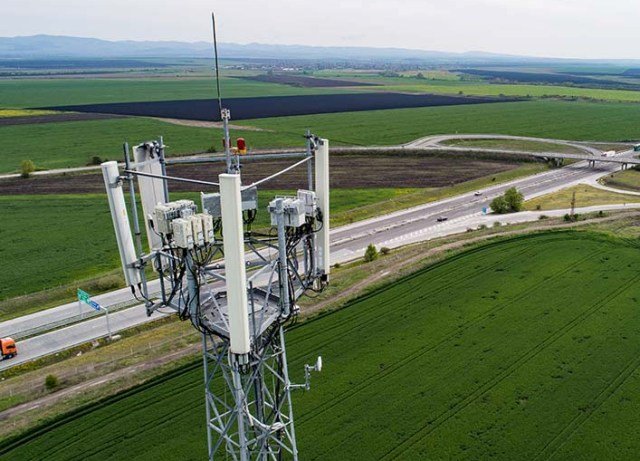
Germany Moves to Restrict Chinese Telecom Equipment in 5G Networks
Germany is preparing restrictions on Chinese telecommunications equipment in its mobile networks, potentially excluding Huawei and ZTE from its 5G infrastructure over national security concerns. The proposed measures are intended to strengthen the protection of critical telecommunications infrastructure and reduce dependence on Chinese technology suppliers. Germany’s Federal Network Agency has also been considering stricter security requirements for sensitive 5G network components. Potential alternative equipment suppliers include European vendors Nokia and Ericsson, alongside South Korea’s Samsung. The move reflects broader European efforts to diversify telecommunications supply chains and strengthen network security. The restrictions could affect equipment replacement plans and future infrastructure investments by German mobile network operators.
ZTE and Ethio Telecom Deploy Ethiopia’s First Pre-Commercial AI-Powered RAN Solution
ZTE and Ethio Telecom have completed Ethiopia’s first pre-commercial Artificial Intelligence Radio Access Network (AIR RAN) deployment, introducing AI-powered optimisation into the country’s mobile infrastructure. The solution uses ZTE’s AIREngine intelligent computing engine and AI-driven beam scheduling to improve radio resource allocation and network performance. According to the companies, the deployment delivered an 11 percent increase in 4G network capacity and a 40 percent improvement in peak-hour user throughput compared with the traditional solution. Built on Frequency Division Duplex Massive MIMO technology, AIR RAN enables operators to improve network efficiency and accommodate increasing data traffic without relying entirely on additional infrastructure. The deployment supports Ethio Telecom’s Next Horizon: Digital & Beyond 2028 strategy.
VodafoneThree Deploys Ericsson AIR 3266 Massive MIMO Radio, Targets 30 Percent Energy Savings
VodafoneThree announced on November 4 that it had become the first operator to deploy Ericsson’s AIR 3266 Massive MIMO radio in a commercial mobile network. The first London site became operational in October. The 16-kilogram radio supports up to 400 MHz bandwidth, delivers at least 30 percent energy savings and has up to 50 percent lower embodied carbon than existing solutions. Its dedicated neural accelerators provide tenfold higher AI inference capability. VodafoneThree also plans to test Ericsson’s AI-native scheduler, which has demonstrated up to 20 percent higher downlink throughput under congestion. Nationwide scheduler deployment is targeted for 2027, subject to validation. The deployment supports VodafoneThree’s existing SEK12.5 billion Ericsson modernization agreement covering more than 10,000 sites.