
US telecom operator AT&T is accelerating one of the telecom industry’s largest network modernization programs, combining 5G, fiber broadband, Open RAN, Cloud RAN, and AI-powered automation into a cloud-native connectivity platform designed to support long-term digital infrastructure growth.
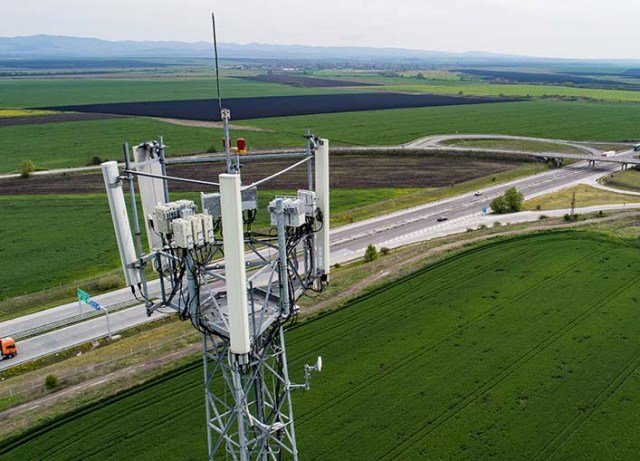
Backed by quarterly revenue exceeding $30 billion and annual capital expenditure of $22-25 billion, AT&T is transforming from a traditional telecom operator into a software-defined infrastructure company focused on scalable connectivity, enterprise services, and intelligent network automation.
The company continues to maintain strong financial scale through its wireless business, generating approximately $16-17 billion in wireless service revenue every quarter.
AT&T’s strategy increasingly emphasizes high-value connectivity services, fiber broadband expansion, enterprise mobility, and digital infrastructure monetization instead of legacy telecom operations. The operator’s postpaid ARPU remains stable at approximately $56+, supported by premium unlimited plans, bundled broadband offerings, and enterprise-focused services.
Under the leadership of John Stankey, AT&T has prioritized convergence between wireless and fiber networks, while accelerating adoption of cloud-native and software-defined networking technologies. The company’s modernization program is focused on nationwide radio access network densification, Open RAN migration, Cloud RAN deployment, and AI-driven automation across wireless and wireline infrastructure.
AT&T’s infrastructure footprint continues to expand aggressively. The company has now passed more than 28 million fiber locations across the United States and continues to add over 200,000 fiber subscribers per quarter. Fiber broadband remains one of AT&T’s primary long-term growth engines, supporting higher customer retention, premium service bundles, and enterprise connectivity opportunities.
The operator has also strengthened its public safety communications leadership through FirstNet, which now supports approximately 6-7 million public safety users nationwide. FirstNet remains a major differentiator for AT&T, delivering prioritized and resilient connectivity services for emergency responders and government agencies.
A major component of AT&T’s network transformation is its long-term partnership with Ericsson, valued at approximately $14 billion. Ericsson serves as a key technology partner supporting nationwide radio modernization and advanced network deployment initiatives.
The collaboration includes Ericsson Radio System upgrades, Open RAN and Cloud RAN deployment, Massive MIMO technology integration, AI-based network optimization through the Ericsson Intelligent Automation Platform, and energy-efficient radio systems capable of reducing power consumption by up to 20 percent, Ericsson said in a case study.
The partnership is helping AT&T accelerate deployment of programmable and interoperable network infrastructure while reducing operational complexity and improving sustainability metrics. Open RAN architecture enables greater multi-vendor flexibility, while Cloud RAN virtualization improves scalability, automation, and network agility.
AT&T is also integrating AI extensively into network operations. The company is deploying Service Management and Orchestration platforms, intelligent rApps, Digital Twin technologies, and machine learning-based optimization systems to automate network planning, traffic management, and performance monitoring. These AI-driven systems are designed to improve latency, enhance reliability, reduce manual operational workloads, and optimize energy efficiency across the network.
Consumers are expected to benefit directly from the transformation through faster 5G speeds, improved network reliability, lower latency, stronger fiber broadband performance, and more consistent connectivity experiences. AI-powered optimization tools are also helping improve service quality across mobile and broadband networks while supporting expanding enterprise and IoT connectivity demands.
AT&T’s capital expenditure strategy highlights its long-term commitment to digital infrastructure leadership. Annual investments of $22-25 billion are primarily directed toward 5G densification, fiber expansion, Open RAN migration, AI-enabled automation systems, and software-defined network infrastructure. This investment model positions the operator among the telecom industry’s largest infrastructure investors globally.
The company’s broader strategic direction centers on building a fully programmable telecom platform capable of supporting enterprise cloud services, edge computing, IoT connectivity, and next-generation digital applications. AT&T’s cloud-native transformation strategy aims to virtualize network functions, create interoperable vendor-neutral systems, and enable real-time AI-based network management across its infrastructure ecosystem.
With more than $30 billion in quarterly revenue, rapidly expanding fiber infrastructure, millions of FirstNet users, and large-scale AI-driven network modernization initiatives, AT&T is positioning itself as a next-generation digital infrastructure leader. Its ongoing investments in Open RAN, Cloud RAN, automation, and fiber broadband are reshaping the company into a scalable, cloud-first connectivity platform focused on performance, enterprise growth, operational efficiency, and long-term sustainability.
SHAFANA FAZAL