
SoftBank has unveiled a major step toward energy-efficient 6G networks through the development and field testing of a new “Functional Beam Shaping Lens Antenna,” designed to significantly reduce power consumption and simplify next-generation mobile infrastructure.
Breakthrough in Energy-Efficient 6G Infrastructure
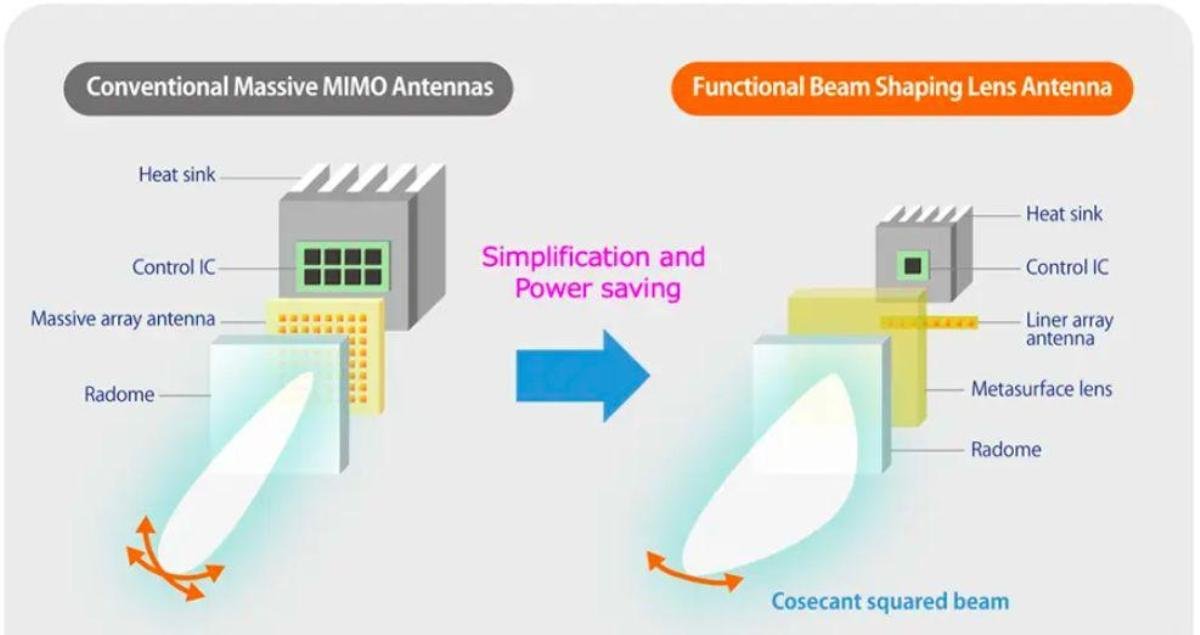
The newly developed antenna, created in collaboration with AGC Inc., introduces a radically simplified architecture for 6G base stations. By leveraging metasurface lens technology, the solution reduces the number of antenna elements required to nearly one-eighth compared to conventional Massive MIMO systems.
This streamlined design directly impacts energy efficiency. Fewer antenna elements and control components mean lower power consumption and reduced heat generation, addressing one of the biggest challenges in scaling future 6G networks.
Lower Power Consumption, Smaller Network Footprint
The innovation not only cuts energy usage but also enables more compact and lightweight base station equipment. With reduced need for cooling systems such as large heat sinks, telecom operators can lower operational costs while improving deployment flexibility.
These improvements are critical as mobile networks face surging data traffic driven by AI, cloud computing, and connected devices. Traditional infrastructure scaling often leads to higher energy demands, making efficiency-focused innovations essential for sustainable growth.
Field Tests Validate Real-World Performance
SoftBank’s outdoor field trials confirmed that the new antenna delivers communication performance comparable to existing Massive MIMO systems while consuming significantly less energy.
This balance between performance and efficiency highlights the feasibility of deploying greener 6G infrastructure without compromising network quality.
Energy Efficiency at the Core of 6G Vision
Energy optimization is a central pillar of 6G development. SoftBank’s broader research emphasizes that future networks must combine ultra-high speed, low latency, and massive connectivity with improved energy efficiency and sustainability.
The company is already integrating AI-driven network management to reduce power consumption in existing networks, including dynamic base station sleep modes that can save millions of kWh annually.
Toward Sustainable, AI-Native 6G Networks
The new antenna technology aligns with the industry’s shift toward AI-native, software-defined networks that optimize resource allocation and energy usage in real time. Emerging AI-RAN architectures are expected to further enhance efficiency by intelligently managing both computing and radio resources.
Conclusion
SoftBank’s latest 6G innovation demonstrates how energy efficiency is becoming a defining factor in next-generation connectivity. By reducing hardware complexity and power consumption while maintaining high performance, the company is paving the way for scalable, sustainable 6G networks that can support the data-intensive demands of the future digital economy.
SHAFANA FAZAL