Today’s telecom news includes announcements on MSI, NVIDIA, MWC 2026, Huawei, Rockfish Data, Snowflake, among others.
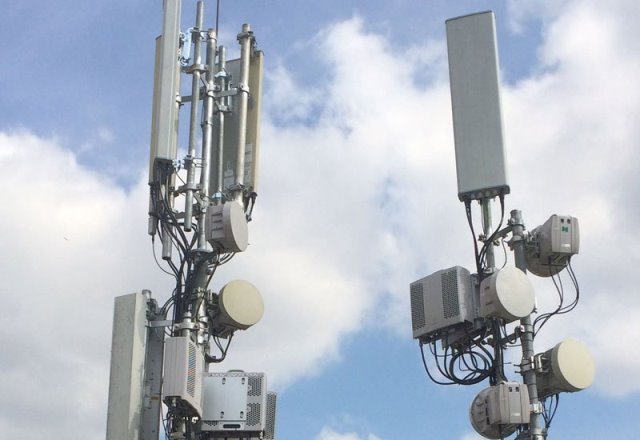
AI Meets 5G: MSI and NVIDIA Power the Next Wave of Intelligent Networks at MWC 2026
MSI has introduced a scalable AI-RAN (Radio Access Network) solution integrated with AI technologies from NVIDIA at Mobile World Congress 2026. The unified AI-vRAN platform supports O-RAN, 5G private networks and virtualized RAN, enabling telecom operators to embed AI directly into core network operations. Built on GPU-accelerated servers, the system dynamically allocates computing resources between 5G processing and AI workloads, improving efficiency and flexibility.
Huawei Unveils Intelligent Core Network Breakthrough at MWC 2026
At MWC Barcelona 2026, Huawei introduced its ICNMaster MDAF solution to help telecom core networks advance toward Autonomous Networks Level-4 (AN L4). As network complexity grows with 5G expansion and digital services, traditional operations models are proving insufficient. In 2025, industry standards for AN L4 were established, with 18 operators announcing deployment plans and six achieving TM Forum stability certification. Huawei’s solution leverages a hybrid Mixture of Models (MoM) architecture and intelligent agents to enable predictive maintenance, automated optimization, and faster fault resolution. Already deployed by 14 operators, the platform enhances operational efficiency, reduces downtime, and strengthens overall network stability.
AI-Powered Networks Get a Privacy Boost with Rockfish–Snowflake Integration
Rockfish Data has integrated with Snowflake to accelerate autonomous network operations through privacy-safe synthetic data. The collaboration enables telecom operators and network technology providers to generate realistic synthetic network telemetry and observability data within Snowflake’s AI Data Cloud environment, allowing teams to securely build, test and validate AI models, analytics platforms and automation workflows including AI agents without exposing sensitive customer information. By simulating rare and complex network scenarios, the solution enhances model accuracy, strengthens operational resilience, and supports faster deployment of AI-driven automation across modern telecom networks.
SHAFANA FAZAL