
Turkcell, Turkiye’s leading digital operator, is accelerating its transformation into an AI-driven telecom leader through the deployment of Nokia’s AI-powered Fixed Network Analytics.
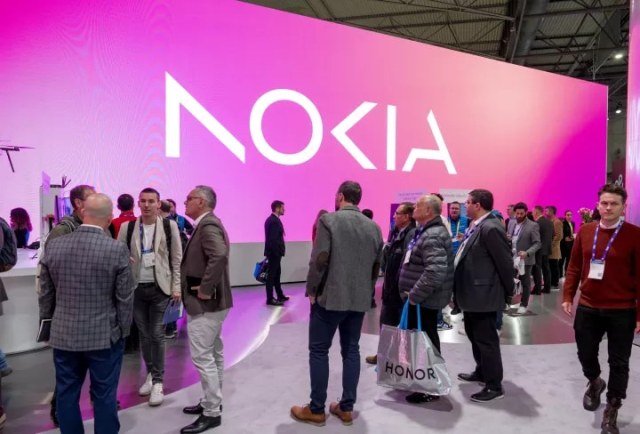
The initiative enhanced fixed broadband service quality for 43.9 million subscribers, while strengthening network intelligence across millions of connected devices. Turkcell reported TRY 220.3 billion revenue (FY2025) and continues to invest heavily in infrastructure with TRY 89.96 billion Capex, reinforcing its long-term strategy of building a high-performance digital connectivity ecosystem.
Operator Achievement: Scaling AI-Driven Broadband Intelligence Across National Network
Turkcell’s key achievement lies in shifting from traditional reactive network operations to a predictive, AI-enabled broadband management model. With Nokia’s analytics platform integrated into its fixed network environment, Turkcell now processes real-time performance insights across large-scale broadband infrastructure supporting millions of users.
Key operational outcomes include enhanced visibility across fixed broadband and access networks, predictive identification of service degradation before customer impact, improved operational efficiency across large-scale network environments, and support for 43.9 million total subscribers, including mobile and fixed users. This transformation represents a major step toward autonomous network operations in Turkiye’s telecom sector, Nokia said in a case study.
Consumer Benefits: Improved Broadband Quality and Seamless Digital Experience
For customers, Turkcell’s AI-powered transformation directly improves home connectivity experience. The integration of Nokia’s analytics enables faster detection and resolution of network issues, resulting in a more stable and reliable broadband service.
Consumer-level benefits include more consistent high-speed broadband performance, reduced downtime and service interruptions, faster issue resolution through predictive maintenance, and improved Quality of Experience (QoE) for streaming, gaming, and remote work. With increasing data consumption per user and rising demand for digital services, Turkcell’s network intelligence upgrade ensures better performance for both residential and enterprise customers.
Innovation in Technology Deployment: AI, Analytics, and Cloud-Native Network Intelligence
At the core of Turkcell’s transformation is Nokia’s AI-powered Fixed Network Analytics solution, which enables real-time monitoring and predictive insights across broadband infrastructure. Key technology innovations include AI/ML-based anomaly detection across broadband networks, real-time analytics for millions of connected devices, cloud-native architecture for scalable network intelligence, and end-to-end visibility from core network to home connectivity. This deployment supports Turkcell’s broader transition into an AI-native telecom operator, where automation and data-driven decision-making replace manual network troubleshooting.
Technology Team: Leadership Driving Network Modernization
Turkcell’s technology transformation is led by its engineering leadership, headed by Vehbi Cagrı Gungor – Chief Technology Officer (CTO), Turkcell. He oversees national network architecture strategy, fiber broadband expansion and modernization, AI and automation integration into network operations, and core and fixed network performance optimization.
Supporting him is a multi-layer engineering organization covering mobile and fixed network planning teams, core network and data center operations, AI and digital transformation units, and cybersecurity and network resilience teams. This structure enables Turkcell to manage one of the largest telecom infrastructures in the region while driving continuous innovation.
Strategy: Premiumization, Digital Expansion, and Infrastructure Investment
Turkcell’s strategy focuses on long-term value creation through three core pillars. The first is revenue and ARPU growth strategy, where mobile ARPU stands at 348 TRY (FY2025) and fixed broadband ARPU is approximately 475 TRY, supported by a focus on premium postpaid and high-value data customers. The second pillar is subscriber scale and quality focus, with 43.9 million total subscribers, strong postpaid growth improving revenue stability, and reduced churn through better customer experience. The third pillar is heavy infrastructure investment, with CAPEX of TRY 89.96 billion (FY2025) and CAPEX intensity of about 22.6 percent of revenue, focused on fiber expansion, 5G readiness, and cloud infrastructure. This strategy positions Turkcell as both a connectivity leader and a digital infrastructure provider.
Vendor Ecosystem: Nokia and Global Technology Partnerships
Turkcell collaborates with global telecom vendors to build its next-generation network ecosystem including Nokia for AI-powered broadband analytics, fixed network intelligence, and RAN solutions, Ericsson for radio access network modernization, Cisco for IP core and enterprise networking, Huawei for selected legacy infrastructure deployments, and Ciena for optical transport and backbone capacity expansion. Among these, Nokia plays a critical role in enabling Turkcell’s AI-driven broadband optimization strategy, supporting real-time analytics across millions of devices.
Conclusion: Building a High-Performance AI-Native Telecom Network
Turkcell’s deployment of Nokia AI-powered analytics marks a major milestone in its evolution into a data-driven, AI-native telecom operator. With 43.9 million subscribers, TRY 220.3 billion revenue, and nearly TRY 90 billion Capex investment, the operator is scaling both infrastructure and intelligence simultaneously. By combining strong leadership, advanced analytics, and strategic vendor partnerships, Turkcell is redefining fixed broadband performance and positioning itself at the forefront of next-generation telecom innovation in Turkiye.
SHAFANA FAZAL

