
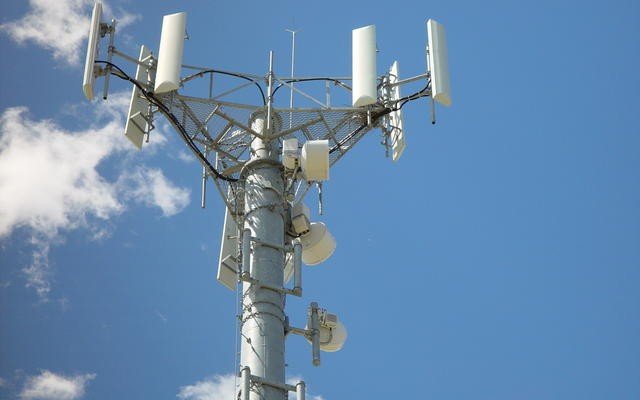
The year 2017 will see change and consolidation in the telecom towers industry, according to a top official of the Towers and Infrastructure Providers Association (TAIPA).
“The year 2017 will be the year of innovation, disruption and transformation. It will also witness mergers and acquisitions (M&As),” said Tilak Raj Dua, director general of TAIPA.
Asked where the towers industry was headed, Dua said that rural telephony will see a fillip as an investment of $2 billion from USOF (Universal Service Obligation Fund) would facilitate expansion into non-urban areas. “It will bridge the rural-urban digital divide,” he said.
Investments in telecom infrastructure will see a rise, and expansion of public WiFi will take place, Dua added.
He said the development of robust telecom infrastructure with the proliferation of in-building coverage, ICT, 4G and public WiFi will lead to accessibility to affordable high-speed internet for the common man. “This is likely to transform society into a knowledge-led and a connected one,” Dua said.
The expansion of 4G networks, affordability, penetration of smartphones and surge in data demands have opened up new opportunities for the telecom tower industry.
“In the next few years, growth in data demands will pave the way for infrastructure providers to establish and maintain in-building solutions, small cells, public Wi-Fi and fiberisation of backhaul networks,” Dua said.
All these opportunities for tower companies will play a significant role in reducing rental and energy costs besides many other advantages like savings in capital expenditure and faster rollouts.
Regarding the much talked-about issue of call drops, Dua said the Indian telecommunication sector has significantly picked up to curb call drop issues by adding around 1,500 BTS (base transceiver stations) per day.
The sector has installed additional 212,917 such stations across the country during the period from June 2016 to February 2017, taking the total number to 1.5 million, he said.
Further, to ensure quality of service, seamless connectivity and spectrum efficiency India would need around 100,000 towers in the north-east alone, in addition to the 450,000 in operation.
The tower roll-out is increasing at a rate of 3-5 percent year-on-year.
Talking about the Right of Way (RoW), Dua said the delay in providing RoW by the state is adversely affecting the development of telecom infrastructure and services.
The government unveiled the RoW policy in November 2016 which allows only a licensee to deploy telecom infrastructure.
“The policy needs to be extended to IP-1 companies too. IP-1s are formed with the sole mandate of servicing telecom operators and providing shared infrastructure. We are seeking clarification from DoT and persuading them for the same,” Dua said.
Infrastructure Providers category 1 (IP-1) policy was launched by DoT in 2000.
Aparajita Gupta / IANS


