
The U.S. House of Representatives approved a bill compelling ByteDance, the Chinese owner of popular short-video app TikTok, to divest its U.S. assets within approximately six months or confront a ban on the platform.

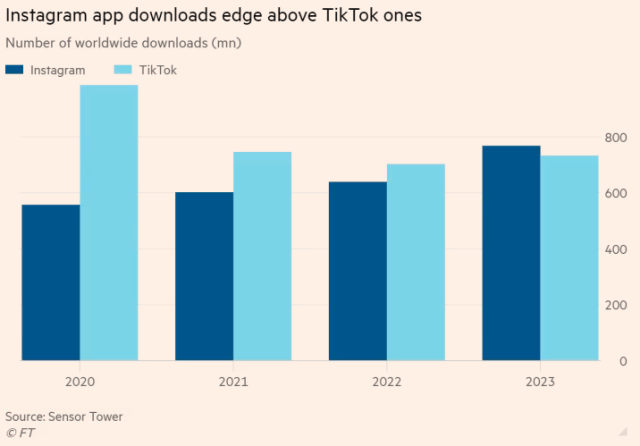
Instagram’s number of app downloads grew 20 percent in 2023 to 768 million, according to market intelligence firm Sensor Tower. Downloads of TikTok have edged up 4 percent to 733 million over the same period, Financial Times reported.
The bill, which passed with a vote of 352-65 and received bipartisan support, marks a significant step in addressing national security concerns regarding Chinese-owned apps. However, its future in the Senate remains uncertain, with some senators advocating for alternative approaches to regulating such apps.
Senate Majority Leader Chuck Schumer stated that the Senate would carefully review the legislation, reflecting the gravity of the issue at hand. TikTok’s fate has become a focal point in Washington, drawing attention from lawmakers inundated with calls from teenage users who oppose the proposed legislation.
 Reacting to the House’s decision, a TikTok spokesperson criticized the process, labeling it as secretive and emphasizing the importance of considering factual information and public opinion. The bill’s passage underscores the broader context of Washington’s response to national security apprehensions regarding China, extending from technology sectors to critical infrastructure, Reuters news report said.
Acknowledging the urgency of the matter, House Republican Steve Scalise emphasized the necessity for the Senate to swiftly address and pass the bill. Senate Commerce Committee chair Maria Cantwell, while recognizing the significance of the issue, deliberated on crafting legislation that could withstand legal scrutiny, suggesting potential avenues for future action.
The House’s vote occurred shortly after the bill’s proposal, following minimal public debate, indicating a swift response to longstanding concerns. TikTok CEO Shou Zi Chew’s scheduled visit to Capitol Hill coincided with the unfolding developments, illustrating heightened attention surrounding the app’s future.
Outside the Capitol, TikTok users voiced their concerns, with the company sponsoring their travel and accommodations. Among them, 23-year-old Mona Swain shared her apprehensions about the potential impact on creators’ livelihoods, highlighting the economic stakes at play.
Despite political support for the bill, uncertainties persist regarding its implementation and potential legal challenges. While President Joe Biden expressed willingness to sign the bill, White House national security adviser Jake Sullivan clarified that the objective is to address ownership concerns rather than outright ban TikTok.
The bill’s ramifications extend beyond TikTok, raising questions about the fate of other Chinese-owned apps like WeChat. Legal battles and constitutional concerns loom large, with potential challenges from advocacy groups asserting free speech and other rights.

