
SK Hynix has announced a $8 billion deal to purchase chipmaking equipment from ASML, reflecting the intensifying global race to scale AI-driven semiconductor production.
Largest-Ever EUV Equipment Order
The company will purchase 11.95 trillion won (approximately $7.97 billion) worth of extreme ultraviolet (EUV) lithography machines, marking the largest single publicly disclosed order for ASML’s equipment. These tools are critical for producing semiconductors used in artificial intelligence, high-performance computing, and next-generation memory chips.
The acquisition will be completed by the end of 2027 and is expected to include around 30 EUV scanners, significantly expanding SK Hynix’s manufacturing capacity.
Powering AI and High-Bandwidth Memory Growth
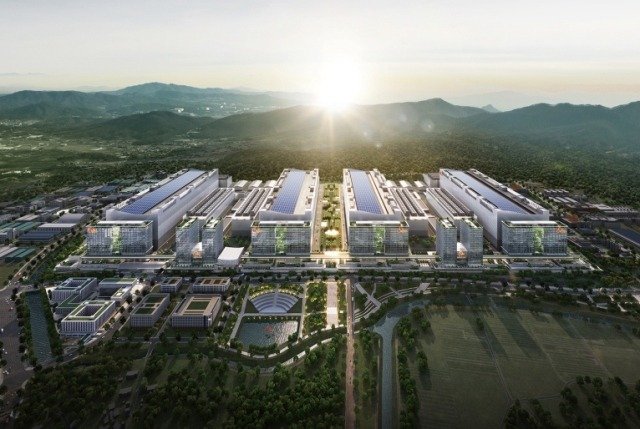
The investment is closely tied to surging demand for AI infrastructure, particularly high-bandwidth memory (HBM) and advanced DRAM chips used in data centers and AI workloads. Analysts say the new equipment will be deployed at SK Hynix’s facilities in Cheongju and its upcoming semiconductor cluster in Yongin, Reuters news report said.
By scaling production capabilities, SK Hynix aims to strengthen its leadership in memory chips, a critical component in AI servers and next-generation computing systems.
Accelerating Semiconductor Expansion Plans
The EUV purchase aligns with SK Hynix’s broader expansion strategy, including fast-tracking its Yongin fabrication plant, which is now expected to begin operations in early 2027. The company is investing heavily in infrastructure to meet growing global demand for advanced chips.
This move also highlights the increasing adoption of EUV technology in memory chip manufacturing, a process previously dominated by logic chipmakers.
SK Hynix reported its highest-ever financial performance in 2025, driven by demand for AI-focused memory products. SK Hynix generated revenue of 97.1467 trillion won, operating profit of 47.2063 trillion won with an operating margin of 49 percent, and net profit of 42.9479 trillion won with a net margin of 44 percent.
In the fourth quarter, SK Hynix’s revenue rose 34 percent to 32.8267 trillion won, while operating profit surged 68 percent to 19.1696 trillion won, lifting operating margin to 58 percent. The strong quarterly performance was supported by rising demand for high bandwidth memory and conventional server memory products.
In DRAM, SK Hynix advanced to mass production of its 1cnm process, representing the sixth generation of 10 nanometer class technology, and strengthened its server portfolio with products such as the 256GB DDR5 RDIMM.
In NAND, SK Hynix achieved record annual revenue as demand recovered in the second half, particularly for enterprise SSDs. The company also completed development of its 321 layer QLC NAND technology, further improving competitiveness.
SK Hynix has started mass production of HBM4 after completing industry first readiness and is expanding its Custom HBM offerings. It is also accelerating the transition to advanced DRAM processes and next generation products while expanding NAND capabilities.
Strategic Implications for the Chip Industry
The deal reinforces ASML’s position as the sole supplier of EUV lithography machines, which are essential for producing the world’s most advanced semiconductors. Rising demand from AI applications has driven a surge in orders, with chipmakers racing to secure limited supply.
The investment also intensifies competition among global memory players such as Samsung and Micron, as companies ramp up spending to capture AI-related growth opportunities.
SK Hynix’s $8 billion commitment reflects a broader industry trend of massive capital expenditure driven by AI demand. As companies build more powerful data centers and AI systems, advanced memory chips are becoming increasingly critical.
SHAFANA FAZAL


