Today’s telecom news includes announcements on Ericsson, LotusFlare, BSNL, among others.
Ericsson and LotusFlare Join Forces to Revolutionize Telecom Connectivity
Ericsson has taken a minority stake in LotusFlare, forming a strategic partnership to accelerate innovation and enhance customer-focused solutions in telecom. The investment supports LotusFlare’s cloud-native DNO Cloud platform and Nomad eSIM service, offering communication service providers (CSPs) advanced tools for network-API exposure, consent management, digital commerce, and scalable monetization. Together, Ericsson and LotusFlare will provide ready-to-use solution blueprints for network-API integration, enabling CSPs, enterprises, and developers to quickly launch new connectivity services, leverage 5G and AI capabilities, and improve customer experience.
BSNL Powers Ahead with 97,000 4G Sites Ready for 5G Upgrade
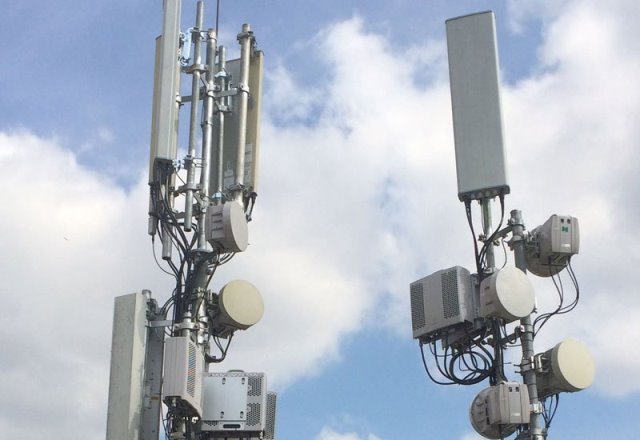
BSNL has installed 97,068 indigenous 4G sites across India, with 93,511 already active. The equipment is 5G‑upgradable, allowing BSNL to transition these towers to 5G within months. Alongside network expansion, BSNL is upgrading infrastructure by replacing old batteries, installing DG‑sets where needed, and using solar power at new towers to ensure reliability and energy efficiency. Financially, BSNL reported strong H1 FY26 revenue of ₹11,134 crore, targeting ₹27,500 crore for the full year.
India’s Digital Revolution: 6.3 Lakh Villages Now Connected!
India has expanded its digital infrastructure, covering 6,34,019 out of 6,44,131 villages with mobile connectivity, including 6,30,676 with 4G. The optical‑fibre network grew from 17.5 lakh km (2018) to 42.36 lakh km, and Base Transceiver Stations rose from 17.3 lakh to 31.4 lakh. Broadband subscriptions surged from 48 crore to 98 crores, while average monthly data use per subscriber increased from 8.32 GB to 25.24 GB. Average wireless tariffs dropped from ₹10.91/GB to ₹8.27. Government initiatives like Digital Bharat Nidhi and the updated BharatNet Programme, along with regulatory reforms such as spectrum changes and FDI liberalisation, are making telecom services more affordable, widespread, and sustainable across India.
Shafana Fazal