
Australia’s fixed-wireless access (FWA) market is entering a transformative phase as national operators ramp up investment in wireless-driven broadband. Once primarily a rural connectivity solution, FWA is now emerging as a mainstream alternative to fibre, driven by network upgrades, 5G deployment, and growing demand for flexible home internet services.
NBN Leading FWA Expansion with Strategic Upgrades
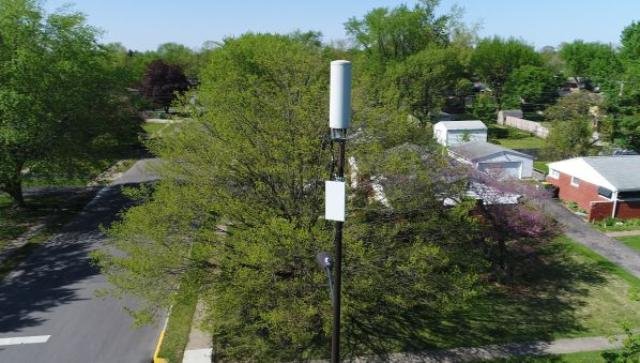
At the heart of this growth is NBN Co, the backbone of Australia’s fixed broadband ecosystem. Focused on serving regional and remote areas where fibre deployment is costly, NBN has modernized its fixed-wireless infrastructure through its Fixed Wireless and Satellite Upgrade Program. Completed in December 2024, the AUD 750 million initiative (AUD 480 million government funding and AUD 270 million from NBN) upgraded over 2,300 towers, expanding coverage to roughly 800,000 homes and businesses across 345,000 square kilometres.
The upgrades also enabled new wholesale speed tiers, including “Fixed Wireless Home Fast” (200–250 Mbps) and “Fixed Wireless Superfast” (up to 400 Mbps), while baseline Fixed Wireless Plus plans improved from 75/10 Mbps to 100/20 Mbps. For the year ending June 2025, the fixed-wireless network handled approximately 1,921 petabytes of data, a 7 percent year-on-year increase.
Looking ahead, NBN is testing 5G millimetre-wave (mmWave) technology with Ericsson, achieving wholesale speeds above 1 Gbps over nearly 10 kilometres. These trials highlight FWA’s potential to match fibre-level performance in the near future.
Mobile Operators Driving Retail FWA Adoption
Alongside NBN’s efforts, mobile operators are pushing retail FWA services to urban and regional homes. Telstra, Optus, and TPG Telecom (including Vodafone) are offering 4G and 5G home internet plans that bypass fixed-line infrastructure, leveraging existing cellular networks for faster deployment.
Recent subscriber growth highlights increasing consumer adoption: TPG added 18,000 new FWA connections, Telstra 17,000, and Optus 5,000 during the December 2024 half-year. These services appeal to households seeking flexible, low-installation broadband solutions, particularly where fibre rollout is limited.
FWA subscribers
NBN fixed wireless (FWA + satellite + fixed-wireline mix) accounts for about 8.7 million wholesale broadband services as of mid-2024; about 85 percent of those are provided via retail ISPs, meaning roughly 7.4 million retail broadband subscriptions rely on NBN infrastructure. Within that, the FWA portion of NBN’s network is 400,000 active subscriptions (about 4.5 percent of NBN’s connections) are served over NBN’s fixed-wireless network.
On the commercial 5G/4G home-internet (fixed wireless) side, all three large operators saw growth in FWA subscribers during the December 2024 half-year: TPG added around 18,000 new FWA services, Telstra added around 17,000, and Optus added about 5,000.
Investment in FWA infrastructure remains a strategic component of Australia’s broadband expansion, especially for reaching regional/rural areas where fibre deployment is costly or slow. For example, NBN Co committed to expanding and upgrading its fixed wireless network: under a long-term partnership with equipment vendor Ericsson, the fixed wireless footprint was slated to grow by up to 50 percent nationally by the end of 2024.
FWA Filling the Fibre Gap
FWA’s appeal stems from structural realities in Australia’s broadband landscape. In many regional areas, low population density, rugged terrain, and high civil-works costs make fibre deployment uneconomical. Fixed-wireless leverages existing mobile infrastructure to deliver high-speed, reliable internet with minimal installation delays.
Enhanced fixed-wireless services support multiple devices, enabling streaming, remote work, telehealth, and digital learning. For operators, FWA provides a cost-effective way to extend coverage, while wholesale providers like NBN Co can maintain national broadband reach without relying solely on fibre. With 5G mmWave and mid-band spectrum trials, FWA is increasingly capable of delivering fibre-like experiences.
Market Outlook: Rising FWA Adoption and Competitive Landscape
Analysts forecast strong growth for FWA in Australia. The latest GlobalData report predicts a 5.5 percent CAGR for FWA connections from 2025 to 2030, with FWA’s share of total fixed broadband rising from 11.5 percent to 14 percent. Growth is fueled by demand for high-speed internet in underserved areas, competitive wireless offerings, and FWA’s ability to complement or replace fibre where rollout is impractical.
For consumers in regional and remote areas, FWA provides faster, more reliable internet without waiting for fibre deployment. Operators gain cost-efficient expansion opportunities, monetizing existing radio networks and accelerating customer acquisition. For policymakers, recognizing FWA as a core broadband component is critical, with spectrum allocation, tower infrastructure, and rural connectivity incentives key to sustaining growth.
Fasna Shabeer

