
The Federal Communications Commission (FCC) has proposed a new auction of 25 megahertz of mid-band spectrum to accelerate 5G network expansion, strengthen wireless competition, and support satellite direct-to-device (D2D) services in the United States.
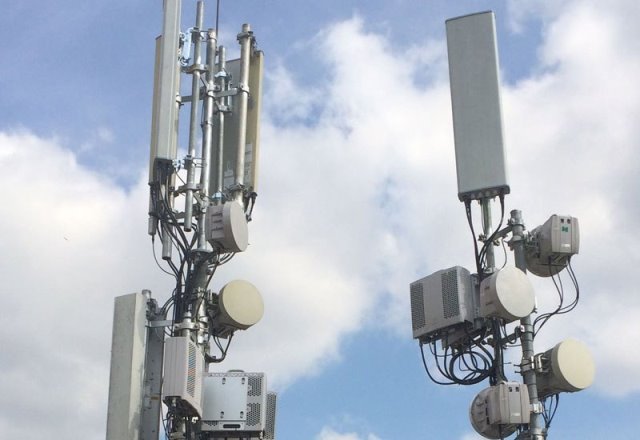
The proposal, approved on October 29, 2026, covers 20 megahertz in the 1675–1695 MHz band and 5 megahertz in the 2020–2025 MHz band. It could create additional spectrum acquisition opportunities for mobile operators, satellite service providers, and companies developing integrated terrestrial and satellite communications networks.
For US telecom operators including Verizon, AT&T, T-Mobile, and emerging wireless competitors, the proposed auction introduces new possibilities for expanding network capacity, improving coverage, developing satellite-to-smartphone services, and strengthening spectrum portfolios.
The FCC initiative follows the completion of a $3.5 billion AWS-3 spectrum auction and comes ahead of a planned auction of 160 megahertz of Upper C-band spectrum by July 2027.
The US administration aims to make up to 400 megahertz of spectrum available for commercial use through auctions by 2028, including frequencies in the 2.7 GHz and 7 GHz bands.
What the 25 MHz Spectrum Auction Means for Mobile Operators
The proposed spectrum auction could provide additional opportunities for mobile network operators to acquire frequencies for advanced wireless services.
Unlike traditional spectrum allocations focused exclusively on terrestrial mobile networks, the FCC proposal would introduce a regulatory framework supporting both terrestrial communications and satellite supplemental coverage from space (SCS).
This approach reflects growing interest in combining conventional cellular networks with satellite connectivity to extend service availability beyond existing terrestrial coverage.
The relatively small 25 megahertz allocation is unlikely to transform nationwide 5G capacity on its own. Its strategic importance lies in the possibility of introducing new spectrum-sharing and terrestrial-satellite business models.
Verizon, AT&T and T-Mobile Face New Spectrum Investment Decisions
The proposed auction could influence future spectrum investment strategies at Verizon, AT&T, and T-Mobile, although the FCC has not identified prospective bidders or established auction participation commitments.
Satellite Direct-to-Device Investment Exceeds $45 Billion
One of the most significant developments behind the FCC proposal is the rapid expansion of investment in satellite direct-to-device technology.
According to the FCC, more than $45 billion in D2D-related deal flow has been approved by or submitted to the Commission for approval during the past year.
FCC Proposes New Rules for 1675–1695 MHz Spectrum
The FCC proposes reallocating the 1675–1695 MHz band on a co-primary basis for fixed and mobile services, excluding aeronautical mobile services, to support new non-federal commercial operations.
The proposal would also permit mobile satellite service on a secondary basis for domestic supplemental coverage from space.
The proposed reallocation remains subject to the outcome of the National Telecommunications and Information Administration’s study of the band under the One Big Beautiful Bill Act.
This requirement is particularly important because existing federal spectrum operations may affect the amount of spectrum available for commercial deployment and the conditions under which operators can use it.
The FCC proposal expands on a 2019 initiative involving the 1675–1680 MHz portion of the band, which considered shared use between incumbent federal operations and new commercial wireless services.
The 1675–1695 MHz proposal could create additional flexibility for terrestrial network operators while introducing opportunities for satellite connectivity.
The FCC also proposes adding a secondary mobile satellite service allocation for domestic supplemental coverage from space in the 2020–2025 MHz band.
Upper C-Band Auction Offers Larger 5G Capacity Opportunity
While the 25 megahertz auction introduces new possibilities for terrestrial and satellite convergence, the planned Upper C-band auction could have a much larger impact on conventional 5G network capacity.
The FCC plans to auction 160 megahertz of Upper C-band spectrum by July 2027.
US Plans Up to 400 MHz of Commercial Spectrum by 2028
The US spectrum strategy could have substantial implications for mobile network investment over the next two years.
The administration plans to make up to 400 megahertz of spectrum available for commercial use through auctions by 2028.
BABURAJAN KIZHAKEDATH

