
AT&T showcased the scale and resilience of its wireless network during one of the world’s biggest football tournaments, supporting nearly 4 million spectators who traveled to North Texas and delivering reliable connectivity across 11 U.S. host cities. As the only U.S. venue to host nine matches, AT&T Stadium generated massive mobile traffic, while AT&T’s nationwide infrastructure enabled fans to share, stream, and stay connected throughout the tournament.
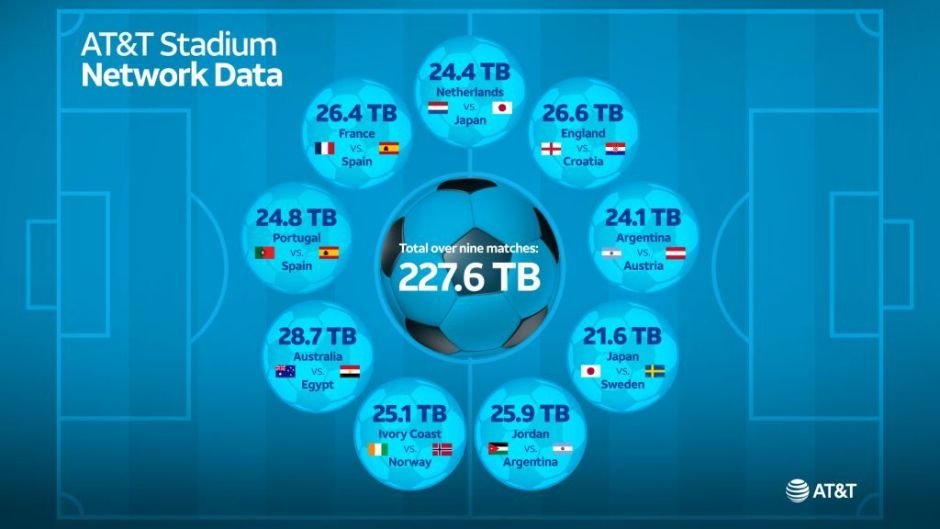
AT&T Stadium recorded its highest mobile data usage during the Australia vs. Egypt match, when fans consumed 28.7 terabytes of data, equivalent to sharing more than 5.7 million social media posts. Another historic moment came during Jordan vs. Argentina, when Argentina’s captain became the all-time leading scorer in football history. Fans inside the stadium generated 25.9 terabytes of data as they instantly shared the record-breaking goal across the world.
“AT&T’s strong performance reflects years of focused investment, preparation, and execution,” Robert Walters, SVP Network at AT&T, said in a blog post.
The tournament also highlighted the scale of AT&T’s nationwide network investments. The operator prepared all 11 host cities for traffic levels expected to be 2 to 3 times higher than normal, supporting connectivity across 146 venues, including stadiums, airports, fan festivals, transportation hubs, and team basecamps. AT&T monitored network performance in real time through a centralized command center while deploying on-site engineering teams across major venues.
AT&T’s Robert Walters said company invested more than $430 million since 2023 to prepare for the event, completing more than 1,500 network enhancement projects. During the tournament, AT&T established more than 1 billion network connections, carried approximately 1 petabyte of traffic across host cities, and achieved over 99 percent voice and data reliability.
Public safety communications were supported through FirstNet, which provided connectivity for more than 300 public safety agencies across the 11 host cities. The FirstNet Response Operations Group deployed more than 20 portable cell sites at stadiums, emergency operations centers, and other high-traffic locations. These deployments were backed by a dedicated fleet of more than 190 portable FirstNet assets and over 750 AT&T portable assets reserved for emergency communications.
AT&T also established the FirstNet Operations Center at its Dallas headquarters to coordinate communications nationwide while providing 24×7 U.S.-based customer support throughout the tournament. During the France vs. Spain match, a FirstNet user uploaded more than 4 times as much data as the average fan, demonstrating the growing bandwidth requirements of modern emergency response operations. Public safety communications remained protected through dedicated Band 14 spectrum along with priority and preemption across AT&T’s commercial 5G network.
AT&T said its investments will continue to benefit customers, businesses, public safety agencies, and communities beyond the tournament. The company also highlighted Turbo Live, its VIP connectivity service that provides priority mobile data access during crowded live events, enabling smoother live streaming, social media sharing, messaging, photo and video uploads, sports updates, and rideshare access even during periods of peak network demand. Meanwhile, FIFA celebrated the 2026 World Cup as its most globally accessible tournament, with record-breaking viewership. FIFA said early group matches drew over 54 million viewers across host nations, while digital platforms recorded over 20 billion video views and the official tournament TikTok generated over 24 billion online views.
BABURAJAN KIZHAKEDATH


