

The Telecom Regulatory Authority of India (TRAI) has released its drive test findings in Jammu and Kashmir, offering a comprehensive assessment of mobile network performance across urban zones, highways, and key public locations during February 2026.

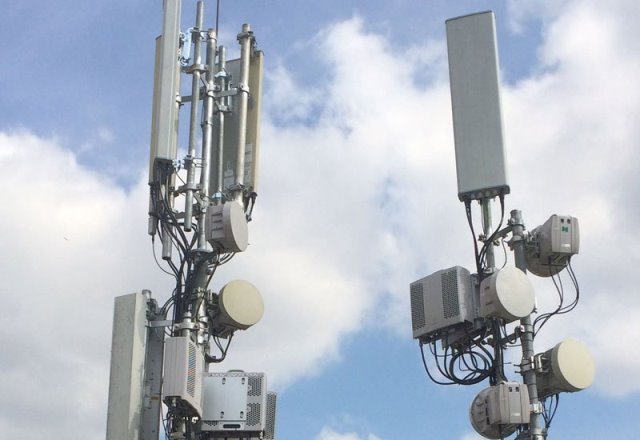
TRAI’s Delhi office conducted the drive tests between February 2 and February 5, 2026. The exercise covered 178.2 km of city routes, 620.5 km of highway stretches, 3.5 km of walk tests, six hotspot locations, and inter-operator calling at one location. The evaluation spanned 2G, 3G, 4G, and 5G technologies to reflect real-world user experience across different devices and network conditions.
Strong Voice Performance Led by Jio and Vodafone Idea
Voice service performance remained largely stable, with Reliance Jio and Vodafone Idea leading in call setup success rates. Vodafone Idea recorded the highest success rate at 99.26 percent, followed by Reliance Jio at 99.12 percent, Airtel at 98.83 percent, and BSNL lagging at 81.62 percent.
Call setup time was fastest on Reliance Jio at 0.66 seconds, followed by Vodafone Idea at 0.94 seconds, Airtel at 1.40 seconds, and BSNL at 4.05 seconds. Drop call rates were relatively low for most operators, with Vodafone Idea at 0.60 percent and Airtel at 0.74 percent, while Reliance Jio recorded 1.18 percent. BSNL reported a significantly higher drop call rate at 7.87 percent.
Speech quality, measured through Mean Opinion Score (MOS), placed Reliance Jio at the top with 4.43, followed by Airtel at 3.96, Vodafone Idea at 3.83, and BSNL at 3.07. Call silence rates also indicated better performance from Jio at 0.53 percent and Airtel at 0.71 percent, compared to Vodafone Idea at 1.40 percent and BSNL at 6.83 percent.
Data Performance Driven by 5G Expansion
Data testing highlighted the clear advantage of 5G networks in delivering higher speeds. Reliance Jio recorded the highest average download speed at 295.90 Mbps, followed by Airtel at 179.53 Mbps. Vodafone Idea and BSNL reported significantly lower speeds at 25.34 Mbps and 11.30 Mbps respectively.
Upload performance showed Reliance Jio and Airtel nearly tied at 30.50 Mbps and 30.09 Mbps, while Vodafone Idea reached 16.39 Mbps and BSNL remained at 3.86 Mbps. Latency performance was strongest on Reliance Jio at 22.84 ms, followed by Airtel at 27.94 ms, BSNL at 29.72 ms, and Vodafone Idea at 43.38 ms.
Hotspot testing further reinforced 5G’s impact, with Reliance Jio achieving peak download speeds of 298.52 Mbps and Airtel reaching 178.53 Mbps. In comparison, 4G speeds across operators remained considerably lower in the same locations.
Real-World Testing Across Cities and Highways
The assessment in Jammu city covered dense residential and commercial areas including Preet Nagar, Gandhi Nagar, Shastri Nagar, Miran Sahib, Channi Himmat, Raipur Domana, and Narwal. TRAI also evaluated network performance at critical public locations such as Government Medical College Jammu, Jammu Bus Stand, Jammu Tawi Railway Station, Jewel Chowk, Raghunath Temple, and Satwari Chowk.
Walk tests conducted in high-footfall areas like Cole Market and Hanuman Market captured user experience in crowded pedestrian environments, while extensive highway testing from Delhi to Jammu via Ambala and Jalandhar assessed connectivity during high-speed travel.
TRAI Flags Performance Gaps for Improvement
While the overall results indicate strong progress in network quality, particularly with 5G deployments, the findings also highlight persistent gaps in coverage and service consistency. BSNL’s comparatively lower performance across several parameters underscores the need for infrastructure upgrades, while other operators must continue optimizing networks to ensure seamless connectivity across urban and transit corridors.
SHAFANA FAZAL