

Telecommunications providers and their ecosystem partners are entering a decisive phase in 2026 as the industry accelerates its transition toward integrated digital services, AI-enabled solutions, and deeper collaboration with channel partners.

Devan Adams, Principal Analyst, Channel at Omdia, expects a major shift in go-to-market (GTM) strategies as telecom operators modernize partner programs, converge IT and telecom billing, and expand mergers and acquisitions to strengthen their service portfolios.
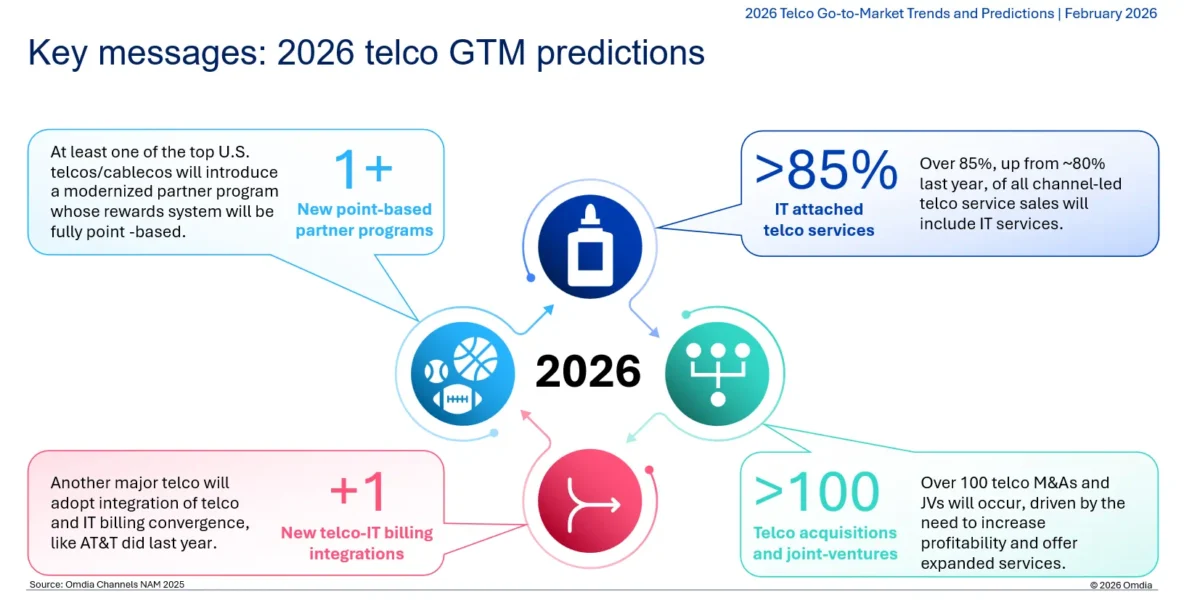
Research report from Omdia suggests that the telecom channel business is evolving. More than 85 percent of channel-led telecom service sales are expected to include attached IT services, highlighting the growing demand from enterprises for bundled connectivity, cloud, cybersecurity, and managed technology solutions.
At the same time, the industry is expected to see over 100 mergers, acquisitions, and joint ventures as telecom operators pursue profitability and attempt to compete with hyperscalers and IT service providers in delivering AI-enabled digital services.
Modernized Partner Programs to Strengthen Channel Ecosystems
One of the most significant changes expected in 2026 is the introduction of modernized partner programs across major telecom operators. At least one large U.S. telecom or cable provider is likely to implement a fully points-based rewards system for channel partners.
These programs are designed to reward partners across the entire customer lifecycle, including lead generation, solution design, deployment, and post-sales support. By shifting to a points-based incentive structure, telecom providers aim to encourage deeper partner engagement and improve long-term retention.
Advanced analytics and artificial intelligence tools will also play a growing role in partner program management. AI-powered systems can help telecom operators identify high-performing partners, analyze customer lifecycle patterns, and optimize incentive structures to maximize partner productivity.
IT-Attached Telco Services Become the Norm
The telecom market is moving toward bundled offerings that combine connectivity with IT services. More than 85 percent of telecom services sold through channels in 2026 will include IT components such as cloud infrastructure, cybersecurity services, and managed IT solutions.
This shift reflects enterprise demand for integrated technology platforms rather than standalone connectivity services. Businesses want a single provider capable of delivering networking, cloud, security, and collaboration solutions as part of a unified offering.
Telecom operators that integrate IT services into their portfolios will gain a competitive advantage. AI-driven capabilities such as predictive network maintenance, automated threat detection, and intelligent analytics will further enhance the value of these bundled solutions.
Billing Convergence Simplifies Partner Operations
Another major industry trend is the convergence of telecom and IT billing systems. A major telecom provider is expected to follow the example set by AT&T, which previously integrated its billing operations with platforms such as HaloPSA and Datagate.
Billing convergence allows channel partners to manage procurement, service provisioning, invoicing, and customer relationships through a single platform. This unified approach reduces operational complexity, minimizes billing errors, and improves financial transparency.
For telecom providers, integrated billing systems also provide better visibility into partner performance and revenue streams, enabling more effective sales planning and forecasting.
Strategic Mergers and Partnerships Accelerate Industry Transformation
The telecom sector is also expected to witness significant consolidation in 2026. Analysts predict more than 100 mergers, acquisitions, and joint ventures as operators expand beyond traditional connectivity services.
Strategic partnerships and acquisitions will allow telecom providers to strengthen their capabilities in areas such as cloud infrastructure, cybersecurity, edge computing, and AI-driven applications. These capabilities are becoming essential as enterprise customers demand high-performance networks capable of supporting advanced AI workloads and digital transformation initiatives.
By expanding their technology portfolios through partnerships and acquisitions, telecom operators can unlock new revenue opportunities while improving network performance and reliability.
Channel Partnerships Move to the Center of Telecom Strategy
Industry leaders increasingly recognize that channel partners are essential for driving telecom market growth. Major telecom companies such as T-Mobile US, Lumen Technologies, Comcast Business, AT&T, and Verizon Communications have all announced plans to expand channel-driven sales and invest more heavily in partner ecosystems.
These initiatives reflect a broader shift toward collaborative sales models similar to those used by leading IT vendors and hyperscale cloud providers. Telecom operators are increasingly relying on partners to deliver specialized services, expand market reach, and support enterprise customers with complex digital transformation projects.
Outlook: A New GTM Model for Telecom Growth
As telecom companies navigate the rapidly evolving technology landscape, modernized channel strategies will become a central pillar of growth. Operators that successfully integrate partner programs, IT services, and flexible billing models will be better positioned to compete with technology giants in the enterprise market.
With AI adoption accelerating and enterprises demanding integrated digital platforms, 2026 is shaping up to be a defining year for telecom go-to-market transformation. By strengthening partner ecosystems and expanding service capabilities, telecom providers can unlock new revenue streams and build a more resilient business model for the future.