

AT&T has announced its largest-ever infrastructure investment commitment in California, pledging $19 billion by 2030 to modernize its fiber and wireless network infrastructure as demand for high-speed connectivity, AI-driven applications, and reliable digital services accelerates across the state.

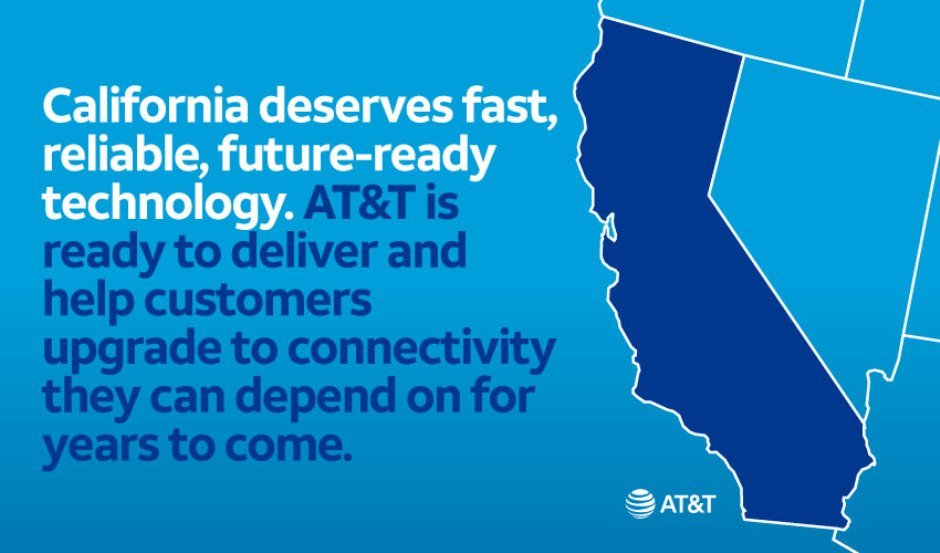
The telecom giant said the investment plan will support the expansion of fiber broadband, strengthen wireless coverage, phase out aging copper infrastructure, and improve connectivity for households and businesses across urban, suburban, and rural California.
While the telecom operators do not officially disclose California-specific subscriber numbers, industry estimates indicate California remained the largest wireless market in the U.S., accounting for roughly 10 percent to 12 percent of national mobile subscribers because of its nearly 40 million population, strong enterprise presence, and high smartphone penetration.
AT&T revealed that its total investment in California’s network infrastructure will reach $35 billion during 2021-2030. The company plans to invest $3 billion more during 2026-2030 compared with the previous five-year period from 2021-2025.
Susan Santana, state president of AT&T California, said Californians increasingly depend on fast and reliable connectivity, and the company’s modernization strategy will help deliver future-ready fiber and wireless services while transitioning away from outdated copper networks.
AT&T Expands Fiber Connectivity to 9 Million Locations
AT&T plans to extend fiber internet access to more than 4 million additional households and businesses in California by the end of 2030. This expansion will increase the company’s total fiber footprint in the state to more than 9 million locations.
The company said fiber technology is critical for supporting AI applications, autonomous vehicles, remote healthcare services, cloud computing, and other data-intensive digital workloads.
AT&T also reiterated its broader nationwide target of reaching more than 60 million fiber locations across the United States by 2030.
AT&T to Add 1,200 New Cell Sites in California
As part of its wireless expansion strategy, AT&T plans to add more than 1,200 new cell sites statewide by 2030 while deploying additional wireless spectrum to support growing mobile network traffic.
The company said stronger wireless coverage will improve emergency communications capabilities and enhance public safety connectivity through FirstNet built with AT&T.
The upgraded wireless and fiber networks are expected to improve network resiliency and enable faster restoration during emergencies and natural disasters.
AT&T Begins Transition Away from Copper Networks
AT&T announced that it will begin upgrading customers in parts of California from copper-based legacy phone systems to modern fiber and wireless services starting on or after June 1, 2027.
The telecom company said only 3 percent of California households served by AT&T still use traditional copper-based phone services.
AT&T plans to discontinue energy-inefficient copper services through a phased, year-long transition process while ensuring that customers continue to have access to voice and 911 emergency services.
The company highlighted newer services such as AT&T Phone – Advanced and AT&T Business Voice, which allow customers to retain their existing phone numbers and continue using devices including fax machines, medical monitoring systems, and home alarms.
For residential customers transitioning from traditional phone services, AT&T will offer AT&T Phone – Advanced free for three months. Existing California LifeLine customers will receive additional discounts to upgrade to newer services.
Energy Savings and Sustainability Benefits
AT&T expects the modernization effort to deliver significant energy efficiency improvements.
The company estimates annual savings of 300 million kilowatt-hours by 2030 as copper infrastructure is replaced with more energy-efficient fiber and wireless technologies.
According to AT&T, the avoided emissions from the energy savings are equivalent to emissions generated from consuming 17 million gallons of gasoline annually.
Hiring Hundreds of Technicians Across California
AT&T said the large-scale infrastructure expansion will support job creation and workforce development in California.
The telecom operator plans to hire hundreds of technicians to support fiber deployment and copper network decommissioning projects statewide.
AT&T also committed to recruiting, upskilling, and training skilled workers needed to build and maintain telecommunications infrastructure.
Digital Inclusion and Community Investments
AT&T announced additional initiatives aimed at reducing California’s digital divide.
The company plans to open six additional Connected Learning Centers in 2026 and conduct more than 30 digital literacy workshops focused on internet basics, cybersecurity awareness, and mobile device skills.
AT&T is also committing an additional $1.2 million in 2026 to nonprofits supporting digital inclusion, disaster preparedness, tribal communities, and older adults across California.
This funding comes in addition to the more than $2.5 million contributed by AT&T in 2025 to organizations working to expand digital access statewide.
AT&T said the $19 billion California investment aligns with its previously announced 2026 financial guidance and long-term operational strategy focused on fiber expansion, wireless growth, and next-generation digital infrastructure.
BABURAJAN KIZHAKEDATH