

Nokia has opened a new research and development center in Riyadh focused on AI-powered network automation, strengthening its presence in Saudi Arabia as the Kingdom accelerates investment in 5G, artificial intelligence and future 6G technologies.

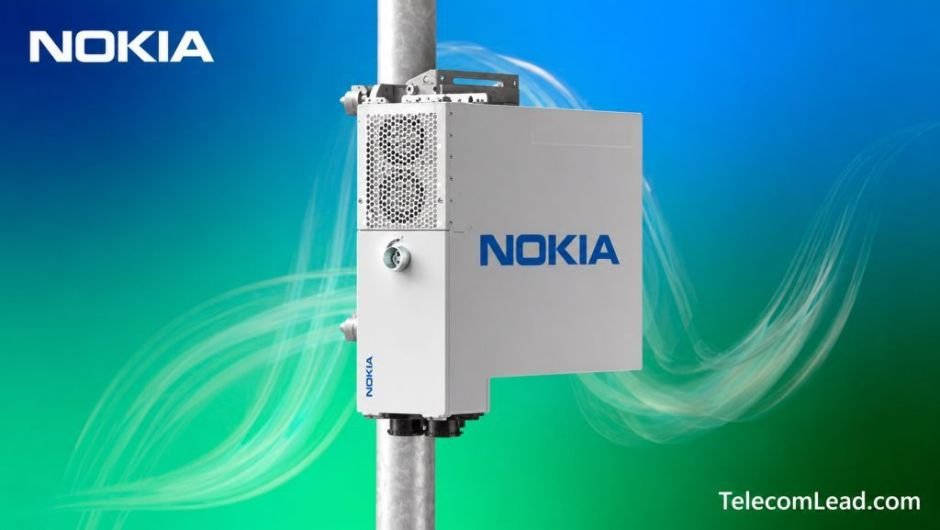
The center will develop software that enables communications networks to self-configure, self-heal, optimize performance and reduce energy consumption while operating with greater autonomy. Nokia will focus on Service Management and Orchestration (SMO), Self-Organizing Networks (SON), Autopilot and rApps supporting automation and energy efficiency.
The investment comes as Saudi Arabia develops into one of the world’s more advanced telecom markets. The country’s telecom market reached SAR 84 billion in 2025, according to Saudi Arabia’s Communications, Space and Technology Commission (CST).
Nokia plans to use its Riyadh operation to develop AI-driven network capabilities for communications service providers and enterprises in Saudi Arabia, while also exploring AI-native 6G technologies. Software created by the center could ultimately be supplied to Nokia customers globally as “Made in Saudi” technology.
Saudi Arabia Emerges as Major 5G Market
Saudi Arabia’s advanced mobile infrastructure provides Nokia with a substantial market and technology environment for developing autonomous network software.
A July 2026 GSMA Intelligence study of Saudi Arabia’s mobile network performance found that Saudi Arabia ranks among the leading large economies globally for 5G development.
5G download speeds in Saudi Arabia reached 314 Mbps during 2025. The GSMA Intelligence assessment, covering 187 countries, identified network investment, spectrum availability, technology upgrades, fibre deployment and smartphone adoption as the strongest factors supporting improvements in mobile network quality.
Saudi Arabia has adopted aggressive spectrum strategy. GSMA said the Kingdom has assigned spectrum across nearly all major mid-bands and made more 3.5 GHz spectrum available than any country other than Japan. Saudi Arabia also became the first country in the EMEA/ITU Region 1 to assign 600 MHz spectrum for mobile services.
The combination of extensive spectrum resources, 5G infrastructure and growing data consumption creates demand for more intelligent network management — an area Nokia’s Riyadh R&D center is specifically targeting.
Saudi Mobile Data Consumption Reaches 53 GB Per Month
Network automation is becoming particularly important because Saudi consumers are among the world’s intensive users of mobile connectivity.
The Saudi Internet Report 2025 shows internet penetration reached 99.6 percent in 2025, while average monthly mobile internet consumption climbed to 53 GB per person, three times the global average.
Median mobile internet download speed increased 6 percent from 203 Mbps in 2024 to 216 Mbps in 2025, placing Saudi Arabia among the top five G20 countries. Median 5G download speed reached 320 Mbps, while median mobile latency was 24 milliseconds.
Saudi Arabia generated 69 million TB of internet traffic, with mobile and fixed networks each accounting for 50 percent. Local internet traffic represented 56 percent of the total and international traffic accounted for 44 percent.
AI adoption is accelerating in Saudi Arabia. Some 45.2 percent of Saudi internet users adopted AI tools in 2025, more than double the previous year’s level, while 61.3 percent of users spent at least seven hours online every day.
IoT represents another growth opportunity for operators. Saudi Arabia had 13.85 million IoT subscriptions, more than 30,000 towers supporting NB-IoT and 99 percent urban NB-IoT population coverage.
These traffic and connectivity levels increase the need for operators such as stc, Mobily and Zain to automate network optimization, capacity management and energy consumption.
Nokia Already Demonstrating AI Network Benefits at stc
Nokia’s Saudi R&D strategy also builds on its existing network automation work with stc.
Nokia previously deployed its AI-powered MantaRay Cognitive SON solution in stc’s commercial network. During a high-traffic period, the system processed more than 10,000 actions and increased utilization by approximately 30 percent on loaded cells while improving average user throughput by 10 percent.
The network maintained connectivity despite traffic increasing 40 percent during the period. Nokia also reported that AI-supported radio network energy efficiency contributed to a 13 percent reduction in energy consumption across stc’s 4G and 5G networks in 2023.
Such deployments demonstrate the potential commercial value of the technologies that will be developed at Nokia’s Riyadh center. As Saudi networks become more complex, operators can use AI to identify network conditions, automatically adjust resources and resolve operational issues with less manual intervention.
Nokia Supports Saudi Vision 2030 With Local R&D
The center follows an agreement announced earlier in 2026 between Saudi Arabia’s Minister of Communications and Information Technology and Nokia President and CEO Justin Hotard.
Nokia will create high-value engineering and research roles while offering training programs, boot camps and certifications covering AI and network automation. The initiative is designed to increase Saudi expertise in software development and advanced telecom technologies while contributing to the country’s Vision 2030 digital transformation objectives.
Eng. Abdulrahman AlMufadda, Deputy Minister for Telecom and Digital Infrastructure at Saudi Arabia’s Ministry of Communications and Information Technology, said the center will help localize advanced R&D capabilities and develop Saudi talent in AI and software.
Mikko Lavanti, President of Nokia Middle East and Africa, said the center will combine Nokia’s global expertise with Saudi talent to develop more autonomous, efficient and responsive communications networks.
At LEAP 2026, Nokia is also showcasing autonomous networks, AI-native RAN, next-generation optical transport, data center automation, mission-critical IP and optical networking and enterprise edge technologies.
For Nokia, the Riyadh R&D center provides access to a SAR 84 billion telecom market characterized by high 5G speeds, 53 GB monthly mobile data consumption per person and rapidly expanding AI adoption. For Saudi Arabia, the investment supports a broader shift from being a major consumer of telecom technology toward developing AI network software and future connectivity technologies that can be exported to global markets.
SHAFANA FAZAL