
Ericsson reported Q1 2026 revenue of SEK 49.3 billion, down 10 percent year-on-year from SEK 55 billion in Q1-2025, impacted by currency headwinds despite 6 percent organic sales growth across markets.
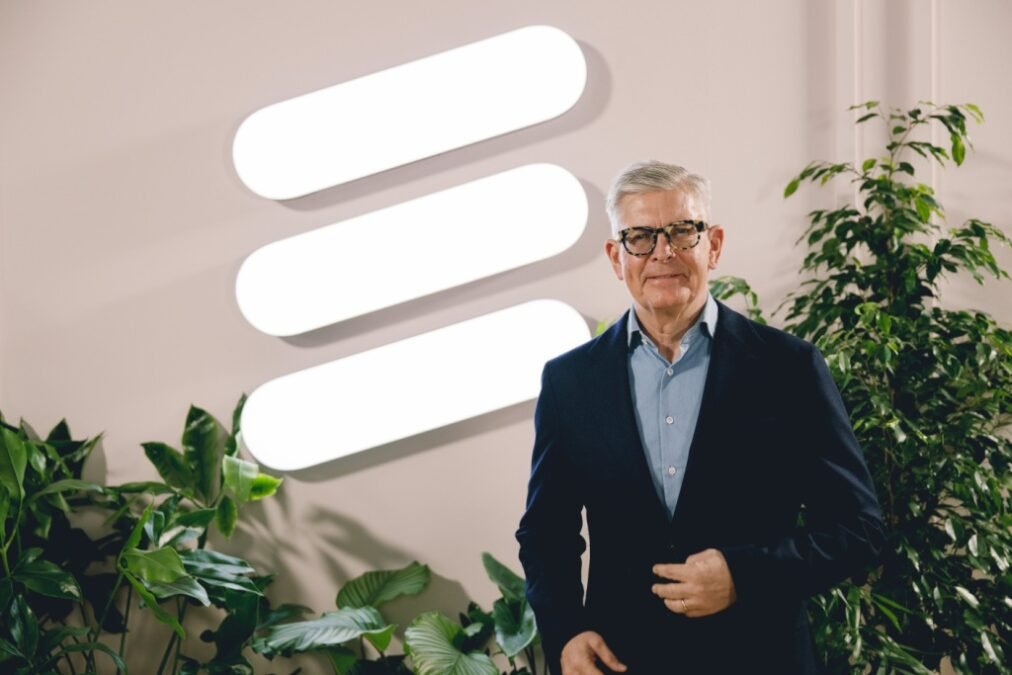
Borje Ekholm, President and CEO of Ericsson, said: “Our Q1 results demonstrate resilience in a dynamic environment, with organic sales growth of 6 percent. Our gross margins and strong cash flow reflect the progress we have made in recent years, reducing reliance on geographic mix and strengthening our foundations globally.
Ericsson’s Networks revenue reached SEK 32.9 billion, down 8 percent.
Ericsson’s Cloud Software and Services generated SEK 11.8 billion, declining 9 percent.
Ericsson’s Enterprise segment posted SEK 4.2 billion, a 30 percent drop due to divestments.
Regional and Country-Level Sales Performance
Ericsson said Americas generated SEK 17.1 billion in revenue, declining 18 percent, primarily due to reduced network investments in North America following high spending in the prior year. However, Latin America delivered strong growth, partially offsetting the regional decline.
Europe, Middle East and Africa (EMEA) revenue stood at SEK 14.3 billion, down 1 percent. This was driven by 5G network investments in the Middle East and Africa and modernization projects across Europe.
South East Asia, Oceania and India recorded SEK 6.9 billion in revenue, declining 4 percent, led by higher 5G equipment deliveries in India, making it a key growth market.
North East Asia, including Japan, posted SEK 3.1 billion in revenue, down 3 percent, supported by project execution and network upgrades.
The Other segment, including licensing and enterprise business, delivered SEK 7.9 billion, declining 15 percent, mainly due to divestments.
Ericsson’s Q1 2026 performance highlights a shift toward emerging markets such as India and Japan, alongside stable demand in EMEA, while North America softness weighed on overall revenue, despite strong underlying sales momentum.
Key operator deals and partnerships
Ericsson strengthened operator relationships through major contracts:
A five-year extension with Virgin Media O2 in the UK to supply Radio Access Network (RAN) infrastructure and support nationwide 5G deployment
Multi-year agreements with SoftBank and Far EasTone for next-generation core networks, including AI-native and 6G-ready capabilities
Overall operator-driven outlook
Operator spending remains uneven globally, with North America softening, while India, Japan, and emerging markets drive growth through 5G expansion and modernization. Ericsson expects a stable RAN market in 2026, with operators continuing to prioritize efficiency, AI integration, and next-generation network capabilities.
BABURAJAN KIZHAKEDATH

