

India’s smartphone shipments declined 3 percent year-on-year in Q1 2026, marking the weakest quarterly performance in six years, according to Counterpoint Research report.

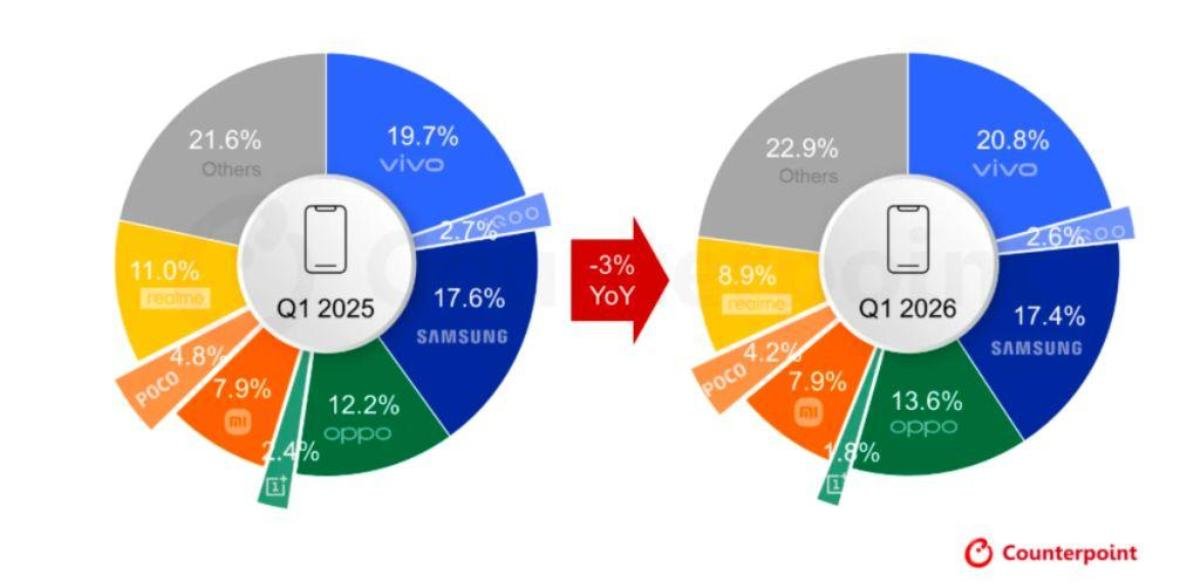
The slowdown in India’s smartphone market was driven by rising component costs, OEM-led price hikes, and subdued consumer demand, despite a surge in new launches as brands attempted to offset bill of materials inflation, especially from memory and currency pressures.
Affordability Crisis Impacts Mass Segment
The market is facing a clear affordability squeeze, with average price increases exceeding INR 1,500. The sub-INR 15,000 segment has been the worst affected due to high price sensitivity. Rising energy costs and geopolitical tensions have further pressured household budgets, delaying smartphone upgrades and weakening retail conversions.
Brand Performance and Market Leaders
vivo led the market with a 21 percent share, supported by strong mid-premium demand and an expanded portfolio.
Samsung Electronics ranked second, benefiting from A-series demand and strong early response to the Galaxy S26 lineup.
OPPO held third place with a 14 percent share and 8 percent growth, driven by budget and Reno series performance.
Xiaomi saw double-digit growth in the INR 10,000-INR 20,000 segment through improved channel execution.
realme gained traction online, especially with Narzo and P series models.
Premium Segment Resilience and Emerging Players
Apple increased its share to 9 percent, driven by strong iPhone 17 demand and financing offers.
Nothing Technology emerged as the fastest-growing brand with 47 percent growth, supported by offline expansion and new launches.
Google grew 39 percent in the premium segment, leveraging AI-led features and marketing initiatives.
OnePlus led the affordable premium category on Amazon with strong Nord series demand.
Chipset and Pricing Trends
MediaTek led the chipset market with a 49 percent share.
Qualcomm dominated the premium Android segment with over 50 percent share.
More than 80 smartphone models saw an average price increase of 15 percent in Q1, with an additional 15 percent to 20 percent hike expected in Q2. Memory prices alone are projected to rise 80 percent to 85 percent sequentially, continuing to pressure device affordability.
Outlook: Continued Pressure in 2026
India’s smartphone market is expected to remain under stress, with Q2 likely to witness a double-digit decline. Full-year shipments are projected to fall 10 percent year-on-year, as persistent component inflation and weak entry-level demand extend replacement cycles. Brands are shifting focus toward premium segments, tighter portfolio strategies, and improved channel efficiency, while recovery in the mass segment is expected to be gradual.
BABURAJAN KIZHAKEDATH