

Huawei has expanded its foldable smartphone portfolio with the HUAWEI Mate XT 2 | ULTIMATE DESIGN, a second-generation tri-fold flagship priced from RMB 19,999 (about $2,800). Unveiled on September 7, 2026, the smartphone combines a new Kirin 9050 Pro processor, an upgraded tri-fold architecture, hardware-level privacy technology and advanced cameras with the productivity benefits of HarmonyOS 7.

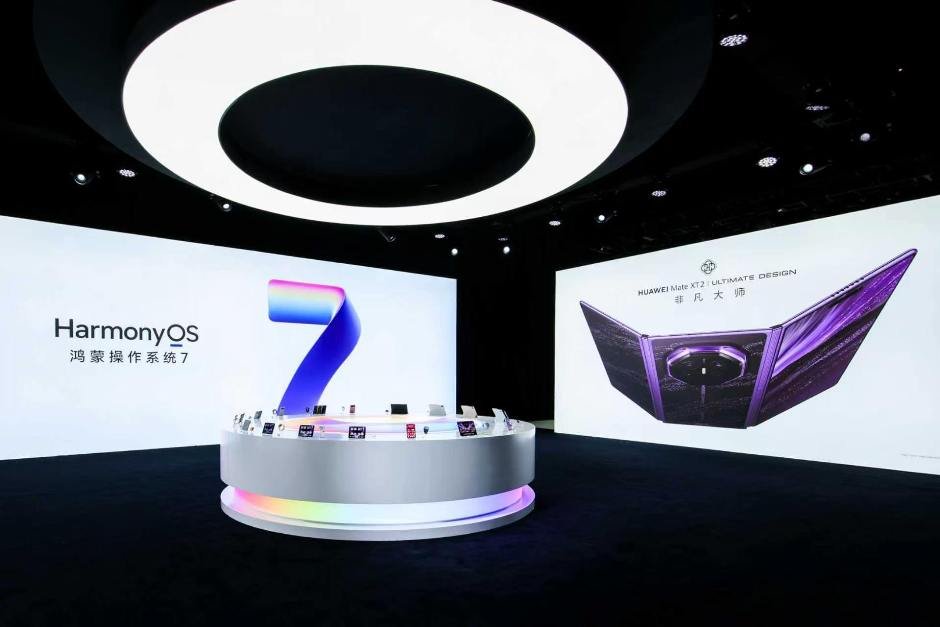
Sales of the Huawei Mate XT 2 will begin at 10:08 on September 12, with a stylus set also available. The aggressive feature set reinforces Huawei’s strategy of creating a premium category above conventional book-style foldable smartphones.
Huawei Mate XT 2 Price and Availability
The Huawei Mate XT 2 price starts at RMB 19,999, positioning the device firmly in the ultra-premium smartphone market. While substantially more expensive than mainstream flagship smartphones, Huawei is selling something fundamentally different: a device capable of transforming from a conventional smartphone into a much larger-screen productivity and entertainment platform.
The Mate XT 2 is available in Purple, White and Black.
Huawei has also focused heavily on premium materials. Its rear panel uses a cloud pattern produced through Brocade Cloud craftsmanship, while the Star Diamond Glow camera ring is manufactured from Yttrium Crystal fired at 1,800°C.
The camera housing undergoes eight polishing processes to create 33 star-diamond facets, reinforcing the luxury positioning of the ULTIMATE DESIGN model.
New Wing-Like Tri-Fold Design
The standout feature remains the wing-like tri-fold form factor, which unfolds from both sides. Huawei has upgraded the underlying engineering with what it calls the Xuanwu Ultra-Durable Tri-Fold Architecture.
Durability is particularly important for tri-fold smartphones because their additional hinges and folding points introduce greater mechanical complexity than conventional smartphones.
Huawei says the Mate XT 2 is the first tri-fold smartphone with IP58 and IP59 dust and water resistance.
The cover display uses Xuanwu Kunlun Glass designed to improve scratch and impact resistance, while anti-glare technology is intended to maintain screen visibility outdoors.
For the folding main display, Huawei combines several protective layers, including large UTG glass, aerospace-grade ultra-thin high-strength steel and a carbon-fibre support layer.
Its Advanced Precision Hinge System 2.0 incorporates a five-curved-arm structure and synchronized linkage mechanism to distribute forces more evenly across the folding system.
Kirin 9050 Pro Delivers 42 percent Performance Improvement
One of the biggest hardware upgrades is the Kirin 9050 Pro, which makes its debut in the Huawei Mate XT 2.
Huawei claims that hardware, software, chip and cloud optimization delivers a 42 percent improvement in overall device performance compared with the previous generation.
The processor includes a LinxiCore CPU working with Huawei’s Ark Engine to improve application responsiveness, large-file loading and multitasking.
Huawei has also upgraded graphics capabilities. The Maleoon GPU doubles computing units and cache and supports 50 MRPS hardware-level real-time ray tracing, targeting improved graphics and lighting effects in mobile games.
AI performance comes from a Huawei Da Vinci Architecture NPU. The Mate XT 2 can natively support the Pangu 30B-A2B MoE large language model, bringing more AI processing directly onto the smartphone.
On-device applications include AI-assisted album management through Celia.
LogicFolding Tau Chip Makes Commercial Debut
Another notable technology in the Mate XT 2 is the LogicFolding Tau (τ) Chip. Huawei says the smartphone represents the technology’s first entry into mass commercialization.
The development reflects how foldable-phone competition is increasingly moving beyond flexible displays toward specialized hardware, hinge engineering, AI processing, thermal management and software designed specifically for multi-screen devices.
Heat is managed through an architecture that distributes heat sources across the Mate XT 2’s three frames. Large vapor chambers and thermally conductive graphene help transfer heat while demanding applications are running.
Smart Shield Privacy Screen Protects Sensitive Information
Huawei is also introducing what it describes as the industry’s first foldable Smart Shield Privacy Screen.
The hardware-level privacy system uses an independent dual-pixel design. Importantly, activating Privacy mode does not reduce display resolution, allowing the person directly in front of the smartphone to retain a clear view while limiting visibility from other angles.
The Mate XT 2 can intelligently provide privacy reminders when users enter locations such as airports and railway stations.
Privacy mode can be activated through methods including double-tapping the cover display or using the Smart Controls button.
Huawei has also incorporated a Mobile Security Processor and independent security chip. The system supports post-quantum cryptography algorithm detection and has achieved EAL5+ CCRC security certification.
True-to-Color Camera 3.0 Improves Color Accuracy by 95 percent
Photography receives another significant upgrade through Huawei’s new True-to-Color Camera 3.0 system.
Huawei says improved filtering of infrared interference enables a 95 percent improvement in color reproduction compared with the previous generation.
The camera configuration includes an ultra-HDR main camera, an ultra-wide aperture periscope telephoto camera and an ultra-wide-angle camera.
For video, the Mate XT 2 supports a dynamic range of up to 18 EV, targeting better detail across bright highlights and dark areas.
Huawei’s upgraded XMAGE SmartCapture can recognize people, landscapes and food. AI-generated real-time previews provide recommendations covering composition and lighting.
The tri-fold hardware also creates an unusual photography feature called Desk-calendar mode, allowing users to partially fold and position the smartphone for hands-free selfies, group photos and other shooting situations.
HarmonyOS 7 Turns Tri-Fold Display into Productivity Workspace
The value of a tri-fold phone ultimately depends on whether applications can take advantage of the additional display area. Huawei is addressing this through HarmonyOS 7.
Its Live-Multitask feature allows three application windows to operate side by side. Users can adjust individual window sizes and even control their volume independently.
Huawei is targeting scenarios including financial services, office productivity, social media, entertainment, online shopping comparisons and travel planning.
The approach could make the Mate XT 2 particularly attractive to business users who normally switch between a smartphone and tablet. Opening three applications simultaneously gives Huawei an important differentiation from conventional smartphones and smaller foldables.
Satellite Connectivity and 32 Antennas
Huawei has equipped the Mate XT 2 with 32 distributed antennas as part of its communications architecture.
The smartphone supports Tiantong satellite communications and Beidou satellite messaging, extending connectivity beyond areas served by conventional terrestrial mobile networks.
The combination of satellite communications, advanced antenna design and large-screen productivity demonstrates Huawei’s attempt to make the Mate XT 2 more than a showcase for foldable display engineering.
Is the Huawei Mate XT 2 Worth RMB 19,999?
At RMB 19,999, the Huawei Mate XT 2 is clearly not designed to compete primarily on affordability. Its appeal rests on whether buyers value having smartphone, tablet-like display and multi-window productivity capabilities integrated into one device.
The strongest upgrades over the previous generation include the 42 percent performance improvement, Kirin 9050 Pro processor, IP58/IP59 protection, True-to-Color Camera 3.0 with 95 percent better color reproduction, Smart Shield Privacy Screen, 50 MRPS ray tracing, satellite communications and three-window HarmonyOS 7 multitasking.
Huawei’s Mate XT 2 therefore represents an important test for the emerging tri-fold smartphone segment. If Huawei can turn its engineering advantages into sustained consumer demand, tri-fold devices could develop into a distinct ultra-premium category rather than remaining technology showcases.
Huawei Mate XT 2 key figures: starting price of RMB 19,999; 42 percent higher overall performance; 95 percent improvement in camera color reproduction; 50 MRPS real-time ray tracing; 18 EV video dynamic range; 32 antennas; 33 star-diamond facets; IP58/IP59 protection; and support for three simultaneous application windows.
BABURAJAN KIZHAKEDATH