

SK hynix delivered its strongest quarterly financial performance ever in the second quarter of 2026, fueled by surging artificial intelligence infrastructure investments, robust demand for high-bandwidth memory (HBM), AI server DRAM, enterprise SSDs (eSSD), and rising memory prices.

The semiconductor leader reported record revenue of KRW 79.3187 trillion, operating profit of KRW 60.5426 trillion, and net profit of KRW 93.9226 trillion, achieving an operating margin of 76 percent and a net margin of 118 percent.
The company said cumulative first-half revenue exceeded KRW 100 trillion for the first time in its history, with revenue and operating profit increasing 257 percent and 557 percent year over year, respectively.
The latest performance significantly exceeded previous records, compared with Q1 2026 revenue of KRW 52.5763 trillion and operating profit of KRW 37.6103 trillion, while Q2 2025 revenue stood at KRW 22.232 trillion with operating profit of KRW 9.2129 trillion. Higher prices for both DRAM and NAND flash memory, combined with strong sales of premium AI-focused products including HBM, AI server DRAM and enterprise SSDs, supported the company’s exceptional profitability.
SK hynix also strengthened its financial position during the quarter. Cash and cash equivalents increased to KRW 88 trillion at the end of the second quarter, rising KRW 33.6 trillion from the previous quarter. Total debt declined by KRW 0.7 trillion to KRW 18.6 trillion, expanding the company’s net cash position to KRW 69.4 trillion, providing greater financial flexibility for future investments.
The company said AI adoption is evolving toward agentic AI systems capable of performing complex tasks, creating sustained demand for both AI memory and conventional memory products. Growing AI infrastructure spending by major technology companies continues to generate additional memory supply requests, while AI service revenues are expected to support long-term demand growth.
To secure future supply stability, SK hynix has expanded long-term customer agreements, completing Long-Term Agreements (LTAs) with around 10 customers, including major strategic partners, while continuing negotiations with additional industry clients. These agreements are expected to improve operational efficiency and strengthen long-term business stability.
On the technology front, SK hynix began mass shipments of HBM4 during the second quarter and plans to significantly increase production in the second half of 2026. The company also completed HBM4E sample shipments in the first half and highlighted its leadership in performance, power efficiency, manufacturing yield and cost competitiveness.
The company reported strong growth in SOCAMM2 sales during the quarter, while shipments based on its 10nm-class sixth-generation (1c) process technology accelerated. In NAND flash, 321-layer products now account for the largest share of production, with the company targeting approximately 50 percent of domestic production capacity by year-end as it transitions toward higher-capacity and higher-performance memory.
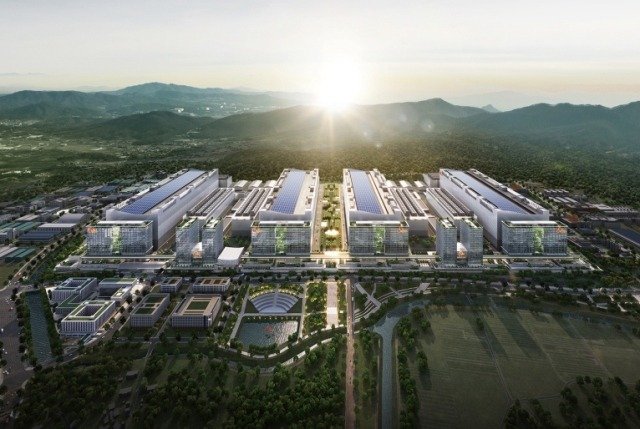
To support long-term AI memory demand, SK hynix is accelerating the production schedule for its M15X facility and plans to expand manufacturing capacity following the opening of the Yongin Phase 1 cleanroom in early 2027. The company also confirmed phased investments in the P&T7 advanced packaging facility, M17 NAND production base, and a new semiconductor cluster, with future capacity expansion aligned to customer demand and investment efficiency.
SHAFANA FAZAL