

The latest telecom news includes announcements on Vodafone Ukraine, Globe Telecom, Nokia, NVIDIA, DNA, and others.

Vodafone Ukraine Starts Solar Power Deployment at 400 Additional Mobile Base Stations
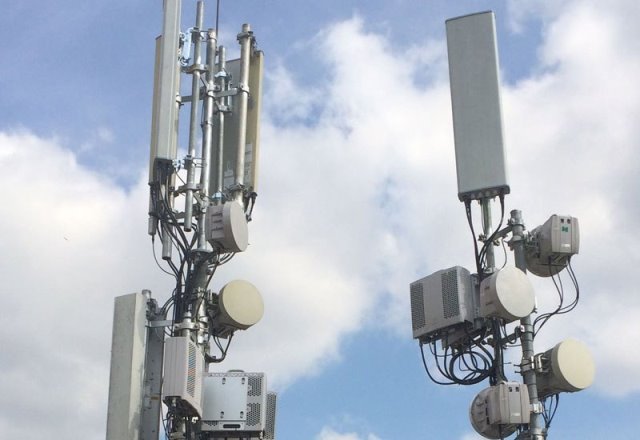
Vodafone Ukraine reported on October 26 that it had entered the second phase of a project to equip 500 mobile base stations with solar power. The first phase installed systems at 100 sites across 14 regions, totaling 360 kW, or approximately 3.6 kW per station. The next phase covers the remaining 400 sites. Vodafone estimates that the first 100 installations can produce about 380 MWh annually and meet up to 30 percent of those stations’ electricity requirements. They generated more than 110,000 kWh during their first summer. The initiative strengthens mobile-network resilience during power interruptions and helps preserve battery reserves. Costs and the completion schedule for phase two were not disclosed.
Globe Telecom Converts More Than 1,000 Philippine Mobile Sites to Renewable Electricity
Globe Telecom reported on October 26 that more than 1,000 of its Philippine mobile sites had shifted to renewable electricity by August 2026. The operator used the country’s Retail Aggregation Program to procure power for the sites and said it was the first domestic telecom provider to reach that milestone through the mechanism. Separately, Globe is replacing diesel-based power at remote facilities with solar and battery systems, including lithium-ion and sodium-nickel storage. Automated load-management equipment is intended to reduce generator runtime at locations still requiring fuel backup. The infrastructure changes are designed to maintain communications during outages and severe weather. Globe did not publish a network-wide power saving or investment total for the conversion.
Nokia, NVIDIA and DNA Join €1.4 Million Finnish 6G-ROCKET AI-RAN Research Program
Finland’s University of Oulu launched the €1.4 million 6G-ROCKET research program on October 26, bringing together Nokia, NVIDIA, mobile operator DNA, Keysight and MediaTek. The two-year initiative runs through 2028 under Business Finland’s 6G Bridge program, with Northeastern University and the University of Tokyo participating as research partners. Work will use a GPU-accelerated AI-RAN testbed connected to Oulu’s existing 5G/6G Test Network. The project aims to develop predictive radio algorithms and sensing-enabled networks that can identify and respond to changing conditions before connections deteriorate. The funding covers research and validation, not commercial 6G network construction. No operator deployment or measured network-performance gain was announced.