

Today’s telecom news includes announcements on MEO, Eutelsat OneWeb LEO, Banglalink, SpaceX, Starlink, Amazon Kuiper, among others.

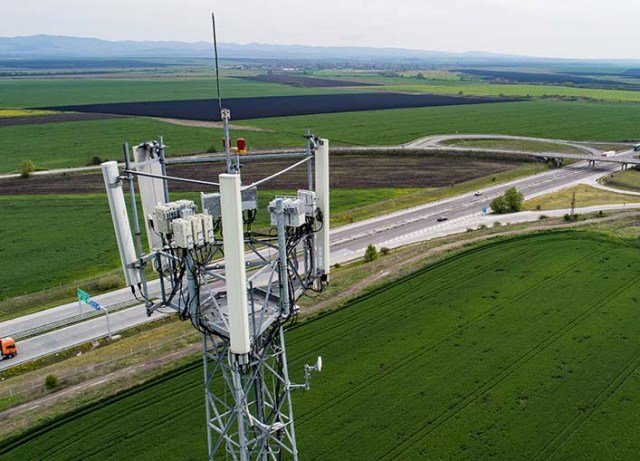
MEO Adds Eutelsat OneWeb LEO to Fiber and 5G Network in Portugal
Portuguese operator MEO has signed an agreement with Eutelsat to integrate OneWeb low-Earth-orbit satellite connectivity with its existing fiber and 5G infrastructure. The combined architecture targets enterprises, municipalities, government organisations and critical-infrastructure operators requiring communications resilience when terrestrial networks become unavailable. MEO already hosts Eutelsat ground infrastructure supporting both GEO satellites and the OneWeb LEO constellation. The new arrangement effectively adds satellite connectivity as another layer of MEO’s national network rather than treating it as a standalone service. Financial terms were not disclosed. The agreement illustrates how European telecom operators are increasingly integrating LEO satellite capacity directly into fixed and mobile network portfolios to provide redundant connectivity and extend services beyond terrestrial-network coverage.
Banglalink to Launch Starlink Direct-to-Cell in Bangladesh on October 4
Banglalink plans to introduce Starlink Direct-to-Cell connectivity on October 4, 2026, after receiving approval from the Bangladesh Telecommunication Regulatory Commission. The service is intended to provide mobile connectivity in locations beyond conventional terrestrial coverage, including coastal waters, remote regions and areas affected by natural disasters. Banglalink says the launch will make Bangladesh the first South Asian country to introduce Starlink Direct-to-Cell connectivity. The architecture connects ordinary mobile users through SpaceX’s low-Earth-orbit satellite network when terrestrial mobile infrastructure is unavailable. Satellite-to-mobile services are becoming an increasingly important extension of conventional cellular networks because operators can potentially eliminate geographic coverage gaps without constructing thousands of additional towers in sparsely populated or difficult-to-reach locations.
Amazon Wins License for Nationwide Private Satellite Telecom Network in Vietnam
Amazon has received a Vietnamese government licence allowing Amazon Kuiper Vietnam to establish a nationwide private satellite telecommunications network. The licence enables Amazon to connect its low-Earth-orbit constellation with Vietnamese ground infrastructure, test locally manufactured customer terminals and evaluate equipment performance. Amazon Leo plans a constellation of more than 3,200 satellites delivering high-speed, low-latency broadband, particularly where terrestrial infrastructure is difficult to deploy. Vietnam has separately authorised a five-year Starlink pilot through January 2031 with a ceiling of 600,000 subscribers. Amazon has indicated that Vietnam could become a manufacturing centre for satellite equipment destined for export, giving the country a potential role in both deployment and production of next-generation LEO communications infrastructure.
NuRAN Tests Starlink LEO Backhaul for Rural Mobile Network in Nigeria
NuRAN Wireless is preparing its first integration of Starlink low-Earth-orbit connectivity as backhaul for a rural mobile-network site in Nigeria. The pilot, conducted with infrastructure partner Infratel, will assess capacity, speed, reliability, integration and commercial economics when satellite connectivity replaces or supplements conventional terrestrial backhaul. NuRAN specialises in mobile infrastructure for rural and underserved markets, where fiber or microwave transport can be difficult or expensive to deploy. The company does not have a direct commercial agreement with SpaceX; Starlink capacity will be obtained through third-party arrangements. If the trial demonstrates attractive economics, LEO backhaul could allow rural mobile operators and neutral-host providers to activate remote radio sites faster while reducing dependence on costly long-distance fiber construction or complex microwave chains.