

Today’s telecom news includes announcements on Alaska Communications, Mobileum, MWC 2026, TeraSignal, among others.

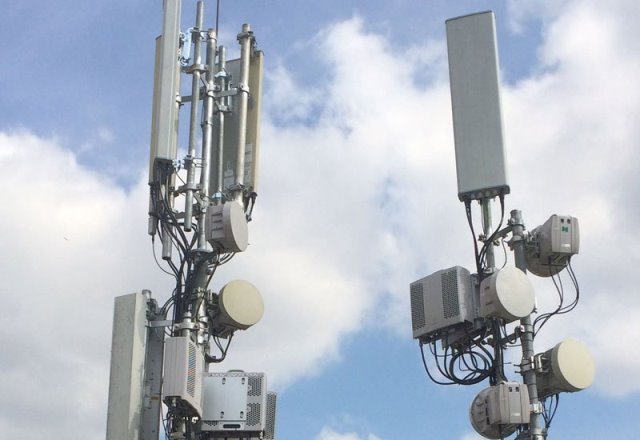
Alaska Goes Gigabit: $124 mn Boost Supercharges Statewide Broadband Expansion
Alaska Communications is expanding its high-speed broadband network across Alaska with support from a $124 million grant under the federal Broadband Equity, Access, and Deployment (BEAD) program. The initiative will deploy fiber and next-generation fixed wireless infrastructure to connect over 9,000 unserved and underserved locations, while additional private investment will extend coverage to another 12,000 sites. The expansion will deliver up to gigabit speeds to multiple communities, improving connectivity for homes, businesses, healthcare, and education.
From Data to Dollars: Mobileum Unveils “Signal to Value” Vision at MWC Barcelona 2026
Mobileum showcased its “Signal to Value” strategy at MWC Barcelona 2026, focusing on helping telecom operators transform network data into actionable insights and revenue opportunities. The company highlighted its Active Intelligence Platform with AI-driven capabilities for roaming optimization, fraud and risk management, and autonomous network assurance. Key innovations include agentic AI for rapid threat detection, API-based monetization of roaming intelligence, and advanced AI-powered network testing and analytics. Mobileum also introduced a white-labeled AI assistant platform aimed at enabling enterprise services and enhancing operational efficiency.
Revolutionizing AI Networks: TeraSignal Launches Industry’s First Intelligent 200G+ Copper Redriver
TeraSignal has introduced the industry’s first intelligent redriver, the TS5802, designed to enhance 200G+ copper interconnect performance in AI and data center networks. Built on its TSAFE analog front-end architecture, the CMOS-based device integrates advanced equalization and CMIS-based link training to automatically optimize signal quality and reliability. It improves link margin, extends reach, and reduces bit error rates, addressing growing challenges such as noise and signal loss at higher data speeds.
SHAFANA FAZAL