

Tele2 reported revenue of SEK 7.60 billion in the third quarter of 2026, supported by growth in enterprise connectivity, mobile postpaid, digital television and Baltic operations. The Swedish telecom operator generated SEK 1.41 billion in net profit and record quarterly equity free cash flow of SEK 2.30 billion while reducing capital expenditure and strengthening its focus on 5G, broadband, artificial intelligence (AI), IoT and digital services.

Tele2’s financial performance for July–September 2026 highlights a strategy of improving profitability through cost discipline, selective network investments, customer retention and higher revenue per subscriber.
Nicholas Hogberg, President and Group CEO of Tele2: “We are delivering in line with our guidance for end-user service revenue, and we are comfortable with narrowing the full-year underlying EBITDAaL guidance.
“We remain disciplined with investments, prioritise what genuinely improves the customer experience and scrutinise every contract and every single cost. This has allowed us to keep growing while offsetting the cost impact of geopolitical developments,” Nicholas Hogberg said.
The company also revised its full-year capital expenditure guidance downward, reflecting a slower 5G rollout pace and tighter investment priorities.
Tele2’s total revenue increased approximately 2.2 percent organically, while end-user service revenue grew 2.2 percent.
Operating profit increased 7.7 percent and net profit advanced 9.3 percent year-on-year.
Underlying EBITDAaL increased 2.8 percent organically, although reported EBITDAaL was marginally lower because of the Baltic tower transaction.
The underlying EBITDAaL margin was approximately 41.4 percent of revenue.
During the first nine months of 2026, Tele2 generated SEK 22.24 billion in revenue and SEK 9.10 billion in underlying EBITDAaL.
Nine-month net profit reached SEK 9.01 billion, including a SEK 5.09 billion gain from the sale of its Baltic tower operations. Consequently, the nine-month profit increase should not be interpreted entirely as recurring operating improvement.
Tele2 Reduces Capex by 9% as 5G Investment Priorities Change
Tele2 reduced quarterly capex excluding spectrum and leases to SEK 583 million from SEK 643 million, representing a decline of approximately 9.3 percent.
The capex-to-sales ratio declined to 8 percent from 9 percent.
For January–September 2026, capex excluding spectrum and leases fell 22 percent to SEK 1.84 billion from SEK 2.37 billion.
Tele2 attributed lower capital spending primarily to a reduced pace of 5G deployment, workforce reductions and delayed hardware supplies.
In Sweden, quarterly capex declined 15 percent to SEK 410 million. During the first nine months, Swedish capex fell 29 percent to SEK 1.36 billion.
The operator reduced its full-year 2026 capex-to-sales guidance to below 10 percent, compared with its earlier projection of 10–11 percent.
Tele2 expects organic underlying EBITDAaL growth of 4–5 percent in 2026, while maintaining low-single-digit organic growth in end-user service revenue.
Tele2 Mobile Subscribers: Postpaid Growth Offsets Prepaid Decline
Tele2’s Swedish consumer mobile business had 2.738 million revenue-generating units (RGUs) at the end of September 2026, down 2 percent year-on-year.
However, postpaid subscriptions increased 2 percent to 2.218 million, while prepaid subscriptions declined 16 percent to 520,000.
During Q3, Tele2 added a net 11,000 postpaid RGUs but lost 10,000 prepaid RGUs.
Mobile consumer service revenue increased 1 percent to SEK 1.63 billion.
Postpaid revenue grew 3 percent to SEK 1.44 billion, while prepaid revenue declined 10 percent to SEK 185 million.
The figures show Tele2’s increasing dependence on postpaid subscriptions and higher-value customer relationships rather than overall subscriber expansion.
Tele2 ARPU: Mobile Spending Rises 2% in Sweden
Tele2 reported average spend per user (ASPU), rather than a separately labelled ARPU metric, in its quarterly operational data.
In Sweden’s consumer business, mobile ASPU increased 2 percent to SEK 198 from SEK 194.
Postpaid ASPU was SEK 218, compared with SEK 217 a year earlier, while prepaid ASPU increased 6 percent to SEK 117.
Sweden Business mobile postpaid ASPU declined 1 percent to SEK 137.
The Baltic markets delivered stronger customer monetisation.
Lithuania’s 9 percent ASPU growth was supported by price adjustments, postpaid migration and upselling.
Estonia achieved 7 percent ASPU growth, while Latvia recorded 2 percent growth.
Tele2’s strategy emphasises increasing customer spending through improved service propositions, price adjustments and migration toward higher-value plans.
Fiber and Fixed Broadband: Revenue Declines 3%
Tele2’s Swedish fixed broadband business faced intense competition and customer migration toward mobile broadband.
Fixed broadband service revenue declined 3 percent to SEK 803 million from SEK 830 million.
The fixed broadband subscriber base declined 2 percent to 937,000 RGUs from 958,000.
Quarterly net additions were negative by 6,000 RGUs.
Fixed broadband ASPU declined 1 percent to SEK 285 from SEK 289.
Tele2 continued expanding availability of broadband speeds of up to 2.5 Gbps across additional Swedish locations.
The company did not provide a separate fiber subscriber count or fiber-specific revenue figure in the quarterly operational breakdown. Its disclosed fixed broadband numbers cover the broader service category.
Tele2’s management indicated that it deliberately avoided some of the most aggressive broadband pricing offers, prioritising customer economics over subscriber acquisition at any cost.
Digital TV Revenue Grows 4% as Subscriber Base Expands
Digital television remained a growth contributor for Tele2’s Swedish consumer operations.
Digital TV service revenue increased 4 percent to SEK 614 million from SEK 590 million.
The subscriber base increased 2 percent to 775,000 RGUs, supported by 2,000 net additions during the quarter.
Digital TV ASPU increased 3 percent to SEK 264.
Tele2 reported high-single-digit service revenue growth for its modern television offering, although overall digital TV growth was moderated by Boxer.
Digital television helped offset weaker broadband and legacy fixed-telephony revenue.
Enterprise Connectivity and IoT Drive 5% Business Revenue Growth
Tele2’s Sweden Business division generated SEK 1.15 billion in end-user service revenue, representing 5 percent organic growth.
Mobile business service revenue increased 7 percent to SEK 664 million, primarily supported by IoT.
Solutions revenue increased 4 percent to SEK 314 million, driven by demand for network solutions and managed connectivity.
Fixed business revenue declined 4 percent to SEK 168 million as customers migrated away from traditional IP-VPN services.
The enterprise postpaid mobile base increased 3 percent to 1.163 million RGUs.
Tele2 added 10,000 enterprise postpaid mobile RGUs during the quarter.
The operator also became the first in Sweden to offer Rich Communication Services (RCS) for both Android and iOS, enabling businesses to deliver verified and interactive messages through native messaging applications.
Sweden Wholesale revenue increased 8 percent to SEK 288 million, supported by application-to-person messaging.
Tele2’s enterprise strategy also includes sovereign cloud and security opportunities through its partnership with Scaleway.
Tele2 5G Network Strategy Focuses on Coverage, Quality and Public Safety
Tele2 continued investing selectively in 5G network capabilities across Sweden and the Baltic markets.
In Lithuania, the operator secured spectrum in the 700 MHz and 1500 MHz bands and renewed its 2100 MHz holdings.
The total spectrum investment was €9.8 million, including €4.6 million scheduled for payment in 2026.
Tele2 reported that independent Ookla measurements identified its network as Lithuania’s fastest 5G network.
In Sweden, Tele2’s network was selected through Net4Mobility to support SWEN, the country’s new emergency communications network.
The framework agreement, signed on October 2, will enable emergency organisations, including police, healthcare and rescue services, to access 5G communications and exchange real-time video and data.
Tele2 said its network received the highest quality score in the procurement.
The agreement expands the role of 5G beyond consumer mobile broadband into mission-critical public-sector connectivity.
Tele2 AI Strategy Targets Customer Service and Operational Efficiency
Artificial intelligence is becoming an important part of Tele2’s operational transformation.
The company is deploying AI across administration, network operations and customer service.
Its AI-powered voice bot, Anna, handles routine customer inquiries without waiting times, allowing experienced customer service employees to concentrate on more complex cases.
Tele2 reported improving net promoter scores for Anna, although it did not disclose specific automation rates, AI-related cost savings or financial returns.
The operator is also using data analytics to improve customer engagement, sales conversion, retention and cross-selling.
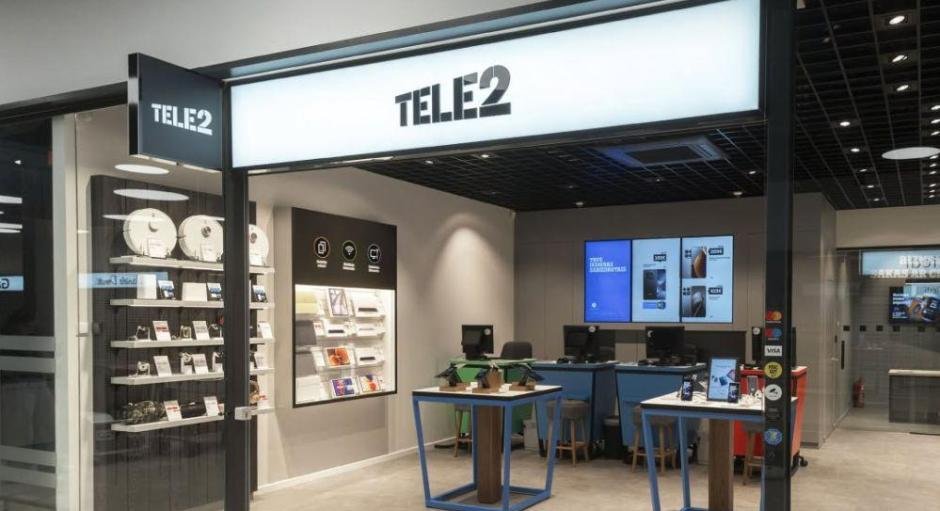
Tele2 opened nine stores in Sweden between January and September 2026, strengthening its direct sales channels.
The strategy combines AI-enabled automation with physical and digital customer engagement.
Baltic Operations Deliver Higher Revenue Growth
Tele2’s Baltic operations generated SEK 1.37 billion in end-user service revenue, growing 6 percent organically.
Lithuania delivered SEK 775 million in service revenue, up 7 percent, while Latvia generated SEK 395 million, up 3 percent.
Estonia’s service revenue increased 5 percent to SEK 196 million.
Lithuania’s underlying EBITDAaL grew 10 percent organically, Latvia achieved 5 percent growth and Estonia recorded 16 percent organic growth.
Customer spending improvements, postpaid migration, pricing initiatives and cost optimisation supported the performance.
Tele2 2026 Outlook: Higher Cash Flow, Lower Capex and Selective 5G Growth
Tele2’s Q3 2026 results demonstrate a shift toward cash flow generation, operating efficiency and selective investment.
Its priorities include strengthening postpaid revenue, monetising enterprise IoT and managed connectivity, expanding high-speed broadband availability, improving 5G network quality and using AI to reduce service costs.
The combination of SEK 7.60 billion quarterly revenue, SEK 1.41 billion net profit, SEK 2.30 billion equity free cash flow and lower capex provides financial flexibility for network investment and shareholder returns.
However, declining prepaid subscriptions, competitive broadband pricing and relatively modest organic revenue growth remain challenges.
Tele2’s performance in the coming quarters will depend on whether enterprise services, AI-driven efficiency and higher customer spending can sustain profitability while the operator maintains disciplined capital expenditure.
BABURAJAN KIZHAKEDATH