

IBC 2026 will put artificial intelligence, cloud-native production, ultra-low-latency streaming, software-defined broadcasting and energy-efficient transmission at the centre of the global media technology agenda.

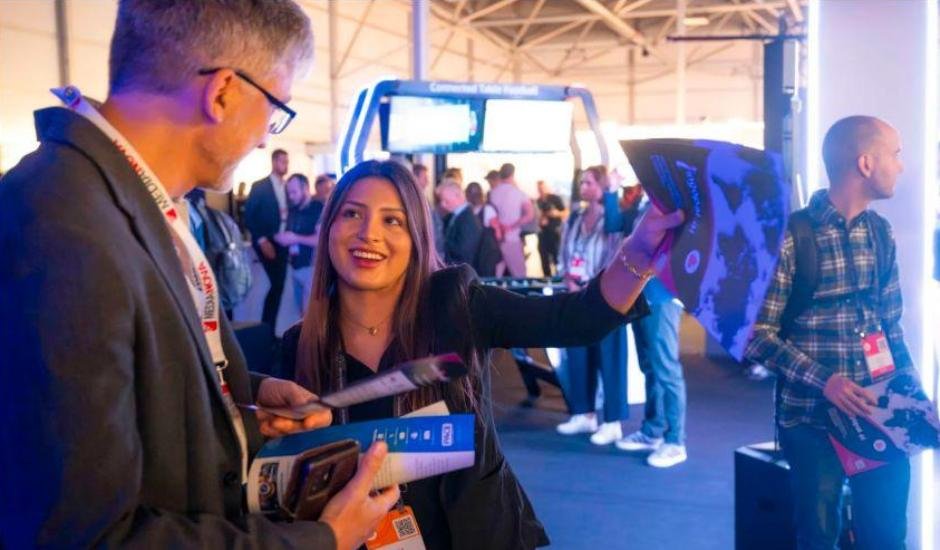
Scheduled for September 11-14 at RAI Amsterdam, IBC 2026 expects more than 44,000 attendees from over 170 countries, alongside 1,200-plus exhibitors across more than 14 halls. The scale of the four-day event makes it an important launch platform for broadcast equipment makers, streaming technology companies and cloud workflow providers.
Recent announcements from Mediaproxy, MainStreaming, Gracenote, LTN, Zixi, Rohde & Schwarz, Sky, Norsk, WorldCast Systems and Zero Density show how the broadcast market is shifting from hardware-dependent infrastructure towards AI-assisted, IP-based and software-defined operations.
# 1 Mediaproxy Brings AI Monitoring and MoQ Streaming to LogServer
Mediaproxy will demonstrate a new generation of AI-powered monitoring tools for LogServer, its flagship compliance logging and broadcast analysis platform first introduced in 2001.
The AI capabilities are designed to move monitoring beyond conventional signal alarms by identifying content-related issues and delivering real-time operational insights. Applications include advertisement and brand tracking, content recognition, regulatory compliance and faster analysis of recorded broadcasts.
The company will also launch Monwall Web, a browser-based version of its Monwall multiviewer. The product supports Media over QUIC and Low-Latency HLS, enabling operators to monitor live feeds remotely without installing dedicated applications. Users can also rewind complete live multiview layouts to investigate incidents.
Mediaproxy is additionally joining the Media eXchange Layer initiative, which uses ultra-low-latency, in-memory media transport for software-defined production.
# 2 MainStreaming Joins OpenMOQ to Advance Sub-Second Video Delivery
MainStreaming has joined the OpenMOQ Software Consortium and will contribute engineering resources to open-source implementations covering three critical stages: ingest, relay and playback.
Media over QUIC is designed to accommodate multiple latency requirements, ranging from interactive real-time applications and sub-second live streaming to conventional video-on-demand delivery. It combines a publish-and-subscribe architecture with prioritisation, caching, time-shifting and adaptive delivery.
Unlike conventional HTTP streaming, MoQ seeks to combine extremely low latency with delivery to millions of viewing sessions. It operates over QUIC and WebTransport, while QUIC itself uses TLS 1.3 encryption and is standardised as RFC 9000.
MainStreaming’s involvement could help move the technology from specifications and trials towards broadcast-scale commercial implementation.
# 3 Gracenote and Tubi Target Content Discovery and Programmatic Advertising
Gracenote, Nielsen’s content intelligence business, will supply discovery and advertising capabilities to Tubi Media Group properties, including Tubi and Fox One.
The partnership brings together Gracenote identifiers, human-verified metadata, imagery and standardised content classifications. These data assets can support natural-language search, personalised recommendations and more accurate discovery across large streaming catalogues.
Gracenote IDs will also be tested inside programmatic advertising bid streams, potentially helping advertisers match campaigns to relevant programmes and viewing contexts.
The scale of the free ad-supported streaming market makes metadata increasingly important. Tubi reported more than 97 million monthly active users, 10 billion streaming hours during 2024, over 275,000 movies and television episodes, and more than 300 exclusive originals. Meanwhile, Gracenote data shows the global FAST market offering 2,172 channels, up 17.5 percent, with more than 225,000 titles, up 14.5 percent over the past year.
# 4 LTN Scales Live Event Master Control After Supporting 20,000 Broadcasts
LTN is expanding its Live Event Master Control platform after using the underlying capabilities to support more than 20,000 live sporting events and broadcasts worldwide.
The platform integrates low-latency IP transport, cloud-native playout, scheduling, automation, monitoring, graphics and optional operator-assisted services. Customers can select a self-service, fully managed or hybrid operating model without constructing a conventional physical master-control room.
LTN says its multicast-enabled network delivers more than 80 million hours of live content annually, reaches over 98 percent of pay-TV households in the United States and Canada, and operates with latency below 250 milliseconds. It also claims SLA-backed availability of 99.9999 percent, distribution of almost 8,000 full-time channels and completion of approximately 2,000 satellite-to-IP migrations.
# 5 Zixi Enters Mauritius Through MTC Jockey Club Deployment
Zixi has secured its first direct deployment in Mauritius through MTC Jockey Club, which is using the platform to distribute live horse-racing coverage internationally.
The Mauritius Turf Club was founded in 1812 and is recognised as the oldest horse-racing club in the Southern Hemisphere. MTC Jockey Club organises approximately 39 race meetings and 320 races annually, with about 500 horses managed by 15 trainers.
Zixi’s platform provides centralised monitoring, orchestration of multiple live feeds, multi-protocol delivery and troubleshooting across the video transport chain. The architecture includes encryption, blackout controls and hitless failover, supporting reliability of up to 99.999 percent.
The initial installation supports international distribution from the Champ de Mars racecourse in Port Louis. MTC Jockey Club plans to add markets and delivery protocols as its overseas audience grows.
# 6 Rohde & Schwarz Targets Up to 50 Percent Transmission Efficiency
Rohde & Schwarz will showcase terrestrial television, radio and satellite technologies designed to lower energy consumption while protecting broadcasters’ long-term infrastructure investments.
Its transmitter portfolio supports two important next-generation standards: 5G Broadcast and ATSC 3.0. These platforms can also enable datacasting, multimedia emergency warnings and Positioning, Navigation and Timing services.
Rohde & Schwarz has previously reported transmitter energy efficiency of up to 50 percent, potentially reducing electricity consumption and lifecycle costs for high-power transmission networks.
The company will also demonstrate the R&S PKU100 Ku-band uplink amplifier. Its solid-state design enables a direct 1:1 replacement for ageing tube-based amplifiers without requiring broadcasters to redesign the surrounding installation. Self-protection and self-monitoring functions are intended to improve reliability and reduce maintenance.
# 7 Sky Enables Four Live Sports Events on One Screen
Sky has launched Your Multiview, allowing subscribers to watch as many as four live Sky Sports events simultaneously on one television screen.
Introduced on August 21, 2026, for the start of the 2026-27 Premier League season, the feature is available through Sky Glass, Sky Stream and Sky Q. Viewers can change the highlighted event, select which audio feed to hear and move any of the four events into full-screen mode.
The service covers sports including Premier League, EFL, SPFL and WSL football, Formula 1, cricket, tennis, golf, NFL and rugby.
Sky has also introduced Sports Hub, which places live scores, statistics, league tables, schedules, clips and highlights beside the main broadcast. Lower-latency Real Time streams are available on Sky Glass and Sky Stream, reducing the risk of viewers receiving goal notifications before seeing the action.
# 8 Norsk Debuts Three Software-Defined Live Video Products
Norsk is introducing three products at IBC 2026: Playout, Remote Commentary and Probe. All are built on the Norsk Studio live-video infrastructure platform.
Norsk Playout can scale from one channel to hundreds of channels, mixing live feeds and file-based content for linear television, event channels, FAST, AVOD, SVOD and enterprise services. Features include schedule alerts, advertisement-break detection, content-aware switching, time-shifting and zero-copy media transfer.
Remote Commentary allows presenters to contribute audio and video through a browser without specialist hardware or ISDN connections. It supports multi-track audio, multi-language output, mix-minus for each commentator, talkback and picture-in-picture layouts.
Norsk Probe provides software-based signal monitoring and real-time alerts at multiple points in a media workflow, including after DRM packaging. The three launches extend Norsk Studio from customised workflow construction into packaged broadcast applications.
# 9 WorldCast Adds 5kW and 3kW Ecreso FM Transmitters
WorldCast Systems will debut two high-power FM transmitters: the Ecreso FM AiO Series 5kW and a new 3kW model.
The modular transmitters feature hot-swappable fans and power supplies, along with tool-free, quick-release RF amplifier modules. These design choices allow technicians to conduct repairs in the field and reduce service interruptions.
Built-in functionality includes a five-band audio processor, UECP RDS encoder, Icecast web streaming and APT IP Decoder. Support is planned for µMPX, APTmpX and linear MPX transport.
WorldCast’s Ecreso high-power platform can deliver energy efficiency of up to 76 percent, while its SmartFM technology can reduce energy consumption by up to an additional 40 percent, depending on operating conditions.
The 5kW transmitter carries a 10-year warranty. Initial deliveries are scheduled for late 2026, followed by wider availability in early 2027.
# 10 Zero Density Connects AI Graphics, Editing and Newsroom Systems
Zero Density will demonstrate an integrated ecosystem connecting newsroom operations, real-time graphics, virtual production and non-linear editing.
Connected NRCS workflows allow newsroom running orders to control graphics for news, sports, weather, elections and financial programming. Journalist Preview enables editorial teams to check graphics before transmission.
The new NLE Live Link brings Reality graphics into two major editing platforms: Adobe Premiere Pro and Apple Final Cut Pro. This can reduce the need to render, export and manually reinsert graphics during post-production.
Zero Density is also demonstrating AI-assisted HTML5 Generative Graphics Templates compatible with the EBU’s OGraf specification. Its Reality platform is based on Unreal Engine 5 and can power virtual studios, augmented reality, extended reality, LED stages and on-air graphics.
The company’s technology is used by major broadcasters including ABC, CBS, Fox, Univision and The Weather Channel.
IBC 2026 Reflects Shift to Intelligent and Software-Defined Broadcasting
The announcements reveal major changes in broadcast technology. AI is moving into practical functions such as compliance monitoring, content discovery, advertising and graphics creation. Cloud and software platforms are replacing dedicated infrastructure across master control, playout, commentary and quality monitoring. At the same time, MoQ, LL-HLS and low-latency IP networks are narrowing the delay between traditional broadcasting and internet-delivered video.
Hardware innovation remains important, particularly where energy costs, reliability and long equipment lifecycles influence investment. Rohde & Schwarz and WorldCast Systems are therefore combining software flexibility with more efficient transmitters and solid-state architectures.
For viewers, Sky’s four-event Multiview demonstrates the commercial outcome of these infrastructure investments: more personalised and interactive live sports without requiring several screens. IBC 2026 will consequently showcase not only new broadcast products, but the industry’s wider transition towards intelligent, scalable and energy-efficient media operations.
FASNA SHABEER