

Most Australian households are receiving broadband speeds close to what they pay for, according to the latest report from the Australian Competition and Consumer Commission. However, performance gaps persist in high-speed plans and older fibre to the node connections.

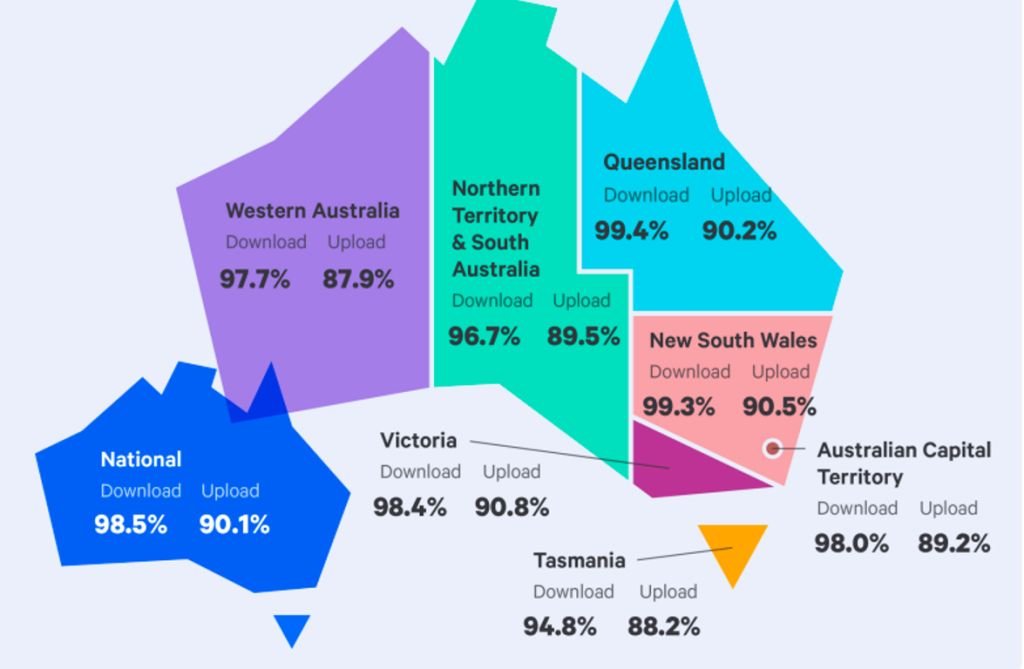
Strong Overall Performance Across NBN Services
The data, provided by UK-based firm SamKnows, highlights that during December 2025, download speeds across fixed-line NBN services reached 98.5 percent of advertised plan speeds during peak evening hours (7pm to 11pm). This indicates that the majority of users are experiencing reliable and consistent internet performance.
Upload speeds remained close to plan levels, while latency was low and stable, supporting activities such as video calls, gaming, and streaming. Outage rates were minimal, reflecting strong network reliability.
ACCC Commissioner Ian Oppermann noted that although results were slightly lower than previous reports, it is still encouraging that users are generally receiving expected speeds.
Key Takeaways
98.5 percent speed attainment during peak hours reflects strong overall network performance
High-speed plans deliver near-promised speeds but face occasional in-home setup issues
FTTN connections remain the weakest link, with 11.8 percent underperforming
Infrastructure type is the biggest factor influencing broadband performance
High-Speed Plans Deliver Performance, With Some Exceptions
Following upgrades by NBN Co in September 2025, higher-speed plans have gained traction. The Home Fast plan (500/50 Mbps) has become the most popular among monitored services.
Average busy-hour download speed: 493.7 Mbps
Performance: Close to full plan speed for most users
Underperformance rate: 6.3 percent of services
Despite strong averages, some households on high-speed plans are not achieving expected speeds. In many cases, this is linked to in-home equipment limitations, such as outdated routers that cannot support speeds above 100 Mbps.
Infrastructure Plays a Critical Role in Performance
Performance varies significantly depending on the type of NBN connection:
FTTP and HFC connections: Deliver speeds at or near 100 percent of plan levels, often benefiting from recent upgrades
Mid-tier plans (50–100 Mbps): Maintain consistent performance during peak hours
FTTN and FTTC connections: Show greater variability and are more prone to underperformance
Notably, 11.8 percent of FTTN services were classified as underperforming. Many of these connections are considered “impaired,” meaning their maximum achievable speed is lower than the subscribed plan.
Limitations of Legacy Network Technologies
FTTN and FTTC technologies continue to lag behind newer fibre infrastructure. These connections are capped at 100 Mbps, making them ineligible for newer high-speed offerings like the 500/50 Mbps plan.
ACCC said that retailers should clearly inform customers if their connection cannot support the speeds they are paying for. Consumers experiencing slower speeds are advised to contact their providers or explore eligibility for upgrades to fibre-to-the-premises (FTTP).
BABURAJAN KIZHAKEDATH