

The latest report from the Australian Competition and Consumer Commission, Measuring Broadband Australia Report (April 2026), offers the clearest answer yet to a question many households ask: who is the fastest NBN provider in 2026?

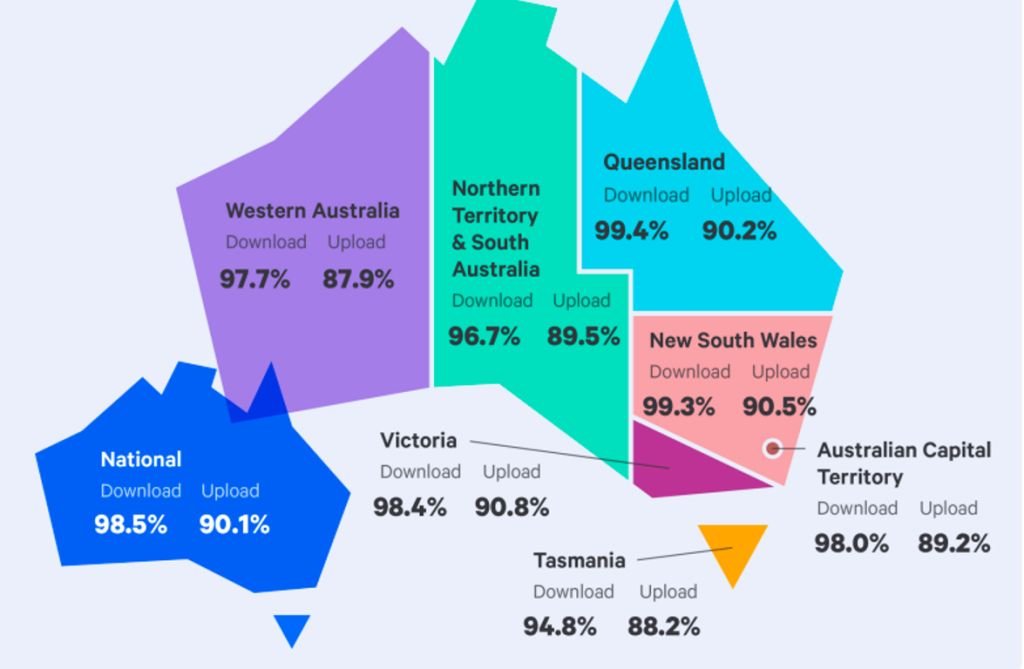
Based on real-world data collected by SamKnows, the findings show that most Australians are now receiving broadband speeds very close to what they pay for. However, performance still varies across providers, technologies, and pricing tiers.
Who is the Fastest NBN Provider in 2026?
Exetel and Superloop Lead on Peak Speed Performance
Among all providers, Exetel and Superloop stand out as the fastest NBN providers in 2026.
They consistently deliver 100 percent or more of advertised speeds, even during peak evening hours (7 PM to 11 PM). This makes them the top choice for users seeking maximum speed consistency, especially on NBN 50 and NBN 100 plans.
Their strong results are driven by efficient network capacity management and lower congestion levels compared to competitors.
Telstra Delivers Premium High-Speed Performance
Telstra remains a top-tier performer, particularly for higher-end plans such as NBN 250 and NBN 1000.
Users typically experience 98 percent to 99 percent of plan speeds during busy hours, making Telstra one of the most reliable options for demanding households. While pricing is higher, the performance consistency and infrastructure investment justify the premium.
Optus Maintains Stable and Reliable Speeds
Optus continues to offer a balanced performance profile.
Its network delivers stable speeds with low latency, making it well-suited for homes with multiple connected devices streaming, gaming, and working simultaneously. Optus may not top the speed charts, but it excels in reliability.
TPG, iiNet and Vodafone Offer Strong Value
The TPG Telecom brands — TPG, iiNet and Vodafone — consistently deliver 96 percent to 98 percent of advertised speeds.
These providers are particularly attractive for budget-conscious users, offering a strong balance between affordability and performance, especially on mid-tier plans.
Aussie Broadband Excels in Latency and Transparency
Aussie Broadband remains a standout for advanced users.
While its speed performance is competitive, it leads in:
Low latency (ideal for gaming)
Network transparency
Minimal outages
This makes it a preferred ISP for gamers, remote workers, and tech-savvy households.
Key NBN Performance Insights for April 2026
Average busy-hour speeds reached 98.5 percent of plan speeds across all providers
Upload speeds remained stable, though dependent on connection type
Latency levels were low, supporting streaming, gaming, and video calls
Outage rates were minimal, indicating strong network reliability
According to ACCC Commissioner Ian Oppermann, while performance dipped slightly compared to earlier reports, the overall results remain encouraging.
High-Speed Plans: Strong Performance with Minor Gaps
The growing popularity of high-speed tiers such as the 500/50 Mbps plan reflects improved infrastructure upgrades by NBN Co.
Average busy-hour speed: 493.7 Mbps
Underperformance rate: 6.3 percent
Most users achieve near-full speeds, but some issues persist due to in-home equipment limitations, such as outdated routers.
Infrastructure Matters More Than Your ISP
Your connection type plays a critical role in performance:
FTTP and HFC: Deliver near 100 percent speeds consistently
NBN 50 and 100 plans: Perform reliably across most providers
FTTN and FTTC: More variable, with higher underperformance rates
Notably, 11.8 percent of FTTN connections underperform, often due to physical line limitations.
Which NBN Provider Should You Choose in 2026?
Fastest Speeds: Exetel, Superloop
Best for Gaming: Aussie Broadband, Exetel
Best for Work from Home: Telstra, Optus
Best Value: TPG, Superloop
Final Verdict
The 2026 ACCC report confirms that Exetel and Superloop are the fastest NBN providers in Australia, consistently delivering peak-hour speeds at or above advertised levels.
However, the best ISP ultimately depends on your needs. While speed is important, factors such as latency, reliability, pricing, and connection type can significantly impact your overall broadband experience.
BABURAJAN KIZHAKEDATH