Around 3.5 million UK consumers have started switching their broadband or landline provider over the past two years, highlighting growing consumer interest in finding better telecom deals as household costs remain under pressure.
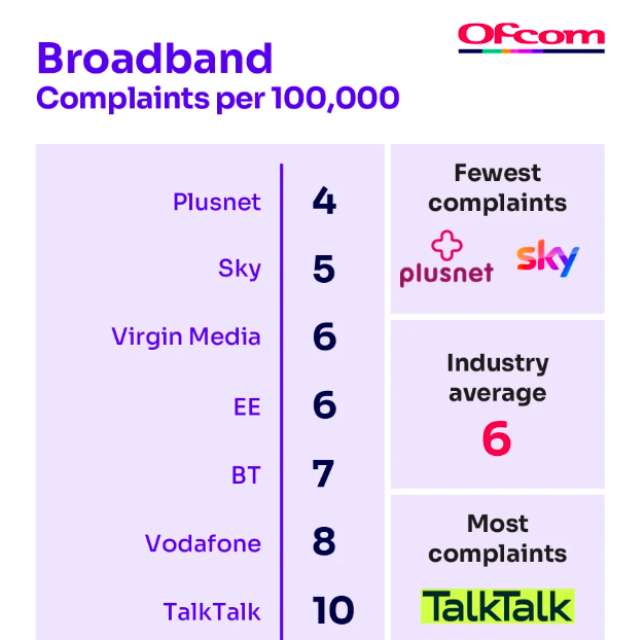
Latest figures cited by UK communications regulator Ofcom show that 3,431,195 people had started the One Touch Switch process by September 3, 2026. The switching system allows broadband and landline customers to move to a new provider without separately contacting their existing operator.
The regulator is encouraging broadband, mobile, landline and pay-TV customers to check their contract status, compare available packages and consider switching if they can obtain better prices or services.
Out-of-Contract Broadband Customers Could Save More Than £100
Ofcom’s Pricing Trends Report 2025 reveals a significant price difference between customers who remain within contracts and those whose contracts have expired.
Customers taking a bundled package covering fixed broadband, landline and pay-TV pay an average £78 per month when they are out of contract, compared with £69 per month for customers who are in contract.
That represents a difference of £9 per month, or £108 a year.
The potential savings are particularly important because one in three triple-play customers were out of contract in 2025.
For telecom operators, the figures highlight the importance of customer retention strategies as easier switching gives subscribers more power to move when promotional contracts expire.
3.43 Million Start One Touch Switch Process
One of the biggest changes in the UK fixed telecom market has been the introduction of One Touch Switch, designed to remove friction from changing broadband and landline providers.
Consumers switching between participating networks generally need to contact only their new provider, which then manages the switching process.
More than 300 broadband and landline providers participate in the system.
Data from The One Touch Switching Company shows 3,431,195 consumers had started the switching process as of September 3, 2026, roughly two years after its introduction.
The scale of adoption demonstrates how streamlined switching mechanisms can increase competitive pressure across the broadband market. Operators cannot depend as heavily on procedural complexity to retain customers whose contracts have ended.
Cost-of-Living Pressure Hits Telecom Customers
Although Ofcom says communications services remain affordable for most consumers, its telecom affordability research indicates that a meaningful section of households continues to experience financial pressure.
During the latest reported quarter, 4 percent of telecom customers missed a payment.
Consumers are also adjusting their spending to keep communications services affordable. Ofcom found that 12 percent made changes to a communications service, while 10 percent reduced spending elsewhere. Another 7 percent cancelled a communications service.
These figures indicate that price remains an important factor influencing customer behaviour even as broadband and mobile connectivity become increasingly essential to everyday life.
The combination of higher out-of-contract prices and household budget pressures could therefore encourage more consumers to compare broadband and mobile offers during 2026.
Ofcom Launches Consumer Hub
Ofcom has launched a new Consumer Hub for telecom customers, bringing together information on switching, reducing telecom bills, solving service problems and making complaints.
One of its central messages is simple: customers should first determine whether their broadband, mobile, pay-TV or landline service remains under contract.
Consumers who have reached the end of their minimum contract period can then compare current offers against what they are paying.
This can be particularly valuable for triple-play subscribers. Based on Ofcom’s average figures, moving from the £78 monthly out-of-contract price to the £69 in-contract average would represent savings of around 11.5 percent, or £108 annually.
Actual savings will vary according to provider, broadband speed, television package, location and services included.
Broadband Availability Can Influence Switching Decisions
Price is only one consideration when changing broadband providers. Consumers also need to know which networks and broadband technologies are available at their address.
Ofcom provides a broadband coverage and availability checker showing the types of broadband and speeds available at a particular address. This is increasingly relevant as UK households gain access to newer full-fibre infrastructure and alternative broadband networks.
Customers considering switching can therefore compare both price and network capability, rather than simply choosing the cheapest package.
For broadband operators, this creates competition across several areas: monthly price, broadband speed, reliability, customer service and contract terms.
Mobile Users Can Switch Using a Text Message
The switching process for mobile subscribers is similarly straightforward.
Customers who want to retain their existing mobile number can obtain their PAC — Porting Authorisation Code — by texting “PAC” to 65075.
This removes the need to call the existing mobile operator simply to obtain the information required for number portability.
Ofcom also provides its Map Your Mobile service, allowing consumers to compare mobile coverage and performance by location. Coverage can be particularly important when customers are considering moving between mobile networks.
Easier Switching Raises Competitive Pressure on UK Telecom Operators
The adoption of One Touch Switch by almost 3.5 million consumers has broader implications for the UK’s telecom market.
Reducing barriers to switching makes it easier for customers to respond to price increases, poor service or better competing offers. It also increases the importance of proactive retention programmes among broadband providers.
Operators increasingly need to convince subscribers to renew before they become disengaged out-of-contract customers.
The economics are significant. The £9 monthly difference between Ofcom’s average in-contract and out-of-contract triple-play prices represents more than £100 of potential annual savings per household.
At the same time, affordability remains an issue for part of the market, with 4 percent of customers missing payments and 7 percent cancelling a communications service.
The combination of easier switching, increased price transparency and continued pressure on household budgets could therefore make customer retention, competitive broadband pricing and service quality increasingly important priorities for UK telecom operators in 2026.
BABURAJAN KIZHAKEDATH